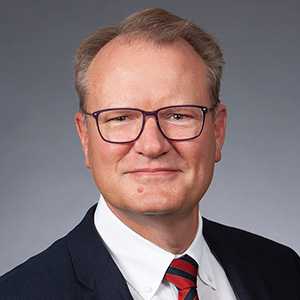
Tom Halverson
CEO of CoBank, the largest institution in the US Farm Credit System, serving agriculture and rural America; previously a Goldman Sachs managing director.
4
APPEARANCES
2
PODCASTS
Jun 26, 2026

Tom HalversonGUEST
The most important thing I can say about that is, you know, this has been a massive trade liberalization success in the agricultural sector.
Tom HalversonGUEST
I'm not gonna speak to autos or other industries and so forth, but from an agricultural perspective, it's been a tremendous success.
Tom HalversonGUEST
Does that mean every single agricultural producer in every nook and cranny of the United States has benefited from it? No.
Tom HalversonGUEST
That's not the way economics works, right? You have winners, you have losers.
Tom HalversonGUEST
But the biggest number of winners, the biggest, uh, incremental value creation, uh, has come from the liberalization of these markets.
Tom HalversonGUEST
To me, uh, moving backward would be to, uh, reverse that trend, increase tariffs, increase market barriers, uh, drive our closest neighbors and colleagues in Canada or Mexico to retaliate against us in a way that would harm our access to those markets.

David WestinHOST
From the point of view of an American farmer, uh, taking a look at this renegotiation of USMCA, what's the best they might hope for, and what's the worst they might fear coming out of the negotiations?

Jean CraneMODERATOR
But what other impacts are you seeing on the agricultural markets, you know, just supply chains in general and ultimately the American farmer?
Tom HalversonGUEST
Well, I often get asked when people read my resume that I have a PhD in war studies.
Tom HalversonGUEST
What the heck? I'd say, you'd be surprised just how often such thought processes can be useful.
12 MINS LATER
Jean CraneMODERATOR
Let's build on what we were talking about, but are there policies or regulatory approaches that matter most in supporting that long-term competitiveness in U.S. agriculture, especially from a financial and economic standpoint?

David WestinHOST
Tom Halverson is CEO of CoBank, which provides financial support to farms, cooperatives, and agribusinesses.
Tom HalversonGUEST
At the same time, rural Americans in general and farmers in particular are not immune from macroeconomic conditions, including inflation, for example.
Tom HalversonGUEST
Producers have been squeezed quite dramatically over the last 12, 18, 24 months by a combination of lower commodity prices for what they sell, on the one hand, and significantly higher prices for the inputs, be it fertilizer, seeds, chemicals, and things of that nature.
Tom HalversonGUEST
And therefore, economic conditions are tougher than they have been, you know, until you go back to the 2018-2019 period when we had our first trade conflict in general, but particularly the one we had with the Chinese.
David WestinHOST
Given the pressure on farmers from the war and its effects on fertilizer, the question remains how to respond and what comes next.
Tom HalversonGUEST
If I'm a row crop farmer somewhere in the Midwest, pick a state, Iowa, Nebraska,

Stu SwansonGUEST
The cost of production is at such a high level and it just keeps increasing that we need that backstop to know that we can average cash flows out,
Tom HalversonGUEST
One of the most important indicators of credit quality for the farm credit system, and indirectly for farmers as well, is farmland value.
Tom HalversonGUEST
Commodity prices have come down a lot, right? Corn's down, beans down, wheat's down since the peak two years ago.
David WestinHOST
Is there also a risk in terms of business and the economy in ongoing subsidies to farmers?