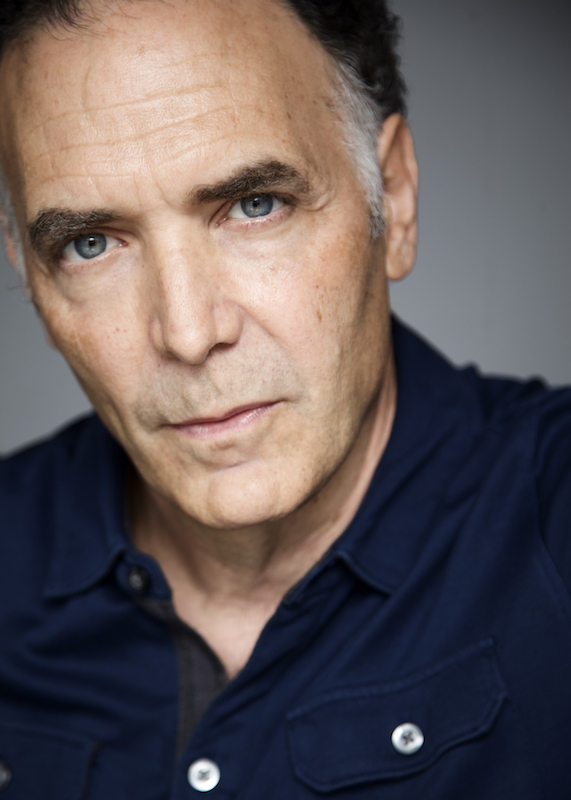
Tom Hale
CEO of Oura
24
APPEARANCES
20
PODCASTS
Oct 28, 2026


Lloyd MinorHOST
Can you talk about how... how in particular the Oura Ring does this and the metrics that are being tracked and sort of the behavioral analyses that have gone behind the development of nudges and other types of feedback that are available for people who choose to avail themselves of that feedback.

Tom HaleGUEST
Yeah, I mean, it's such an interesting problem to change behavior, right? Humans are remarkably resistant to behavior change.
Tom HaleGUEST
And when you think about behavior change, the ways that you do it is, first of all, you sort of make sure that it's not too big of a behavior change because, of course, anything that's too dramatically different, it's hard to sustain.
Tom HaleGUEST
But also, as you said, the nudges and insights are really a little bit about like, hey, I'm going to give you a little support, but maybe I'm also going to give you a little bit of a push.


Brandy ScottHOST
Is there a potential customer upside here for you? Could this result in a contract with the Department of Health to provide these rings on a mass basis if the findings from this study are good and you do get that preventative data that you want or a boost for you in your female sales?
Tom HaleGUEST
You know, it's fascinating because, first of all, we're doing really well in the market here in the Middle East.
Tom HaleGUEST
Our hope is actually that for people who are going through a pregnancy or, more importantly, a high-risk pregnancy, that providing a device like this for them could really help the health outcome.
Brandy ScottHOST
How far could this partnership with the Department of Health go? I realize you're just kicking off this study today, but are you talking about more? And which aspects of public health do you think it's worth targeting?


Tom HaleGUEST
So what we're trying to do is trying to give you something useful so you don't have to do the cognitive work of trying to understand all the metrics.
Tom HaleGUEST
We'll give you some insight like, hey, it looks like maybe your heart rate was elevated after you went to bed last night.
Tom HaleGUEST
It's also trying to do a little bit of behavior modification, maybe nudge you in a certain direction.
14 MINS LATER

Steve KrausHOST
So I imagine that's on your 10-year product roadmap and go-to-market roadmap and commercial roadmap, but how do you get
Tom HaleGUEST
I think it starts with maybe preventative care and preventative health and educating people on healthy behaviors and how to reinforce that.
Tom HaleGUEST
What's interesting is I think it's always been part of the company strategy to become part of, call it the healthcare industry, broadly read, to be reimbursed by payers, to be something that doctors might prescribe, to be a clinical grade medical device that people would trust and use the values to make clinical decisions.
Tom HaleGUEST
So, for example, a couple of years ago, we crossed the bar for being HIPAA compliant and we made all the investments to be HIPAA compliant in our systems.

Michael EsquivelHOST
And if our co-host Hallie Tecko were on with us today, she would say, well, Michael, how do we get our HRV up? What do we do to improve it? And so what are two or three tidbits you might leave listeners with that they might focus on to improve that metric?


Tom HaleGUEST
We think of ourselves as being in the behavior business, not in the ring business or the fashion business or anything like that.
Tom HaleGUEST
And the thing is, is that for everybody, that's actually a slightly different story.
Tom HaleGUEST
For me, healthy habits were things like, uh, not drinking too much coffee and wine in order to fall asleep at the end of the day after being all jacked up on coffee, and changing that habit was transformative for me.
Tom HaleGUEST
For other people, you know, one thing that's surprising about O- Oura for some people is that one in four Oura Ring customers tell us that they use the Oura Ring to manage their chronic illness.
16 MINS LATER


Rana el KalioubyHOST
I am curious why you had to build a women-specific model and what does that entail.
Tom HaleGUEST
First of all, uh, we ha- we have kind of an LLM-based advisor inside the product, and it sort of personalizes to you.
Tom HaleGUEST
What we were finding was, uh, even with the, the frontier models, that for women's health, the answers would be either too generic, um, or they would be weirdly unempathic.
Tom HaleGUEST
And maybe if you, if you wanna unpack that a bit, like, if you think about all the science and research that's done, you know, it wasn't until 1992 that, like, women were allowed to be part of clinical trials.
Tom HaleGUEST
So there's a lot of science out there that is, like, basically, you know, that has, has no bearing on a woman's physiology, um, and in fact, all the LLMs are trained on everything.
7 MINS LATER
Rana el KalioubyHOST
And he said, "What would it take for Oura to be your tracker for everything in life, not just your physical health?" What are your thoughts on that?

Tom HaleGUEST
Uh, we wanna make sure that what we do is in the path of scientific and medical validation.
Tom HaleGUEST
That's almost 300,000 people who are taking cuff measurements and comparing to the predictions that the ring is making, so we will have a data set that'll support the idea that what this does is accurate, validated, clinically relevant.
Tom HaleGUEST
Until that time, um, we'll probably operate as a wellness device, which means that we can provide insight, but not something that's like a diagnosis.

Tom HaleGUEST
Because what are the things that people value? If you think about that, you think about for somebody who's trying to get pregnant.
Tom HaleGUEST
So again, one of the classic use cases is what is your fertile window? It's actually a class one medical device that Aura provides.
Tom HaleGUEST
What most people know, if they've ever tried to get pregnant or been a part of a partnership trying to get pregnant, What they figure out is that taking a luteinizing hormone test tells you after you've ovulated, which means that your fertile window is about the two days after ovulation where your fertility is sort of at its peak.
13 MINS LATER

Liz HoffmanHOST
I mean, first, was being more American, having more Americans on your board or your executive suite, was that a requirement of that deal in any way?


Tom HaleGUEST
And sometimes your hiring is maybe the stakes are, I don't know, slightly less high or something like that.
13 MINS LATER


Tom HaleGUEST
No, no, I was just going to pile on and say, I think what's interesting about the sort of sense of potential here is everyone can agree that the healthcare system has lots of problems and challenges.
Tom HaleGUEST
But the sense of potential is really that like AI has the potential to go beyond like kind of a pilot concept and really understanding how AI gets deployed in practice.
Tom HaleGUEST
I mean, I'm talking more about maybe care and Josh is talking about drug discovery and I'm sure there's all sorts of deployment around, you know, how do we help people with prior authorizations? How do we automate some of the back office stuff? How do how do we make health care more efficient? I think between care, drug discovery and efficiency, there's all this opportunity.

Akash PasrichaHOST
What was the, I mean, you're happy about this? You're, it's, you know, it really unleashes you for more innovation? Yeah.

Tom HaleGUEST
I've always been somebody who's been interested in data and tracking, and I spent time at SurveyMonkey, which was, of course, a platform for gathering the data about all sorts of people and looking at that across web-scale populations and web-scale data, which is kind of analogous to this, which is that there's this huge amount of data that's streaming off of all these people wearing Oura rings.
Tom HaleGUEST
And how do you make sense of that? And how do you give them advice to change their behavior? Because changing behavior turns out to be very hard.

Brian SozziHOST
Where have you been spending your time and where is your focus coming out of the gate next year?

13:45

What did you learn from that situation that makes for table stakes in a successful partnership?
Tom HaleGUEST
In many ways, in terms of creative professionals, Macromedia had won the web, the sort of next generation of creative professionals, the people like you who are making your own websites.
Tom HaleGUEST
Adobe, of course, was the classic Photoshop, Acrobat, like the sort of classic tools of creative production were Adobe's.
Tom HaleGUEST
So here's my sort of so what of that, which is, That was a perfect acquisition because the strategy was really sound.
13 MINS LATER


Tom HaleGUEST
Uh, so we were driving, crossing the Nevada desert just, um, east of Elko, Nevada, and the driver, uh, reached down to, uh, swat a bug off her leg or something.
Tom HaleGUEST
I felt like we were in a rock tumbler and it was all, uh, steel tool chests, propane containers.
Tom HaleGUEST
Just imagine all that was going around (laughs) as we're Spider-Manning through the, uh, through the air.
Tom HaleGUEST
And anyway, we came to a rest, went and made it over to the edge of the, um, freeway and, uh (laughs), I was, um...
Tom HaleGUEST
We're laying there side by side and Bill, one of the leaders said, "Well, I guess that's it for the summer," and didn't miss a blink is, like, my response to that, "Well, I don't think so (laughs)," um, "and we'll figure it out." So we, uh, we, we took the ambulance to the hospital and, and we actually walked out of the hospital.
12 MINS LATER


Tom HaleGUEST
And it makes sense in a way that women would be a great audience for a wearable that's a ring that sort of has the properties of jewelry, that is oriented around women's health.
Tom HaleGUEST
And some of the things that we do better than any other wearable really relate to either reproductive health or cycle tracking or giving you visibility into the best time to conceive.
Tom HaleGUEST
We partner with a natural cycles product, which is the sort of digital contraception.
15 MINS LATER
Tom HaleGUEST
Well, good knows, everyone knows that AI is incredibly expensive and I think AI and the future of healthcare are intertwined.
Tom HaleGUEST
So I think we want to make sure that we have that ability to invest in AI, particularly as we think about acquiring talent and making investments and maybe ultimately developing our own models.
Tom HaleGUEST
The second thing, of course, is that, you know, we're still at the very beginning of this business or has been on a tear.
Akash PasrichaHOST
We're talking a combination of open-source models, closed-source models, the big models like OpenAI?
Tom HaleGUEST
I mean, this last year, we introduced pregnancy insights, menopause features, and we've been continuing to push on this idea of the fertile window, which is helping women or couples conceive.
Tom HaleGUEST
But as you think about the areas of expansion for us, we think about metabolic, because the one thing that you do more often than sleep that affects your health is eat.
Tom HaleGUEST
And so if we can help you build healthy habits around eating, that's hugely powerful.

Caroline HydeHOST
What did you learn from that experience, Tom? You had to get on TikTok yourself.
Tom HaleGUEST
I think it starts with maybe preventative care and preventative health and educating people on healthy behaviors and how to reinforce that.
Tom HaleGUEST
What's interesting is I think it's always been part of the company strategy to become part of, call it the healthcare industry, broadly read, to be reimbursed by payers, to be something that doctors might prescribe, to be a clinical grade medical device that people would trust and use the values to make clinical decisions.
Tom HaleGUEST
So, for example, a couple of years ago, we crossed the bar for being HIPAA compliant and we made all the investments to be HIPAA compliant in our systems.


David NovakHOST
You know, when you think about Oura, you know, and you think about the kinds of things that you'll measure and you'll give a customer, where do you see that
Tom HaleGUEST
The personal part of it is really important, meaning that it's not some generic information that could be applied to anybody.
Tom HaleGUEST
It's applied to you and applied to your situation and your day because your physiology is not fixed.
30 MINS LATER
David NovakHOST
You know, what's the single biggest strategic decision that you made that really unlocked that growth?

Mark FilippinoHOST
How has China responded to Britain's overtures?
Tom HaleGUEST
So shortly after that Rachel Reeves visit in January, the UK government released a statement outlining what they saw as some of the wins from that visit.
Tom HaleGUEST
They included recent grantings of new licenses and quotas for UK financial institutions.
Tom HaleGUEST
There were a couple of pork processing plants, their exports to China were blocked during the COVID-19 pandemic, and in December, shortly before this visit, those restrictions were lifted and those plants, uh, were able to export their pork to China again.
Tom HaleGUEST
I should also mention that there is a trade fair coming up in September in the Chinese, uh, coastal city of Xiamen, and the UK will be the country of honor at that trade fair, which is quite a significant thing in and of itself, and has kind of raised hopes of further visits and, and further trade talks between the two countries.
Mark FilippinoHOST
Sounds like things are really improving, but how has that translated so far to activity on the ground?
Tom HaleGUEST
So I, I think, first of all, it's important to recognize that a lot of British companies already have a very significant presence in China and have done for a long time, HSBC, several other big financial players, the likes of Rolls-Royce, but we also see a lot of small British companies looking to expand their presence in the mainland, particularly kind of prestige or heritage brands, you know, the likes of Baba or Brompton Bicycles, which may be opening new stores in China or may be looking to sell on the world's biggest e-commerce platforms in, on the Chinese internet.
Tom HaleGUEST
These companies will have many reasons for expanding into China, but obviously, this backdrop of this diplomatic thaw between London and Beijing is not gonna hurt their prospects, and it's gonna be something that they're very optimistic about.

Jessica LessinHOST
Where is the ecosystem on the partnership side and how do you strategize around the next steps there?
Tom HaleGUEST
For example, the digital contraceptive natural cycles uses our temperature data to make an assessment of whether or not it's a safe day to have intercourse and not get pregnant.
Tom HaleGUEST
But the other use case is actually where we ingest data from that wearable or that device or that source.
Jessica LessinHOST
So what are you doing today with AI? And maybe 12 months from now, how do you think AI will fit into your platform?


Tom HaleGUEST
I don't think there's a device that does that yet today, or at least does it accurately.
Tom HaleGUEST
However, it's pretty important to understand that where you measure on the human body really matters.
Tom HaleGUEST
And the Oura Ring measuring on the finger, that is the most accurate site for you to measure your biometrics.
Tom HaleGUEST
When you go into the hospital, they don't put a sensor on the back of your wrist where there's and bone and sinew.

Julia BoorstinCORRESPONDENT
What's your future? Are you thinking about an IPO and what kind of timeline?


Liz ClamanHOST
Because when you... fire up the app you can see how much did i get total sleep okay seven hours 16 minutes what was the efficiency i actually had good last night efficiency 89 restfulness is good then it breaks out into rem sleep rapid eye movement sleep which is crucial and deep sleep i want more deep sleep i only got 28 minutes last night and one hour and 36 minutes of rem sleep so what's the difference between rem and deep sleep
Tom HaleGUEST
Yeah, it's a really interesting thing to think about the sort of magic that your body does while you sleep.
Tom HaleGUEST
Deep sleep is sort of the stage of sleep, usually more in the first part of the night.
20 MINS LATER


Diane BradyHOST
How did you crack the code? What is it you think you did differently or Aura did differently that resonated?
Tom HaleGUEST
I think that, you know, maybe the social conversation around sleep, which was like, I don't need sleep.
20 MINS LATER


Tom HaleGUEST
And I'm guessing because you're a Gen 2 user, you haven't experienced our subscription business model quite yet.
Tom HaleGUEST
I think the way I looked at it, And I've spent a lot of time around subscription business models.
Tom HaleGUEST
And there's something about subscription business models that, you know, it's great.