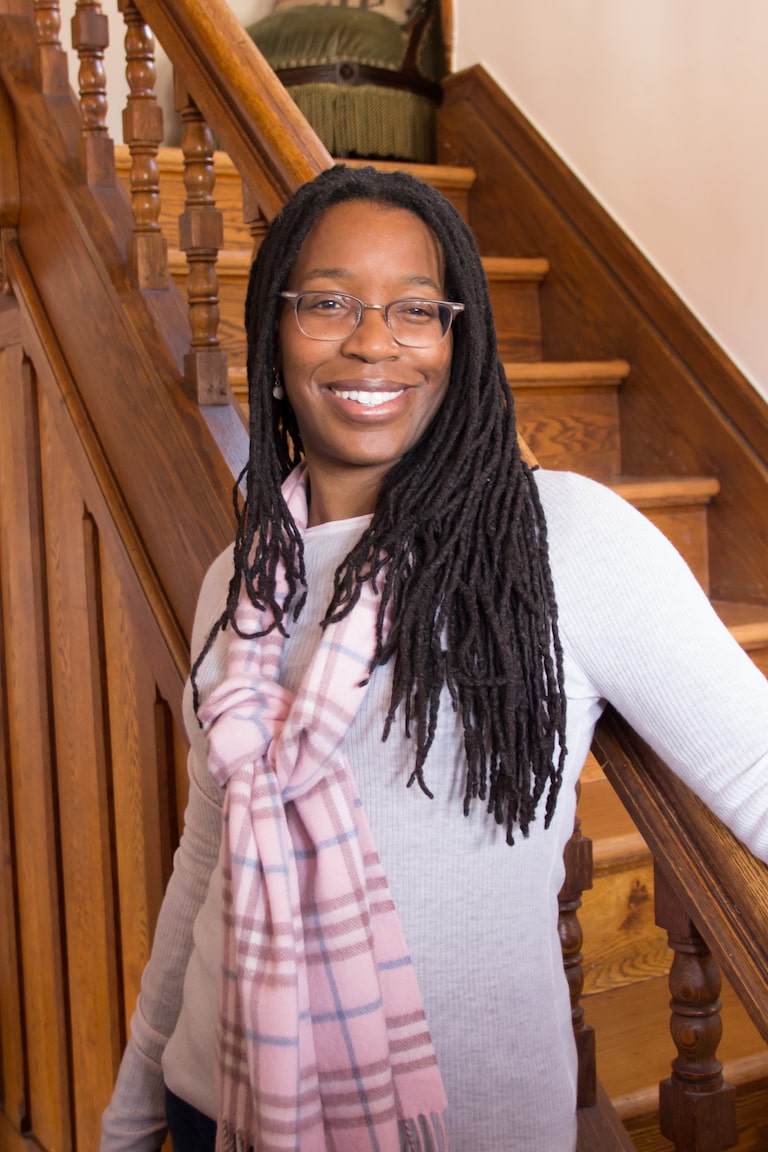
Tiya Alicia Miles
American historian
4
APPEARANCES
4
PODCASTS
Aug 20, 2026


Nahlah AyedHOST
What, what's it like to be working as a historian in this time, in this day and age?

Tiya MilesGUEST
And it feels like the people who are working in these areas now, and those who were doing this work before us, the people whose shoulders on which we stand, that all of that work, all those years, is just turning to dust.
Tiya MilesGUEST
And it can make one wonder, what's the point? What's the point of finishing a book? [laughs] And I'm just gonna say it, when people are being shot in the streets, you just come to a point...
Tiya MilesGUEST
I have come to a point of asking myself, "Is this really the, the most conducive to freedom, democracy, a better future use of my time?" But when I have those moments of questioning, I do turn back to what are the things that have sustained me, that have sustained my family, that sustained generations in the face of deep darkness, and stories are among them.
Tiya MilesGUEST
Stories really can be anchors that can help us to take a moment to pause and to look at what's going on around us, to understand, to interpret, and to come away with deep meanings, true meanings of what it is to be human, and we need those.
38 MINS LATER


Tiya MilesGUEST
... with dates and, you know, uh, names, events, and, and all that, and history felt to me like just a scattering of facts.
Tiya MilesGUEST
[Instrumental music] Meanwhile, my grandmother was an incredible storyteller, and she loved to tell stories on the front porch.
Tiya MilesGUEST
And of course, they encompassed the large narratives of African American and American life.
Tiya MilesGUEST
She was always going back to Mississippi in her mind and in her words, and she thought of this as a, a crucial place that I should know about, that my cousins should know about, that existed in the past, but also in her imagination and in her spirit in the present.
Tiya MilesGUEST
But at the time, I had no idea that what I experienced as a misfit in my history classroom and what I experienced as a perfect, comfortable, inspiring fit on my grandmother's porch were actually two ways of approaching-
6 MINS LATER
Tiya MilesGUEST
... a- a- and death and not having descendants to, uh, inherit and care for the sack.

Tiya MilesGUEST
[gentle music] When I was growing up close to the Ohio River, I, I didn't know how historically important it was.
Tiya MilesGUEST
I didn't realize that it was the border between the free North and the slaveholding South.
Tiya MilesGUEST
I just knew it was a waterway [laughs] that we saw all the time and that, as a small girl, I got to walk on.
Tiya MilesGUEST
Later in life, when I read Toni Morrison's novel Beloved, which is based on the true story of Margaret Garner, an enslaved young woman from Kentucky who crossed the river and made it to Cincinnati into Ohio It wasn't until I read that novel that I realized this river is incredibly consequential, deeply symbolic, and I've grown up around it and going to it my whole life and didn't realize that if it had been 200 years ago, this river would have made the difference between my freedom and my enslavement.
Tiya MilesGUEST
I actually learned not, not too long ago in doing my father's genealogy, which he wanted as a birthday gift because he was turning 80, that some of his ancestors were enslaved in Kentucky right across that river.
Tenery TaylorHOST
So along with her firm expectation of divine help, Harriet also applied those shrewd skills she had acquired in childhood.


David RubensteinHOST
And y- can you describe how she was injured and what type of injury she got that she lived with for the rest of her life?
Tiya MilesGUEST
Araminta grew up being miles away from her family, living in different locations and experiencing successive movements that were, were forced upon her.
Tiya MilesGUEST
She had to do grueling, heavy outdoor work from the time that she was a very young child, including removing dead muskrats from metal traps in cold, brackish waters.
Tiya MilesGUEST
And by the time she was a pre-adolescent being leased out again and again, she was doing agricultural labor in the fields.
Tiya MilesGUEST
On one of these occasions, she was told to go with the, the plantation cook to the local general store to, uh, pick up some supplies.
13 MINS LATER
David RubensteinHOST
Can you describe what happened and how she managed to help free 700 slaves in one effort?