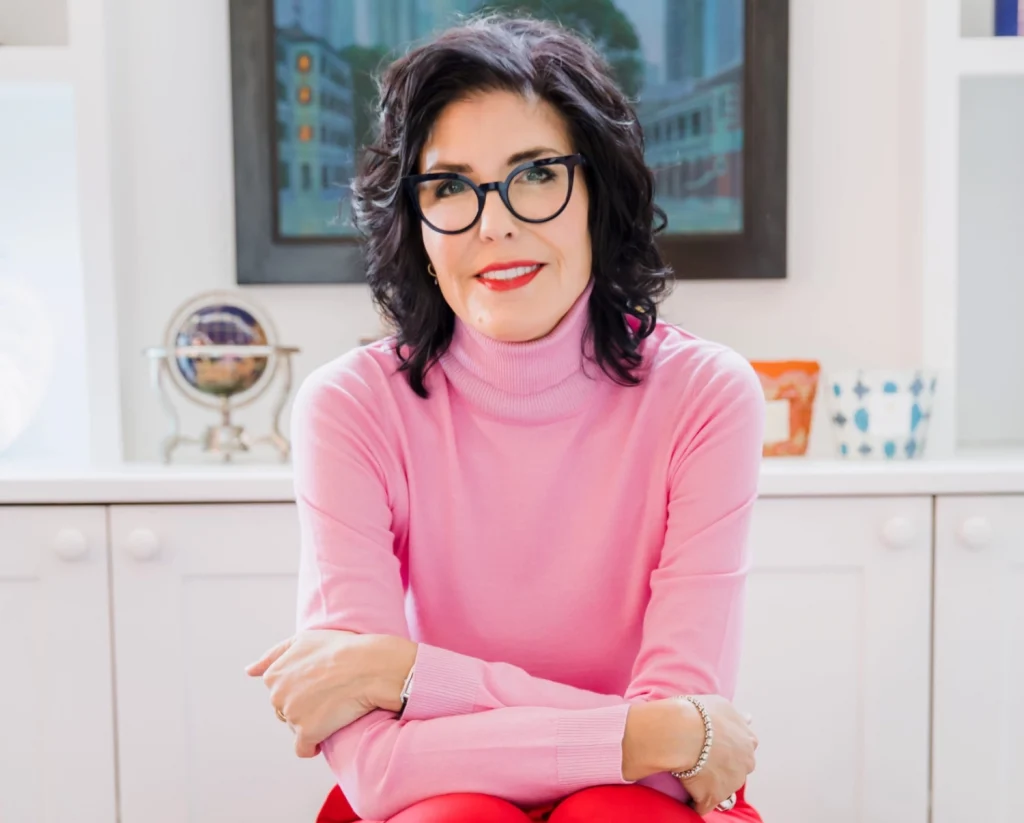
Tina Fordham
17
APPEARANCES
5
PODCASTS
Sep 15, 2026


Tina FordhamGUEST
And that's where the signal versus noise construct as market participants are used to thinking about developments.
Tina FordhamGUEST
When I was in my role at Citi writing investment research, I talked about the Russia-Georgia war in 2008.
Tina FordhamGUEST
I talked about the annexation of Crimea, which I was told by a lot of investors was a tempest in a teapot.
14 MINS LATER
32:10
I'm not asking you to make actual predictions, but when you talk about these plausible hypotheticals, what are some of the things that are on your radar screen that maybe other people haven't considered quite as much and maybe should be thinking about?
Lisa AbramowiczHOST
What kind of mindset should, should leaders take when, when thinking about the war? Co- corporate leaders.
Tina FordhamGUEST
I mean, I was one of the few, you know, analysts from the beginning saying this war would not be over quickly, uh, which is what the market was priced for.
Tina FordhamGUEST
Yes, you know, as the Treasury Secretary said- Alternatives to the Strait of Hormuz will be found.


Martin KimberHOST
What advice would you give to someone running a big listed company or who's an entrepreneur or someone who works in manufacturing of what you can actually do to safeguard yourself against massive, multipolar events happening on either side of the UK?
Tina FordhamGUEST
Well, I mean, obviously, that's why I run an advisory business, because it's not a short answer.
Tina FordhamGUEST
But the first and most important point is to broaden your view of the context that we're operating in.
Tina FordhamGUEST
It used to be people that had a domestic business that didn't do much trade abroad felt somewhat insulated.
Tina FordhamGUEST
That's not the case anymore, because whether it's the security of shipping lanes, supply chains, the income of the median voter, all of these forces are now more subject to global change than at least we thought they would be.
Tina FordhamGUEST
And then there's the wild card of AI, which I think has really accelerated anxiety.

Matt KenyonHOST
Take us inside the room and that what you think might be going on in the Treasury right now when they consider the outside geopolitical forces that are going to sort of buffet around this budget?

Tina FordhamGUEST
Uh, I mean, this is a classic textbook escalation trap, right? And, um, you know that I've been consistent about this from the beginning, whereby the war aims weren't clear, the strength of the adversary in the case of Iran was underestimated, um, the, with the, uh, new, uh, leverage that Iran has with the Strait of Hormuz- Going back to the original, uh, objective, which was mainly around depriving Iran of, of nuclear weapons capability, has now moved further down the list.
Tina FordhamGUEST
And it's a puzzle really, isn't it? I mean, the US casualties currently are around 18.
Tina FordhamGUEST
I know how these are all tragedies, and yet are we inured to the, the human costs of war? The economic costs of war? There is some pretty significant cognitive dissonance going on.
Tina FordhamGUEST
But to bring it back to the markets, in a way the markets are letting it happen by, you know, by not reacting, um, if you like.


Tina FordhamGUEST
Um, but how deep does that relationship go? How long can it last between leaders? This is one issue with democracies.
Tina FordhamGUEST
I think the other thing that this deal, um, highlights for us is the, uh, intensified interest in clean energy, and I think it is really important to differentiate between nuclear energy and nuclear weapons.
Tina FordhamGUEST
Um, the war in, in Iran and indeed the war between Russia and Ukraine also have just highlighted dependence upon fossil fuels.
8 MINS LATER

Tina FordhamGUEST
Well, our geopolitics super cycle framework is based on empirical research that we conducted that looked at the period between 2010, the tail end of the global financial crisis, through the end of 2024.
Tina FordhamGUEST
In other words, in the period before Trump 2.0. And so the geopolitics super cycle took off quite a long time ago, arguably in the aftermath of the global financial crisis.
Danielle MylesHOST
But in terms of this idea of companies and even governments having to align more with China or the US, given their current foreign policymaking, what are you telling boards about how to navigate this period? To what extent do they have to choose?
10:47

Is Washington happy to help again? Is it more a case of can it help rather than will it help?
Tina FordhamGUEST
Well, I would differentiate between the White House, Washington, and the American people who are still broadly in favor of supporting Ukraine.
Tina FordhamGUEST
But President Trump isn't, and another development, um, that factors into this conversation is the, is that, um, the, you know, the, the dynamic duo of, of Russian-Ukraine diplomacy, Jared Kushner and Steve Witkoff, uh, have now suspended their efforts, and notably, uh, they never once set foot in Kiev.
Tina FordhamGUEST
Um, and, and again, I, you know, I, I, I am drawn to the linkages between the war in Iran and, uh, and in Ukraine, whereby US diplomacy is kind of fizzling out, which, you know, we have neither war nor peace.
8 MINS LATER
19:52
How much of this slump is linked to people not wanting to travel or spend their money in Donald Trump's America?
Tina FordhamGUEST
It is something that we heard through our sources over the last couple of days.
Tina FordhamGUEST
What I think is really, you, you know, fascinating and, uh, so important for kind of gaming out the power balance here is that Iran, having been presumed to be a, a weak military force, actually finds itself with more leverage than anybody thought right now and is issuing some pretty robust statements about its commitment to defending its land.

Tom KeeneHOST
We've got a guy who's deal transaction-based, and that culturally, how is that Trumpian deal transaction process greeted by the Arab, and separately, by the Persian world?
Tina FordhamGUEST
How is it created by? Well, I, I, I mean, he is somebody who values making a deal above all, but also winning above all.
Tina FordhamGUEST
And what I think is very concerning is that it's hard to imagine, um, an easy win here.
Tom KeeneHOST
There's a couple maps out of the tr- of the milit- should we be getting ready for some late-night action by the White House against Iran?
Tina FordhamGUEST
It's significant, and so the US kind of brought back the, [chuckles] the, the naval assets that were in, um, uh, off the coast of Venezuela to the Persian Gulf, but for what purpose? I mean, whether there is some type of, of US military action in Iran is a, you know, plausible hypothetical, as I like to say, even maybe a 50% likelihood.
Tina FordhamGUEST
But what I understand, and what I also know, having worked on some of these kinds of scenarios and wargaming in the past, is there really aren't any clean, kind of surgical strike options for Iran, which is almost certainly playing into the White House, um, hesitation.
Tina FordhamGUEST
You know, President Trump has got that hardware there, those military assets there, because, because maximum pressure is the name of the US approach to Iran.
Tina FordhamGUEST
I think the difficulty is that these guys are tough, and they are patient, and they think in terms of decades, and Trump gets bored.
Paul SweeneyHOST
Is there- is this something the president is really focused on, do you believe?
Tina FordhamGUEST
I think there was a moment after the Maduro extraction operation and the pressure on Greenland, where President Trump, you know, really felt like his tactics were bringing about results.
speaker_2ADVERTISER
Hiscox Small Business Insurance.
Tina FordhamGUEST
...going to Windsor Castle, seeing the Queen's tomb, which, which I've seen by the way, um, it's, it's, um, really something to, to behold, as is Windsor Castle.
Tina FordhamGUEST
But of course, in the background is going to be the fact that the UK Ambassador, uh, to Washington, Peter Mandelson, was sacked.
Tina FordhamGUEST
I saw that he's just been fired from the consulting firm, um, that, that he works for.

David GuraHOST
Could you frame that out for us? The, the way that we have seen China respond to this trade war, not on a bilateral basis vis-a-vis the, the US but with other countries in its orbit, and what's the message that it's trying to send here to Mexico with that announcement today?
Tina FordhamGUEST
I mean, throughout this kind of nine months where we've had this huge effort by the Trump administration to put forward, um, an overhaul of America in the world both from trade and security perspective, China's been quiet.Um, it has been able to, to, to watch, to observe, to occasionally signal where it stands with power, um, but it hasn't really risen to, um, the bait.
Tina FordhamGUEST
Uh, it is perhaps, you know, uh, unique a- among the world's largest economies in that, um, it has, still has this pause going on, on the Trump tariffs.
speaker_6HOST
What are they telling you about their confidence in, yes, the way these policies are gonna stand, but how they're gonna be able to kind of plan and do business with them in place?
Tina FordhamGUEST
So, our, our clients, um, I think have, have kind of gone through the, the stages of grief with the previous status quo, uh, relationship with the United States, and indeed the, the global trade system.
Tina FordhamGUEST
Uh, and th- after, uh, several months I would say of a real chill evident in, in the C-suite, you know, in, in, in, in corporate, uh, America and indeed the rest of the world, I've seen a real increase in, in risk appetite and also just kind of getting on with things and, and finding, you know, new opportunities and, and ways to, to make deals.
Tina FordhamGUEST
And so it strikes fear in the hearts of, of diplomats and foreign policy types because you never wanna put your, your leader in a position where he's not sure what's going to come out of the discussion, right? You want to, you know, game out the, the possibilities.
Tom KeeneHOST
What is the incentive for Vladimir Putin to do anything here except a photographic moment?
Tina FordhamGUEST
Um, I think that we, we've got to be, um, very focused on the fact that we're not just looking at a, a bold Israeli attack on Iran taking out, uh, at least 20 of its senior personnel, uh, at one time, as well as some attacks on nuclear facilities, but the Ukrainian spiderweb attack, drone attack deep into Russia, which of course has nuclear capability, and the, the tariff war all happening at the same time.
Tina FordhamGUEST
Um, for investors that are having flashbacks to, you know, the last round of Iran-Israel tensions in 2024, we're in a really different environment.
Tina FordhamGUEST
But I didn't answer your question about what the White House and the State Department should do.
Tina FordhamGUEST
At the moment, um, it looks like, uh, the White House is, is trying to, um, give the impression that, uh, they were on board with these attacks when almost everything that we are hearing is that the White House, uh, was cautioning Netanyahu not to go for it, so both Netanyahu and Zelensky in Ukraine, um, you know, really not heeding Washington's warnings.
Tom KeeneHOST
How will your world change with drones that could kill, take out, uh, armament from a distance?
Tina FordhamGUEST
Uh, Ukraine launched an incredibly bold and audacious attack, um, 18 months in the making.
Tina FordhamGUEST
Uh, you've talked about the idea that this could signal a change in trend and, and others have, have written about, you know, China being able to do the same thing.
Tina FordhamGUEST
Um, but when we look at the markets, guys, right? W- we don't see a very big reaction at all, um, I think just because of the amount of, of news flow.
Tina FordhamGUEST
So, it's an example of something that is potentially, you know, a pivotal moment in geopolitics.
Tina FordhamGUEST
Uh, certainly one that means that, in the short term, there isn't going to be sanctions relief, uh, likely anytime soon, or a ceasefire.
Tina FordhamGUEST
Uh, but there's so much going on for investors to digest that it's not moving the needle.
David GuraHOST
And, and what does that mean just for that country's attitude toward, um, continued involvement in the war in Ukraine and Europe's involvement more broadly, th- the outcome of that election in Poland?
Tina FordhamGUEST
The, uh, we, uh, we are trying to read the tea leaves and understand, uh, who has what brief, or is President Trump kind of, you know, acting as his own, um, counsel? Uh, and, uh, the, the meeting with h- his special envoy Steve Wyckoff, the, the, the subsequent meeting that he was supposed to have at the Kremlin, uh, was canceled.
Tina FordhamGUEST
Um, so I wonder if Trump is going to end up being, uh, frustrated after this conversation because, you know, in dating terms, what Putin is doing is called breadcrumbing.
Tina FordhamGUEST
Well, I mean, I don't, I don't know that President Trump feels that he does have to maintain the commitment.
Tina FordhamGUEST
He had previously, um, you know, to, to, uh, great effect expressed frustration with Ukrainian President Zelensky.
Tom KeeneHOST
How does this move forward? Do we move our foreign diplomacy of Kissingerian realpolitik, of those against Henry Kissinger, do we move it forward by tweet?
Tina FordhamGUEST
I mean, I've had the immense privilege of, of interviewing Henry Kissinger, uh, a couple of times, um, before he, he left us, and, uh, I'm a great admirer of, of his, uh, his colleagues, Madeleine Albright and, and others.
Tina FordhamGUEST
This is the TikTok-ification of global politics, um, and it's definitely not helping investors and business leaders or global leaders work out how to deal with the United States.
Tina FordhamGUEST
I mean, in practical terms, this is an extremely difficult time to be, uh, the CEO of a company that has to get any goods from anywhere else.
Tom KeeneHOST
Tina Fordham, can our listeners and viewers survive two months until the adults show up?
Tina FordhamGUEST
Um, and I suspect that we're going to see a fairly, um, nuanced and sophisticated response from the European Union.
Tina FordhamGUEST
Uh, I think the tension is, is best framed as between, uh, placating Trump and, and retaliation.
Tina FordhamGUEST
And if you look at public opinion data in, in the European Union, um, there's strong public support for retaliating against the US, uh, but there will also be, of course, a desire to play nice, I think, to start with, um, and try to see about taking these down a bit, because 20% is, is, um, is harsh.