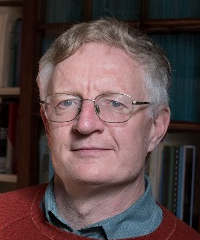
Timothy Williamson
British philosopher
2
APPEARANCES
2
PODCASTS
Oct 13, 2026


Timothy WilliamsonGUEST
I mean, I don't think we really have a- any alternative but to, um, use, uh, evidence as our best g- guide to the, the, the truth, a- a- at least on, on most m- matters.
Timothy WilliamsonGUEST
Because ev- evidence isn't something that's always very fancy and like scientific evidence or legal evidence.
Timothy WilliamsonGUEST
It's really just anything that you, that you know that, uh, in some way bears on the, on the relevant issue.
Timothy WilliamsonGUEST
So for example, um, if, if you'd had, uh, no evidence that there was going to be a festival here today, you wouldn't have come, so that you were using evidence in, um, in, in coming here.
23 MINS LATER


Timothy WilliamsonGUEST
So, so for example, in some of my recent work, o- one of the things that I've been i- interested in, i- is the extent to which philosophers have gone wrong by relying on cognitive heuristics, which are kind of cheap and dirty ways of answering questions that are reliable most of the time, but that sometimes give wrong, uh, results.
Timothy WilliamsonGUEST
And, you know, uh, s- I mean, a, a lot of human cognitive life depends, in fact, on, on using, uh, heuristics.
Timothy WilliamsonGUEST
But, and then so I've been, I've been calling into question various things that some philosophers just r- well, m- many philosophers have just regarded as, as data, um, and in- including in the case of, of vagueness.
Timothy WilliamsonGUEST
And so of course I'm, you know, I, I'm, I'm thinking am, am I getting a bit too skeptical here? And as to where I don't have a red light f- flashing in my [laughs] my mind at, at this, at this point, it's, it seems to me that by going cautiously, by, by making sure that, that it's not just a matter of question thing, questioning things at random, but by, you know, actually identifying what the heuristics are that we, that we're relying on and showing that these heuristics cannot be 100%, uh, correct, uh, that, that I, you know, I can keep the, the doubts, you know, down to reasonable, uh, le- levels.
Timothy WilliamsonGUEST
But, you know, I d- and I, so I'm trying to, to work in a way which isn't just going to g- to generalize because I mean, sometimes people simply use what are basically, you know, just straightforward, specific examples of, um, or instances of, um, skeptical arguments, but wh- where the same argument could be used about almost anything.
48 MINS LATER