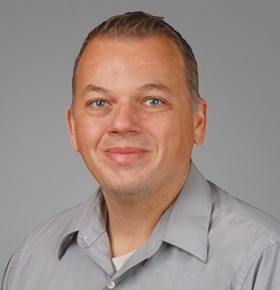
Timothy Weimer
Board-certified family nurse practitioner (FNP-C) at New Jersey Urology, specializing in urology and prostate cancer care in Bordentown, NJ.
4
APPEARANCES
4
PODCASTS
Sep 19, 2026

Heather ValeHOST
And Tim, what role do you play as a family nurse practitioner in early detection, patient education, or referral?

Timothy WeimerGUEST
Yeah, so with my 20 years of experience, I've had a lot of access to patients and guiding them on a regular day-to-day basis where I'm coordinating their care between like specialists, helping patients kind of understand what experiences they are going through, and just kind of being a bridge for them, you know, just helping them really understand the process of what their screening is for, and then what their diagnoses mean, and then everything that gets involved with their treatment regimen and, you know, how to help kind of guide them through this process.
Heather ValeHOST
So, Tim, as we recognize National APP Week, what message do you want people to understand about APPs?
Timothy WeimerGUEST
One is to just have a better understanding of what APPs are, you know, what kind of role we serve for patients and that we're there for them.
Timothy WeimerGUEST
Being diagnosed with prostate cancer is is, you know, a life-changing moment.
Timothy WeimerGUEST
And, you know, being diagnosed with any type of cancer is like one of the hardest things that patients will kind of go through.


Mark BishopHOST
A- and Tim, you know, with that number I mentioned, three hundred and thirty-three thousand odd new prostate cancer cases estimated, uh, in the US, uh, this year, what, what role do you play as a, as a family nurse practitioner in early detection, you know, patient education or referral for advanced cases?
Timothy WeimerGUEST
So, you know, being in urology for about 20 years or so now, it's-- the mo- the most important thing that we can tell people is really to get your screening, uh, completed, get your early detection completed.
Timothy WeimerGUEST
Uh, and simply to start, you know, we, we all know that we should be getting blood tests, you know, once in a while, especially after a certain age, we should get our labs done.
Timothy WeimerGUEST
Uh, and it's important for men that they get the, uh, the PSA level checked, which is the prostate-specific antigen, uh, you know, which helps us to detect for prostate cancer, and not only to get it checked, but also to know the number, right? So normal values are zero to four.
Timothy WeimerGUEST
We wanna make sure you have a number within that range, and also importantly, to make sure that the number's not going up too quickly.
Timothy WeimerGUEST
Now, when it comes from my standpoint, neurology, uh, you know, people will come in, men will come in, and they'll, they'll have an elevated number, and then we have to work that up or get it assessed and determine on, you know, why is that number beyond its limits or why is it going up quickly.
Mark BishopHOST
Well, Tim, you know, uh, we recognize APP Week, uh, this September, so what message would you, uh, want the broader healthcare community to understand about the APP role and the value of mentorship?

Kate DelaneyHOST
What role do you personally play as a family nurse practitioner in early detection, patient education, or even referral for advanced cases?
Timothy WeimerGUEST
Yeah, so right, it's a pretty scary number when you look at it, but, you know, it's so important that, you know, in my role, you know, I've been doing this for about 20 years or so in a urology setting, you know, and the primary thing is really getting patients checked, right? Early detection, making sure they get their blood work done.
Timothy WeimerGUEST
You know, that's through typically through your primary doctor, you're getting a PSA level done, which is your prostate specific antigen.
Timothy WeimerGUEST
And so, you know, when guys start, you know, they should start looking at this number, you know, in their 40s.
Kate DelaneyHOST
Yeah, so speaking of that, Tim, can you walk us through your roles as an advanced practice practitioner, both of you, and what that's like supporting patients? What does it look like day to day?

Kate DelaneyHOST
What role do you personally play as a family nurse practitioner in early detection, patient education, or even referral for advanced cases?
Timothy WeimerGUEST
Yeah, so right, it's a pretty scary number when you look at it, but you know, it's so important that, you know, in my role, you know, I've been doing this for about 20 years or so in a urology setting, you know, and the primary thing is really getting patients checked, right? Early detection, making sure they get their blood work done.
Timothy WeimerGUEST
Uh, you know, that's through typically through your primary doctor, you're getting a PSA level done, which is your prostate Pacific antigen.
Timothy WeimerGUEST
So that's going to help determine if there's an abnormality, uh, you know, if that's a number that comes back as zero to four.
Timothy WeimerGUEST
And so, you know, when guys start, you know, they should start looking at this number, you know, in their 40s, and they want to make sure they know what the number is, so they'll get screened and then get a number, and then depending on what that number is doing, if it's elevated, they should come in and see urology, or if it's going up too quickly, you know, they should come in and see urology.
Timothy WeimerGUEST
And then when they come and see me or one of the providers in the office, once they have this high number or changing number, we want to work them up.
Timothy WeimerGUEST
And that means we can get some, there's a lot of new additional ways to look at this.
Kate DelaneyHOST
So speaking of that, Tim, can you walk us through your roles as an advanced practice practitioner, both of you, and what that's like supporting patients? What does it look like day to day?