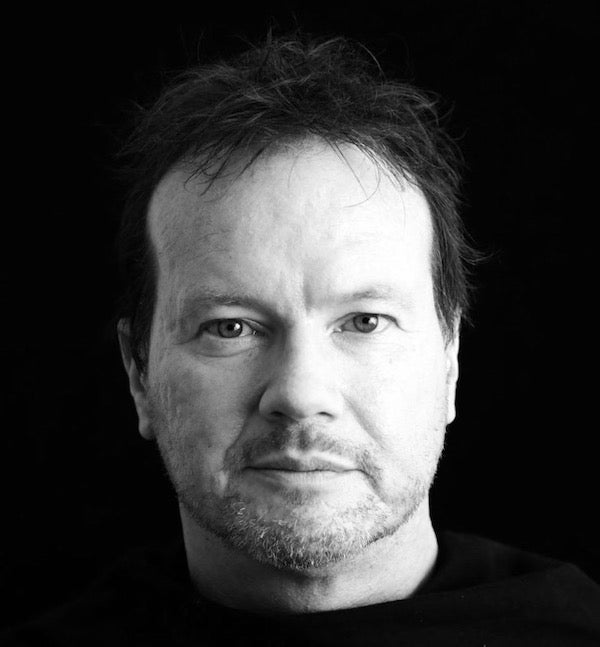
Timothy Morton
Professor
5
APPEARANCES
1
PODCASTS
Oct 22, 2026


Timothy MortonGUEST
That's why you can't have a good definition of it, because it's always arriving.
Timothy MortonGUEST
It's always off the edge, right? You're always waiting a little bit for the meaning to kind of download, right? So it's always kind of haunting the sentence.
22:12
So you can hear it directly from the source itself explaining the concept of hyperobjects.
Timothy MortonGUEST
A hyperobject is a physical thing that is so big, right? So massively distributed in time and so massively distributed in space that's impossible to see it, feel it, think it all at once, right? You can understand it, but you can't access all of it all at once, right? Like, relative to your human being size, it sort of outscales you, yeah? Lots and lots of things could be hyperobjects, and they might not necessarily be malign, right? Like, so the solar system is a, is a hyperobject.
Timothy MortonGUEST
The, the legacy of slavery is a, is a hyperobject, right? Like, in, in physical terms, all the behaviors that human beings do towards each other and other life forms as a consequence of that legacy and all the ways in which that legacy has been physically embedded and embodied in our world is a, is a hyperobject.
Timothy MortonGUEST
So it's hyper in the sense that it's beyond, right? It's beyond my kind of normie idea of what an object could be, right? So when I-- when this word popped in my head, I was thinking about, how do I talk about all the styrofoam in the world ever? What is that? You know, I was trying to think about how human beings deal with pollutants and with huge, massive timescales, such as the hundreds of years it might take for styrofoam to kind of degrade, for example, or nuclear waste.
Timothy MortonGUEST
And so what is that? What is that? When you think about all the styrofoam in all the landfills, right? It's a thing of some kind, so you could say sort of object, but it's beyond my normal idea of an object, which is something manipulable and self-contained and sort of separated from me, right? It's, it's a hyperobject.
21:28
As a heads up, I'm about to just let Tim Morton cook for a minute here because that's what Tim does best.
Timothy MortonGUEST
One of the problems with imperial society is that it has bestowed upon us this idea of master versus slave as the metric for everything, including one's relationship to the divine as some kind of force that we have to make a deal with in order to get by, right? For example, when people like me talk about global warming in terms of an angry God-like being that if we don't propitiate properly, it will destroy us.
Timothy MortonGUEST
If we don't do the right thing or say the right thing or something like that, this bad, nasty thing is going to come and hurt us, right? We like to think of that stuff as kind of in the past.
Timothy MortonGUEST
And that's because of the legacy of Christianity and religions that are related to that, Islam, Judaism, yeah? People are thinking that there's a world beyond master versus slave, right? There's a world beyond subject and object.
Timothy MortonGUEST
There's an idea of personhood that is like less than a subject and a heck of a lot more than an object, yeah? Less to do with mastery and more to do with potentially infinite and infinitesimal kind of sensuality, for want of a better word, a kind of attunement to physical being and to other physical beings, right? This whole idea of the neighbor as opposed to the other, you know, the other is a being that ideology is painted into a sort of a box and there's a very defined idea of the other.
Timothy MortonGUEST
But the neighbor is this intrinsically disturbing, actually existing person who just happens to be in the car next to you at the traffic light, right? And this neighbor is no longer thinkable as an other.
Timothy MortonGUEST
It's a whole different kettle of fish thinking in this way, right? In terms of kind of how do I coexist with my neighbor with like this intrinsically kind of mysteriousness to this neighbor and yet proximity at the same time.
51:27
He actually traces the destruction caused by humans to much, much earlier than the Industrial Revolution.
Timothy MortonGUEST
What the Anthropocene means, it means something really technical, actually, very technical, very straightforward.
Timothy MortonGUEST
It means that there is a layer of human-made materials in the crust of Earth, and it's on the top layer, and it's been there for about twelve thousand years.
53:01
That's just how much we've altered this planet we live on, just in the last eighty years, not to mention the previous ten thousand or all the time since the Industrial Revolution.
29:02
Here's Timothy Morton, a professor of English at Rice University, and most recently the author of Hell: In Search of a Christian Ecology, digging further into the word apocalypse and the great spilling of secrets.
Timothy MortonGUEST
So when we talk about apocalypse, are we really talking about something like a spoiler? The apo part of, of the word apocalypse is, is, is privative, right? It means un or non or sort of off, something like that, right? And the calup- calupto, caluptane is to hide, right? So it's like you're unhiding.
Timothy MortonGUEST
Disclosing might be another way of putting it, right? What's interesting about that is that, of course, there is a kind of initial hiddenness, right? There is something that requires disclosure.
Timothy MortonGUEST
When people say apocalypse, they often mean, well, now the gloves are off and the play is over, and we're gonna see who's Been naughty and who's been nice, right? And someone's got a list, and they're gonna be sorting the sheep from the goats, and we're gonna get to see the reality underneath.
Timothy MortonGUEST
But what if what's being disclosed is the impossibility of that, right? What, what if actually when you think deeply about apocalypse, what you run up against is the possibility that this, what is being disclosed is that you can never rip the appearance off of something to see the workings of the real thing underneath?
25 MINS LATER
Timothy MortonGUEST
Sort of intuitive way that people have started to talk about it as a sort of scary kind of demonic, right? Demonic literally is ano- it's another Greek word, right? It, it has to do with influences that we cannot perceive, right? Like you're being affected by something that you can't point to, which is why in, you know, the old-fashioned days of Stripe, um, I'm old enough to remember the early email software.