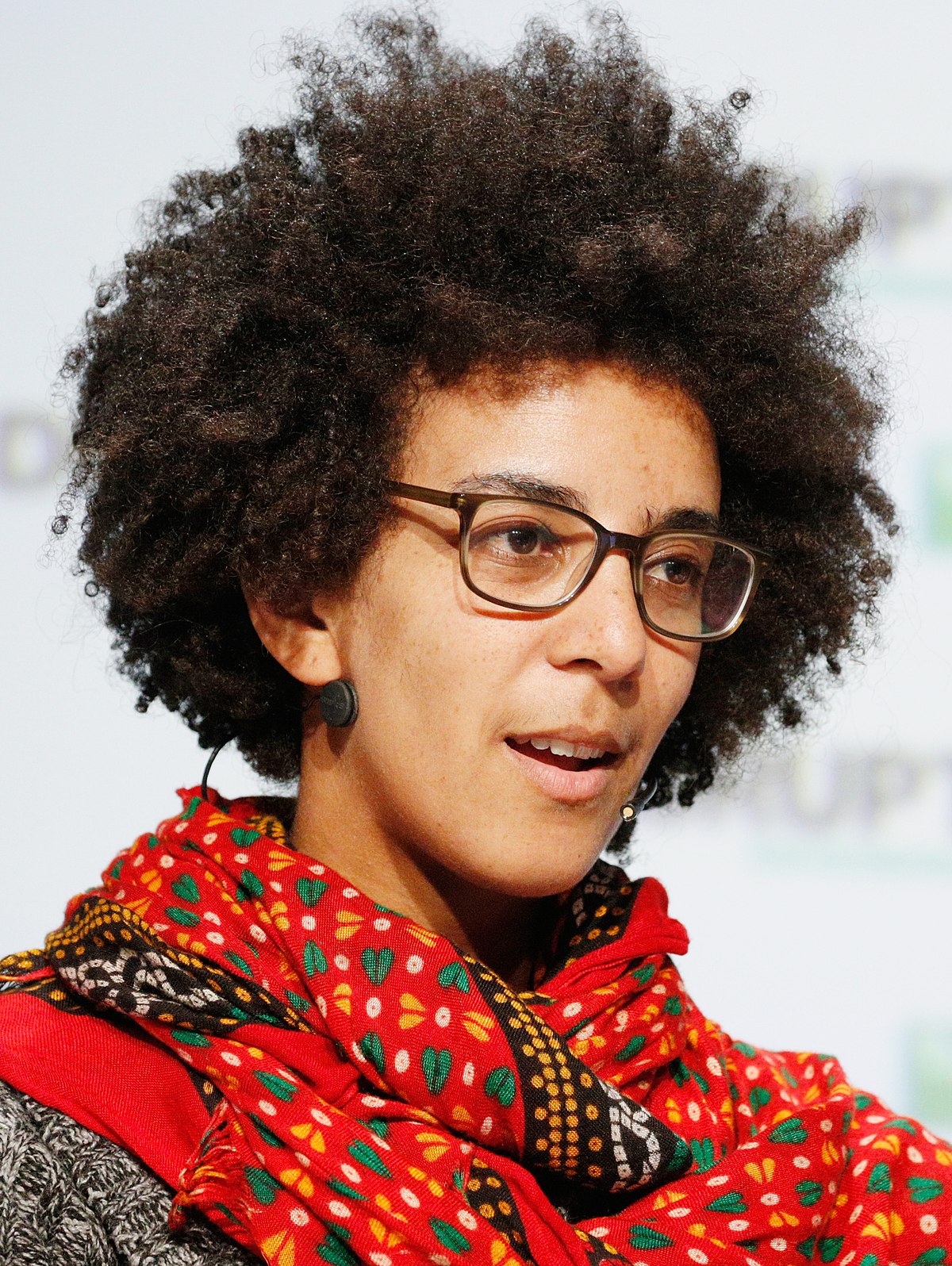
Timnit Gebru
Eritrean computer scientist
16
APPEARANCES
12
PODCASTS
Oct 9, 2026


Timnit GebruGUEST
My concerns, uh, are about people like him actually, who are extremely dangerous, and I have been voicing these concerns for so long.
Timnit GebruGUEST
I was just looking at, um, you know, edits of my book [laughs] and I was, uh, rereading a letter I had written in 2015, um, an open letter I had written when OpenAI was founded, and I said that I'm not concerned about rogue, um, uh, models, uh, destroying humani- or AI destroying humanity.
Timnit GebruGUEST
I'm concerned about the one-dimensional homo- homogeneous group of men pursuing this technology and warning about, [laughs] uh, rogue models.
Timnit GebruGUEST
First of all, um, this, um, existential risk discussion has been happening for a very long time, and there are, uh, a f- the set of people involved in pushing it are the very set of people who also, uh, invest the highest amounts in AI and are the CEOs of these companies.
9 MINS LATER

Myriam FrancoisHOST
So I get why the insiders and the CEOs wanna do it, but why are these guys who were, for all intents and purposes, leaving, and actually sometimes losing out on money to still criticize it, seemingly making the same claims?


Nermeen ShaikhHOST
But okay, so y-you respond to that, and then second, what kinds of policies do you think should be put in place to regulate AI, to control what these companies are doing?
Timnit GebruGUEST
So the first thing I'll say is, you know, the term AI itself is a very misleading term to use.
Timnit GebruGUEST
So, um, uh, when we-- Right now, let's say we're discussing the, specifically the chatbots that these companies are creating, right? Like Claude or ChatGPT.
Timnit GebruGUEST
And so there are many different things happening, uh, where the regulation could be helping.
Timnit GebruGUEST
For instance, um, there are kids who are being goaded into, uh, dying by suicide.
Timnit GebruGUEST
I was just opposed in a po- in a specific, uh, case of Su-Suril Susirh, uh, a, a teenager who committed suicide after interacting with a, um, a chatbot called Character AI, whose whole entire deal was to mimic different characters.
Nermeen ShaikhHOST
Can you talk about what you see as this link between eugenics and artificial intelligence?

Nermeen ShaikhHOST
But okay, so you respond to that, and then second, what kinds of policies do you think should be put in place to regulate AI, to control what these companies are doing?
Timnit GebruGUEST
So the first thing I'll say is, you know, the term AI itself is very misleading term to use.
Timnit GebruGUEST
So, um, uh, when we-- Right now, let's say we're discussing the, specifically the chatbots that these companies are creating, right? Like Claude or ChatGPT.
Timnit GebruGUEST
And so there are many different things happening, uh, where the regulation could be helping.
Timnit GebruGUEST
For instance, um, there are kids who are being goaded into, uh, dying by suicide.
Timnit GebruGUEST
I was just opposed in a po- in a specific, uh, case of Su-Suril Susirth, uh, a, a teenager who committed suicide after interacting with a, um, a chatbot called Character AI, whose whole entire deal was to mimic different characters.

Amy GoodmanHOST
Can you talk about what you see as this link between eugenics and artificial intelligence?

Nermeen ShaikhHOST
And then second, what kinds of policies do you think should be put in place to regulate AI? to control what these companies are doing?
Timnit GebruGUEST
So the first thing I'll say is the term AI itself is a very misleading term to use.
Timnit GebruGUEST
So right now, let's say we're discussing specifically the chatbots that these companies are creating, like Claude or ChatGPT.
Timnit GebruGUEST
And so there are many different things happening where the regulation could be helping.
Timnit GebruGUEST
I was just opposed in a specific case of a teenager who committed suicide after interacting with a chatbot called Character AI, whose whole entire deal was to mimic different characters.
Amy GoodmanHOST
Can you talk about what you see as this link between eugenics and artificial intelligence?
Nermeen ShaikhHOST
But okay, so you respond to that, and then second, what kinds of policies do you think should be put in place to regulate AI, to control what these companies are doing?
Timnit GebruGUEST
So the first thing I'll say is, you know, the term AI itself is very misleading term to use.
Timnit GebruGUEST
So, um, uh, when we-- Right now, let's say we're discussing the, specifically the chatbots that these companies are creating, right? Like Claude or ChatGPT.
Timnit GebruGUEST
And so there are many different things happening, uh, where the regulation could be helping.
Timnit GebruGUEST
For instance, um, there are kids who are being goaded into, uh, dying by suicide.
Timnit GebruGUEST
I was just opposed in a po-- in a specific, uh, case of Su-Suril S-Silsir, uh, a, a teenager who committed suicide after interacting with a, um, a chatbot called Character AI, whose whole entire deal was to mimic different characters.
Amy GoodmanHOST
Can you talk about what you see as this link between eugenics and artificial intelligence?

Timnit GebruGUEST
You know, yeah, so this kind of AI can either bring us utopia, like bring world peace, solve poverty, or stop climate change or apocalypse if the right people don't control it.
Timnit GebruGUEST
And it was seeded by the very people who fund and create these AI companies themselves.
Timnit GebruGUEST
Peter Thiel in 2013 said that AI was a higher existential risk than climate change.
Timnit GebruGUEST
So what's interesting to me is it's the same playbook as the tobacco and fossil fuel companies.

Pamela BrownHOST
Just really quickly, just to follow up with you, do you not see the concern of AI becoming more intelligent than humans and not being aligned with humans and that causing it? Do you not see that as a concern? Why not?


Timnit GebruGUEST
For example, the reason I was telling you all these facts is that these people, the funders, the founders, the investors who stand to benefit and profit the most from these companies IPO-ing are saying this, that they have been the ones seeding this narrative going back multiple decades actually.
Timnit GebruGUEST
If I stand to get lots of money, uh, from a particular company, why do I seem to be the person saying this particular company might build something that kills us all, right? It sounds counterintuitive.
Timnit GebruGUEST
But the first thing is that if you convince the public that you're building something so powerful i- it's beyond even your control, it's beyond something that we've seen before, it's beyond something that we don't have existing regulation for.
20 MINS LATER

speaker_35SOUNDBITE_SPEAKER
It's up to you.
Timnit GebruGUEST
And this is a play on the term deep learning, which is a technique which is currently basically synonymous with AI.
Timnit GebruGUEST
But back in the day, deep learning was not considered AI so much so that the researchers in that specialty were having their academic papers rejected by the prestigious AI conferences.
Timnit GebruGUEST
And so actually, deep learning was sort of a rebranding from another term, artificial neural networks, to avoid that stigma.
Timnit GebruGUEST
So not only do we have this marketing term that is a hodgepodge of disparate techniques or tools.
Amy GoodmanHOST
Timnit Gebru, can you talk about co-founding Black in AI? But start off by talking about why you were fired from Google in 2020, the issues that you were raising there and the position you had there.


Timnit GebruGUEST
Peter Thiel in 2013 said that AI is a higher risk, existential risk than climate change.

Timnit GebruGUEST
Well, the first thing I wanna tell you is that this cycle has been happening for at least 15 years.
Timnit GebruGUEST
In 2013, 2014, Elon Musk said that, um, AI was summoning the demon, and, um, Peter Thiel said that AI was an, a higher existential risk to humanity than climate change.
Timnit GebruGUEST
And he said he didn't understand why so many people were talking about climate change but are not speaking about AI.
Timnit GebruGUEST
And then in 2015, the same institute that's talking about pausing AI right now had a letter asking us to pause AI and saying that it might bring utopia or apocalypse [laughs].
Timnit GebruGUEST
And all of these billionaires signed it while they were investing heavily in AI companies, so they were also the ones investing the most heavily in AI companies like DeepMind and even started OpenAI.
Timnit GebruGUEST
So the first question I, I think all of us should ask is why are the people who are profiting from these-- building these systems and investing heavily on AI constantly telling us every two, three years that it's, it's an existential threat to humanity? And the distraction piece of it, a really good example of this is just a couple of years ago in the US, Sam Altman went to Congress and he was like, "Oh my God, please regulate us.


10 MINS LATER

Timnit GebruGUEST
Yes, and I'm glad that Heidi did some groundwork for us here in the earlier segment.
Timnit GebruGUEST
Um, but, um, yes, for me, um, AI is a discipline with a collection of specialties that are all lumped into this term AI, and they can be very different.
Timnit GebruGUEST
So Heidi mentioned things like large language models, but also computer vision systems that have been around since, since, um, the Vietnam War.
Timnit GebruGUEST
And in fact, every-- the things that are considered AI are not always considered AI.
Timnit GebruGUEST
So for example, the title of my, uh, forthcoming book is Deep Unlearning, and this is a play on the term deep learning, which is a technique which is currently basically synonymous with AI.
Amy GoodmanHOST
Uh, Timnit Gebru, can you talk about f- co-founding Black in AI? Uh, but start off by talking about why you were fired from Google in twenty twenty, the issues that you were raising there and the position you had there.
Timnit GebruGUEST
Yes, and I'm glad that Heidi did some groundwork for us here in the earlier segment.
Timnit GebruGUEST
Um, but, um, yes, for me, um, AI is a discipline with a collection of specialties that are all lumped into this term AI, and they can be very different.
Timnit GebruGUEST
So Heidi mentioned things like large language models, but also computer vision systems that have been around since, since, um, the Vietnam War.
Timnit GebruGUEST
And in fact, every- the things that are considered AI are not always considered AI.
Timnit GebruGUEST
So for example, the title of my, uh, forthcoming book is Deep Unlearning, and this is a play on the term deep learning, which is a technique which is currently basically synonymous with AI.
Nermeen ShaikhHOST
Uh, Timnit Gebru, can you talk about f- co-founding Black in AI? Uh, but start off by talking about why you were fired from Google in 2020, the issues that you were raising there, and the position you had there.
Timnit GebruGUEST
Yes, and I'm glad that Heidi did some groundwork for us here in the earlier segment.
Timnit GebruGUEST
Um, but, um, yes, for me, um, AI is a discipline with a collection of specialties that are all lumped into this term AI, and they can be very different.
Timnit GebruGUEST
So Heidi mentioned things like large language models, but also computer vision systems that have been around since, since, um, the Vietnam War.
Timnit GebruGUEST
And in fact Everyth-- The things that are considered AI are not always considered AI.
Timnit GebruGUEST
So for example, the title of my, um, forthcoming book is Deep Unlearning, and this is a play on the term deep learning, which is a technique which is currently basically synonymous with AI.
Amy GoodmanHOST
Uh, Timnit Gebru, can you talk about f- co-founding Black in AI? Uh, but start off by talking about why you were fired from Google in 2020, the issues that you were raising there, and the position you had there.

Timnit GebruGUEST
Yes, and I'm glad that Heidi did some groundwork for us here in the earlier segment.
Timnit GebruGUEST
Um, but, um, yes, for me, um, AI is a discipline with a collection of specialties that are all lumped into this term AI, and they can be very different.
Timnit GebruGUEST
So Heidi mentioned things like large language models, but also computer vision systems that have been around since, since, um, the Vietnam War.
Timnit GebruGUEST
And in fact, every-- the things that are considered AI are not always considered AI.
Timnit GebruGUEST
So for example, the title of my, uh, forthcoming book is Deep Unlearning, and this is a play on the term deep learning, which is a technique which is currently basically synonymous with AI.
Amy GoodmanHOST
Uh, Timnit Gebru, can you talk about f-co-founding Black in AI? Uh, but start off by talking about why you were fired from Google in twenty twenty, the issues that you were raising there and the position you had there.


Timnit GebruGUEST
But one of the examples I give is actually an example I read in Paris Mark's book called The Road to Nowhere.
Timnit GebruGUEST
And it was an example from researchers at Princeton who suggested that to make it easier for cars to detect, self-driving cars to detect people that each person, each pedestrian wear some kind of sensor that would cost like $2,000.
Timnit GebruGUEST
So, you know, for me, I'm like, okay, we have the most famous universities in the U.S. focused on how to make self-driving cars a reality by any means necessary and how to make the lives of the self-driving cars easier.
Timnit GebruGUEST
It's not about... it's not starting from how to make the person's each of our lives easier.
22 MINS LATER

Stacey AbramsHOST
How do you understand this catch-22 and what is your advice to people who are feeling this anxiety? How should they process it?