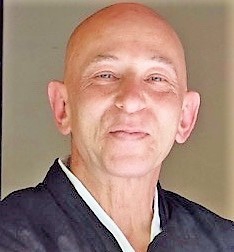
Tim Wicks
Gengyoku Tim Wicks, Zen priest and Tanto (Head of Practice) at San Francisco Zen Center's City Center, host of the Young Urban Zen dharma talks and head sewing teacher of Buddha's robe.
6
APPEARANCES
2
PODCASTS
Nov 25, 2026


Tim WicksGUEST
So as I mentioned before, my name is Tim Wicks, and I'm a priest here at Zen Center.
Tim WicksGUEST
Okay, so tonight I'm going to talk about 15-20 minutes on generosity, gratitude and compassion.
Tim WicksGUEST
However, before I was Tanto, I was trained formally as a fine artist in the European style.

JenniferUNKNOWN
[laughs]
Tim WicksGUEST
So the Satipatthana Sutra was the first sutra that I read when I first came to Buddhism.
Tim WicksGUEST
[sniffs] Um, it opened up a whole new world for me, um, the world that I inhabited, the world of my internal experience, where I, I didn't really know what it was that was going on, [sniffs] uh, inside.
Tim WicksGUEST
I was really just existing in the world like many of us are surviving, [sniffs] tossed around by the need for food and shelter and pleasure, and getting them in the fastest and easiest way I could.
Tim WicksGUEST
My existence conditioned how it is that I acted, how it is that I was in the world.
30 MINS LATER
CharleneUNKNOWN
Um, but what about awe, bringing it to the things that are not so apparently magical? [laughs]
Tim WicksGUEST
Private property became a source of social necessity as it became a part of identity.
Tim WicksGUEST
And this of course has a deep psychological effect on our sense of security and stability.
Tim WicksGUEST
People can even justify taking their own lives if the things they own are suddenly threatened.
Tim WicksGUEST
We're driven to build our whole lives around the ability to accumulate, with the idea that it will make us stable and happy.
speaker_0NARRATOR
The
Tim WicksGUEST
Buddha who was with Ananda, his attendant at the time, as he often was, both of them were standing next to a rice paddy.
Tim WicksGUEST
And if you know a rice paddy is on an incline and there's these little pathways where water flows, and the water flows down and out and gives nutrients to the rice, the rice grows.
Tim WicksGUEST
In fact, he said, Ananda, can you design a robe based on the rice paddy? And so he did.
15 MINS LATER
speaker_0NARRATOR
feeling.