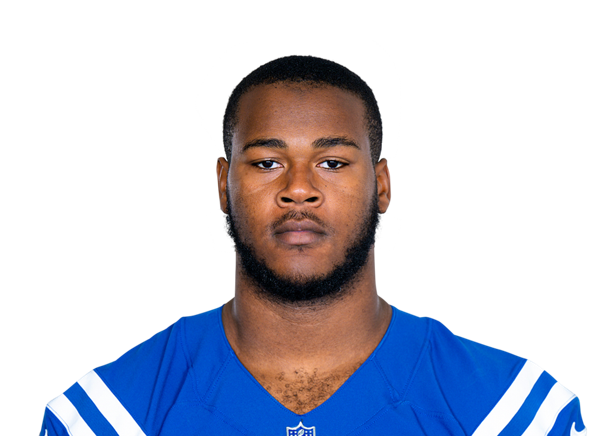
Tim Smith
American American football player
18
APPEARANCES
15
PODCASTS
Sep 3, 2026


Tim SmithGUEST
We moved, you know, every year, every few months, you know, I don't, my assumption is cheaper rents or my step to work construction, maybe the jobs, you know, I don't know.
Tim SmithGUEST
So we moved down to central Florida right about the time I had adolescence and puberty and all of that.
Tim SmithGUEST
And it was an interesting time because like one, you're starting to feel different, but you don't know why.
Tim SmithGUEST
And I remember, dude, I remember being in like eighth grade and like the middle school locker room.


Alex FrostHOST
What, what were you listening to? What was kind of, uh, getting under your skin at that time as a, as a young man?

Tim SmithGUEST
Well, coincidentally, I'd say, I, they'd probably be the first two that I would mention as well.
Tim SmithGUEST
And, um, I think, you know, people around my age that both those two were so important because growing up as a...
Tim SmithGUEST
You know, when I was just a kid really, you know, The Beatles were hitting the charts and, um, we were too young to have really got that first rock 'n' roll wave where I think, you know, people like Presley and Jerry Lee Lewis and that, they were, they were, you know, they kind of broke the mold of what, you know, the bland m- music, you know, popular music that was about at the time, but we were too, uh, young for that.
Tim SmithGUEST
So the p- first band that really hit us, you know, particularly in Britain, was The Beatles, you know, with his melodies, uh, and great s- you know, re- memorable tunes that you could sing along to and remember after the song had finished so that stayed in your head.
Tim SmithGUEST
Um, and it was my first kind of, like, experience of, you know, what we call earworms now, where a song just sticks in there and you find yourself singing it to yourself after it's over.
Tim SmithGUEST
And, um, then of course I went on to do, you know, these strange kind of things that were completely unheard of with the pop, you know, pop group, which was, like, you know, um, them going off the Maharishi and, and finding all this spiritual stuff happening and, you know, obv- obviously drugs and, um, and the, you know, the, the, the, uh, the, the kind of peace stuff that Lennon then did with Yoko and then the lying for, for bed-in for peace.
12 MINS LATER
Alex FrostHOST
Just, just say about what happened, um, to The Adverts for the, in the second album situation.


Tegan TaylorHOST
Can you tell me a bit about this recent court ruling in New South Wales that's allowing people to protect their own properties?
Tim SmithGUEST
I mean, uh, but really, um, so some of the decision really goes against the heart of the, um, the, the Coastal Protection Act.
Tim SmithGUEST
Um, but I think, um, it, it just highlights really that, that our legal system is really struggling to keep pace with these coastal property disputes.
Tim SmithGUEST
Um, so essentially what we did was we, we wanted to see if there are examples in other parts of the world, other sorts of legal, um, jurisdictions, um, and to see whether they were handling them any differently.
9 MINS LATER
Tegan TaylorHOST
Tim, I'm really interested to know what a national approach could look like here.

Tegan TaylorHOST
Can you tell me a bit about this recent court ruling in New South Wales that's allowing people to protect their own properties?
Tim SmithGUEST
I mean, uh, but really, um, so some of the decision really goes against the heart of the, um, the, the Coastal Protection Act.
Tim SmithGUEST
Um, but I think, um, it, it just highlights really that, that our legal system is really struggling to keep pace with these coastal property disputes.
Tim SmithGUEST
Um, so essentially what we did was we, we wanted to see if there are examples in other parts of the world, other sorts of legal, um, jurisdictions, um, and to see whether they were handling them any differently.
9 MINS LATER
Tegan TaylorHOST
Tim, I'm really interested to know what a national approach could look like here.


Marcus HandHOST
Can you explain what this has meant for the tanker markets in the first half of the year?
Tim SmithGUEST
Yes, I think certainly of the sectors we're covering today, it has been the most affected.
Tim SmithGUEST
But yeah, tankers, um, of course, the Strait of Hormuz, the conflict between the US and Iran, um, and the disruption there has effectively cut off a key route for a large amount of global oil trade, both crude oil and products.
Tim SmithGUEST
And as a consequence, and I think at the start of the year when we did this, uh, podcast, we were talking about the US, uh, Venezuela, uh, issue, which was at the time a sizable geopolitical event, uh, seems quite a long time ago in memory now.
Tim SmithGUEST
Um, this is an order of magnitude greater in terms of its impact on both the tanker market, wider oil markets, and, and global economy.
Tim SmithGUEST
And as a consequence of this, which really did start towards the end of February, we s- have seen a massive spike in tanker rates, broadly speaking, primarily impacting segments most exposed to oil movements from the Middle East, um, but also has rippled across the wider tanker market.
Marcus HandHOST
Um, if you look forward, given all those different, uh, factors you just talked about there, what does MSI see as the outlook in the remaining five months of the year?

Paul DonahueHOST
I mean, training and ongoing education, you know, how, how, what sort of an importance do you believe that plays in the long-term success of today's current auto repair shop owners?
Tim SmithGUEST
I've had, I've had sour notes when you go to different trainings and it's in person with your text and people's trying to steal your text and all that stuff, you know, But that's that.
Tim SmithGUEST
But, you know, like, you know, all these people with the programs where they take their tests and they pass ASE.
Tim SmithGUEST
I think my total opinion is they need to go in and diagnose a problem and they get their certificate.
Paul DonahueHOST
So, hey, what do you like? What do you enjoy most? About running an auto repair shop.

TubesHOST
How's preparation going?
Tim SmithGUEST
Um, oh, it's coming together really well again this year, and we're really, um, you know, last year was the first year we got over 5,000 in the race.
Tim SmithGUEST
So we- we're, um, aiming for that as our- our, sort of minimum this year, and we'd really love to see, um, numbers improve again and, um, see if we can get a few more to the pinnacle.
TubesHOST
The reason I ask that, Tim, is because there is time for people to start training now.
Tim SmithGUEST
Um, we open entries now so that there's a good three months, um, 12 sort of weeks to get ready, and, um, plenty of time to put your arm around mates when you're having a chat to them and say, "Come on, join me up the mountain this year." So, um, you know, we, we give everyone a good amount of time to sort of commit to the, the challenge and, um, hopefully bring a lot of mates along and, um, experience it as well.

speaker_1UNKNOWN
essentially? Is that a one-word answer?
15 MINS LATER
speaker_1UNKNOWN
that took the picture with you guys and sent it off to

speaker_0NARRATOR
You know,
9 MINS LATER
Gregory WilliamsHOST
I wanted to find out from you, Tim, what else... happened to you during those middle school years, junior high, high school years that either added to this or maybe eased some of this that was going on in your life?

StevenHOST
why that has become a bit more like intentional in terms of how we approach it, but maybe just talk through what that handoff looks like between the GC and QTS and back and forth.
Tim SmithGUEST
The GC there's not for us right now, there's not really a handoff from the GC to commissioning.
Tim SmithGUEST
The, the, The biggest thing is commissioning really, in my opinion, and I don't, I don't know the, I don't know if this is accurate or not, but commissioning started due to, it's kind of like OSHA, you know, every OSHA regulation was, was written in, in somebody's blood somewhere.
StevenHOST
What are the ingredients where you've seen GCs create a really successful environment for commissioning success? What are some of the other ingredients?


5 MINS LATER


Kathy WhiteHOST
It'd be great to catch up now and just hear a little bit more about what you're doing now as a freelancer and the various different projects that you've got on.
Tim SmithGUEST
I suppose the intention was just to have a bit more time to focus on stuff that I've been wanting to do myself.
Tim SmithGUEST
I've always flip-flopped between being a staff journalist and freelance, and I'm sure that will happen again once I... feel like I need more stability in a full-time job.
Tim SmithGUEST
But in terms of work since then, what it has meant has been going back to some of my roots at the BBC, where I started doing journalism.
Tim SmithGUEST
So I've been back producing news programs for BBC World Service and Radio 4, which has been great.
Tim SmithGUEST
And having more of an AI specialism has been really useful because it's something that has been very much on the global news agenda in a way it wasn't when I first started working there way back in 2014.
9 MINS LATER
Tim SmithGUEST
Tim? Well, and I think also that it's important to know when you read all the reports and all the dispatches that Reynolds is looking at and sends, that they don't know that the Confederate Army might come at them from Emmitsburg.
Tim SmithGUEST
I mean, one thing I always point to, and you mentioned Buford, is that on the morning of June 30th, Buford gets tangled with the Confederate army at Fairfield.
Tim SmithGUEST
And people don't like to talk about this in books on the battle, but definitely Buford stops and talks to Reynolds at Mertz Tavern.
Tim SmithGUEST
And Reynolds, when Doubleday's division comes out of Emmitsburg, places him along Bullfrog Road and kind of puts him in a line of battle looking towards Fairfield.
17 MINS LATER


Hunter ParnellHOST
If you could, tell me who you are, why and how you came to be working in public defense, and then ultimately, why you wanted to be a part of a public defender union, um, to whoever wants to get us started.
Tim SmithGUEST
My wife was in, uh, working on her, uh, her master's, uh, to be a nurse practitioner.
40 MINS LATER

Tim SmithGUEST
Going back 100 years, some religious organizations felt that their faith and values had to be reflected in their investments too.
Tim SmithGUEST
So they, for example, United Methodists wouldn't have invested in tobacco and alcohol.
Amy ScottHOST
After the Episcopal Church filed that shareholder resolution at GM, ICCR members started pressing companies in their portfolios on other social issues, labor rights, discrimination, pollution, and eventually, Tim says, climate change.
Tim SmithGUEST
I think the late 1980s and early 1990s, we started raising questions with companies about climate change.
Tim SmithGUEST
That was a difficult conversation because many companies felt the science wasn't established, it wasn't a sure thing.
Tim SmithGUEST
And, and therefore, talking about taking steps to, uh, address climate change was not something that they felt, uh, comfortable in taking a lead on.

Tim SmithGUEST
I say that because it's a normative experience for people's experience to be in smaller houses of faith, and what we're experiencing is very different, but not wrong.
Tim SmithGUEST
And again, I wanna go back to you is, like, the interesting thing about that statistic is when you begin to look at all the studies by Barna, Pew Study Group, all these people who do all the research on it, is, um, burnout, this is an issue with pastors right now, burnout, people quitting the ministry, is a lot of it is happening...
Tim SmithGUEST
There is a huge correlation in regard to burnout and people quitting ministry in being in small churches.
Tim SmithGUEST
Doesn't mean it doesn't happen in large churches, and when it does, it's very well known.
17 MINS LATER

Tim SmithGUEST
Well, he's like, he says, "Man, how a man views God makes all the difference in the world, and how he practices his faith." Says, you know, how you see God has a, it's, it, it affects how you're gonna work out your faith, and so this is really important in the job that you have.
Tim SmithGUEST
He says there's a lot of metaphors that are out there in regard to a Christian in the, you know, just in the world, and we fixate on two or three of those.
CarlosHOST
Yes.
Tim SmithGUEST
And, uh, I know you guys have read it, but, like, what it, what it does is it sets up, obviously what scholars tell us a lot about Isaiah 14 is, it's, it's the posture of Satan's heart-
36 MINS LATER
CarlosHOST
Pastor Tim, would you please pray for us?
Tim SmithGUEST
Um, Lord, we bless you, and we do, we humble ourselves under your mighty and good and patient hand, and say, God, thank you for grace.
Tim SmithGUEST
God, we pray, just even as we read this word, I pray that this word would read us.