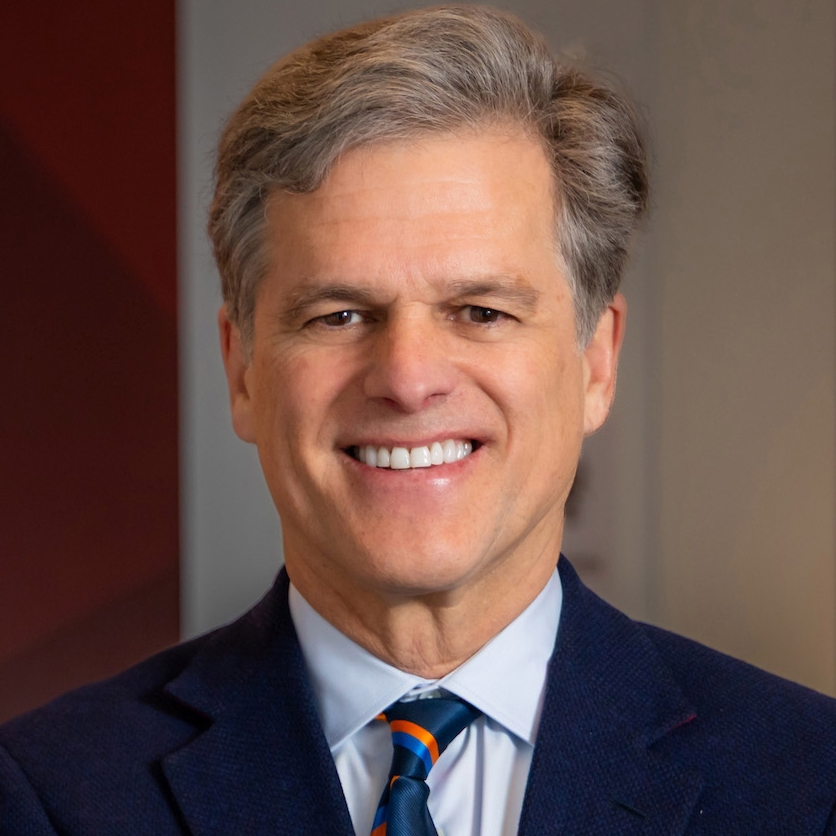
Tim Shriver
Chairman of Special Olympics, founder of UNITE, and co-creator of the Dignity Index; educator, author, and son of Special Olympics founder Eunice Kennedy Shriver.
7
APPEARANCES
5
PODCASTS
Sep 25, 2026


Tim ShriverGUEST
Well, we had a group of folks who were thinking to themselves, you know, look, we see in something like Special Olympics, people like Americans, Lions Club members, local police officers, they're responding with goodness and dignity all the time.
Tim ShriverGUEST
Why can't we encourage other people? Why can't we see ways to treat each other with dignity just because we're Republicans or Democrats, because we have different views maybe on immigration or taxes or education? Isn't there, so, you know, we were sort of puzzling over this question and my colleague, Tom Rosher said, well, what if we scored people? And I was like, well, that'd be interesting.
Tim ShriverGUEST
And the next thing you know, it took us about two or three years, but we built this index.
Tim ShriverGUEST
And all of a sudden people started to look at it and what we thought they were gonna do, Michael, is they were gonna, we thought they were gonna say, oh, look at Trump or look at Biden.


John DearHOST
Did you always want to work with the Special Olympics? Did your parents really encourage you into a life of service for humanity? Just tell me some about those roots.
Tim ShriverGUEST
They were social entrepreneurs before there was a term for social entrepreneurs.
Tim ShriverGUEST
They solved problems in the culture, and rather than cursing them or bemoaning them or shaming someone for having caused them.
19 MINS LATER

Tim ShriverGUEST
Families that can no longer talk together, not because they really differ that much on the issue, but because they've become so inflamed by anger and hostility about the R or the D. It's leading to m- massive distortions in our capacity to solve problems.
Tim ShriverGUEST
Uh, and so they're looking for leaders who will define for them a path forward, not to give up, as Governor Moore said, commitment to their constituencies, but to give up hatred and contempt for the other.
9 MINS LATER

Kristen WelkerHOST
How do you see service fitting into this broader call that you have for restoring dignity in our politics? Is there still the same hunger and space for it?


Tim ShriverGUEST
But it only works if we listen to each other and we try to optimize the ways in which we solve problems.
Tim ShriverGUEST
Look, I think democracy is, uh, synonymous with America, and you have no America without democracy, and you have no democracy without differences of opinion, right? That's part of the solu- differences of opinion are not the problem, Bret, they're the solution to the problems in a democracy.
Tim ShriverGUEST
That's the way it's supposed to work, but it only works if we listen to each other and we try to optimize the ways in which we solve problems.


Loren LoRosaHOST
Like, looking at the people who lead our government in certain administrations or whatever, how do you not censor, but also tell them to treat other people with dignity when a lot of what they're saying and doing is the opposite of treating people with dignity?
Tim ShriverGUEST
So, so you, we might differ on what we should do on climate change, right, you and I.
Tim ShriverGUEST
Uh, but we can discuss it, and you can say, "Well, on this t- this moment we shoulda done this," or, "We should be funding more for schools," or whatever.
Tim ShriverGUEST
W- is it appropriate for the mayor, the governor, the president, the senator to speak this way? W- how do you defend using this much contempt, Mr.
6 MINS LATER

Tim ShriverGUEST
Uh, and I'm, again, I'm not saying this is the absolute, you know, right and wrong.
Tim ShriverGUEST
I'm saying when you start to see, like, the map in your mind, like you were just describing to me this map in your mind when someone comes in and takes the life of your children, your family.
Tim ShriverGUEST
And how you would move from being a, maybe a peaceful or, or a happy person down, down, down into the descent of hatred and venom and retaliation and, and, and that, that's a map.