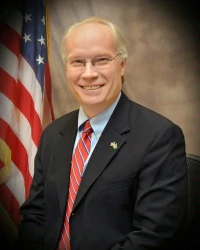
Tim Lenderking
American diplomat
8
APPEARANCES
6
PODCASTS
Oct 14, 2026


Dave DeRocheHOST
How would you characterize the Trump administration, Trump two, because I've, I've argued and I think you might agree that the two administrations are practically different people, uh, Trump two's handling of, uh, the Yemen crisis and, and, uh, their, um, the relationship with the war in Iran?
35:37
You know, I mean, the Trump administration, um, and, and in January last year, I was, um, I shifted from being the special envoy for Yemen to being the acting assistant secretary for the Middle East Bureau, and so Yemen continued to be part of my purview, but obviously, uh, I was focused on the broader region at that time.
35:57
Um, but clearly, uh, you know, and, and, and the Houthis, I think with, with some prodding and convincing from the Saudis, um, remained to be a, uh, you know, a, a pernicious and lethal force.
36:10
And of course, that drove, um, the administration to take up arms against, uh, the Houthis, Operation Rough Rider.
36:18
And, uh, you know, the, the, the two tenets of Operation Rough Rider were, one, to destroy Houthi offensive capability that was used to attack ships in the Red Sea, and number two, to restore freedom of navigation in the Red Sea.
36:33
Um, unfortunately, neither happened I mean, there was an abrupt call by the president in May to end up, uh, you know, Operation Rough Rider.
36:41
It was a surprise to many of us inside the bureaucracy, uh, who were supporting this effort in one way or the other, and it was a surprise to the Saudis, and it was a surprise to, you know, many o-o-of, of the other countries in the region.
9 MINS LATER
Dave DeRocheHOST
Um, talk a little bit about that inter-Gulf dynamic, the rivalry between the Saudis and the Emiratis, and how that affects our situation today.


Timothy LenderkingGUEST
Doesn't mean they do everything the Houthis, the Iranians want them to do.
Timothy LenderkingGUEST
And I think they see an opportunity to put the kind of pressure that the Iranians have on the Strait of Hormuz on the opposite side of the Arabian Peninsula, on the Bab al-Mandeb and the Red Sea.
Timothy LenderkingGUEST
What I've seen about those talks is, which makes sense to me, is that the Houthis used, uh, that opportunity to impress upon the United States that we're not picking a fight with you.
Timothy LenderkingGUEST
We are maintaining the ceasefire that we established with the United States last year to end Operation Rough Rider.
Timothy LenderkingGUEST
Um, I'm, you know, wasn't in the room and I don't know the specifics of that conversation, but I can imagine that the Houthis would put something like that on the table.
Timothy LenderkingGUEST
I personally think it's, uh, wise for the United States to talk to the Houthis.
Timothy LenderkingGUEST
Uh, they are a major actor in this drama, and I think direct contact with them under these particular circumstances, in a limited way, is warranted.


Tim LenderkingGUEST
... and lesser known, of course, as it applies to Yemen, located at the southern end of the Arabian Peninsula there.
Tim LenderkingGUEST
But yeah, so Houthis are a militant group that has been, you know, increasingly gathering territory in Yemen over the last 10 years or more since they took over the capital, Sanaa, in 2014.
Tim LenderkingGUEST
And they've moved since then to consolidate power in, in many parts of the country.
Tim LenderkingGUEST
But there is a government of Yemen also, and that's the internationally recognized and internationally backed government of Yemen.
Tim LenderkingGUEST
There has been a Yemen civil war, but there was a truce that was, uh, set in place in 2022, and that truce has held from 2022 until just about a month ago.
6 MINS LATER
Timothy LenderkingGUEST
Well, that's going to have a very significant impact if, uh, if the Houthis actually follow through.
Timothy LenderkingGUEST
Saudi Arabia, on its western coast in the Red Sea, of course, has major export facility, which they're using more because on the eastern side of the Arabian Peninsula, Straits of Hormuz, is so entangled in war, so they've been able to use the western side more.

Sally SaraHOST
I guess an important question at the moment is, is why now? Is this Iran pulling the trigger, uh, with the Houthis, or have they decided that now is the time?


Amna NawazHOST
And the opportunity to potentially cause harm to Saudi shipments, what about that?
Timothy LenderkingGUEST
Well, I mean, that's an interesting and, and a very unfortunate development because I think there's been sort of a, a detente between Saudi Arabia and the Houthis.
Timothy LenderkingGUEST
Um, Nick, uh, had mentioned the truce that we helped negotiate when I was envoy in April 2022, has largely held and kept fighting restrained inside Yemen for all this period, despite the fact that the Houthis were firing outside of Yemen.
Timothy LenderkingGUEST
But the combatants inside Yemen have been, you know, mostly quiet, right? I mean, not perfect, but certainly a truce, and nobody wants to see that civil war reignite.
Timothy LenderkingGUEST
But this is the kind of incendiary pr- provocative behavior by the Houthis that could really, um, you know, muddy the waters and tilt the scales back toward war inside Yemen as well, because the Yemeni people don't wanna see this.
Timothy LenderkingGUEST
You know, I served there for three years, 2013 to '16, and I, I go back every year multiple times.

Amna NawazHOST
So why are the Houthis making these threats, taking these actions, and why right now?
Timothy LenderkingGUEST
I mean, we've seen that this organization, which the Trump administration put back on the terrorism list has been preparing for a moment like this for a long time.
Timothy LenderkingGUEST
It has a very strong and important relationship with Iran, maybe not a total complete proxy of Iran, but it has developed these capabilities and has shown the willingness to use them.
Timothy LenderkingGUEST
And if we look back at the Gaza conflict and the regularity and the accuracy with which the Houthis struck ships in the Red Sea, another essential global maritime quarter adjacent to the Strait of Hormuz, 12% of global energy supplies, a very important artery for so many economies.
Timothy LenderkingGUEST
But the Houthis striking at ships of all different nationalities, killing a number of mariners, sinking ships.
Timothy LenderkingGUEST
This demonstrated their ability and their willingness to use these tools.