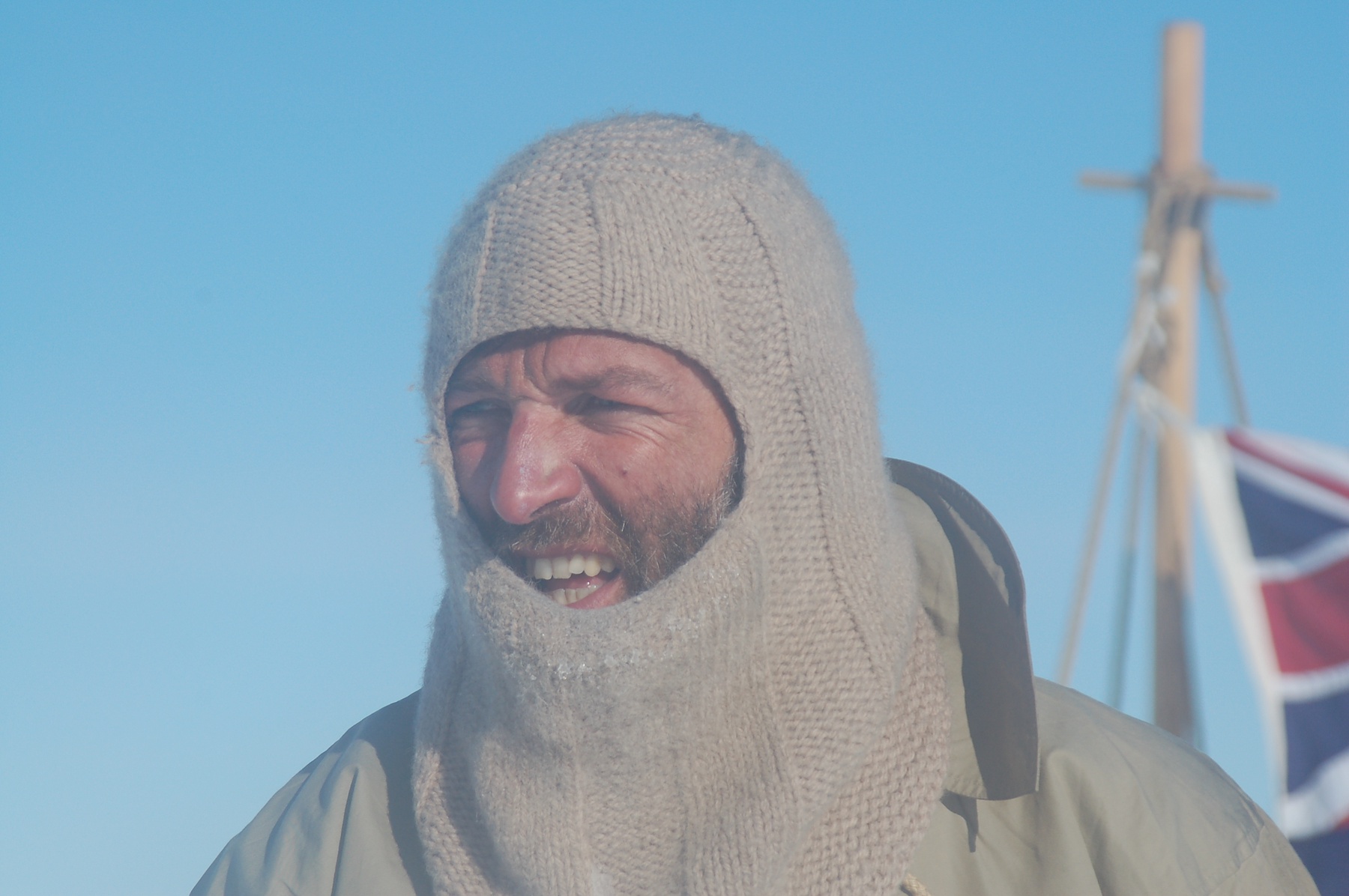
Tim Jarvis
Australian explorer and climber
6
APPEARANCES
4
PODCASTS
Oct 9, 2026


Libby PriceHOST
What's the most important experience you've had that you think helps with your understanding of leadership?

Tim JarvisGUEST
Look, I think probably the number one thing is understanding that really leadership is about getting a group of people to pull in the same direction to achieve an outcome.
Tim JarvisGUEST
And you've got to be aware of the fact that everybody you're trying to get to pull together as one has a different sort of strengths and weaknesses and hopes and aspirations.
Libby PriceHOST
So what is your advice to farmers listening to this who may be feeling a little isolated and thinking, what can I do more with my life?


Tegan TaylorHOST
What has it been like over the last decade or two, seeing the environments that you love changing because of climate change?
Tim JarvisGUEST
Um, I think when I grew up in Malaysia as a child, I remember sitting in the back of the car on trips with my parents and, and you'd be going through often, uh, you know, endless rubber plantations and oil palm plantations.
Tim JarvisGUEST
And I remember thinking at the time as a child, "You know, where's all the nature gone? This doesn't look like nature to me." And that was the first early feelings I had of the extent to which humans have, have, have changed the landscapes.
Tim JarvisGUEST
And so yeah, going back to Antarctica for three decades and seeing glaciers, you know, fundamentally change from the way they used to be.
Tim JarvisGUEST
They really are like the canary in the coal mine, showing us what an issue like climate change looks like, for example.
Tim JarvisGUEST
Um, but I think the key is then using the images of that and the stories you tell and the leadership lessons from the expedition experiences to then try and affect some positive change and instill a sense of urgency in people and turn what is fundamentally a, I guess, a bad news story into something positive in terms of what we can do.
Tegan TaylorHOST
What's your message to everyday Aussies about what they can do to be part of conservation efforts?

Tegan TaylorHOST
What has it been like over the last decade or two, seeing the environments that you love changing because of climate change?
Tim JarvisGUEST
Um, I think when I grew up in Malaysia as a child, I remember sitting in the back of the car on trips with my parents, and, and you'd be going through often, uh, you know, endless rubber plantations and oil palm plantations.
Tim JarvisGUEST
And I remember thinking at the time as a child, "You know, where's all the nature gone? This doesn't look like nature to me." And that was the first early feelings I had of the extent to which humans have, have, have changed the landscapes.
Tim JarvisGUEST
And so yeah, going back to Antarctica for three decades and seeing glaciers, you know, fundamentally change from the way they used to be.
Tim JarvisGUEST
They really are like the canary in the coal mine, showing us what an issue like climate change looks like, for example.
Tim JarvisGUEST
Um, but I think the key is then using the images of that and the stories you tell and the leadership lessons from the expedition experiences to then try and effect some positive change, instill a sense of urgency in people, and turn what is fundamentally a, I guess, a bad news story into something positive in terms of what we can do.
Tegan TaylorHOST
What's your message to everyday Aussies about what they can do to be part of conservation efforts?

Kirstie BedfordHOST
So tell us, uh, what, what, what sort of projects you've got planned for 2026 and, and beyond that.
Tim JarvisGUEST
I worked together with the environment minister here in South Australia to get a Biodiversity Act for South Australia, where I'm speaking to you from.
Tim JarvisGUEST
I'm looking forward to seeing what that will look like when we try and roll out habitat conservation at scale in a place like South Australia.
Tim JarvisGUEST
Um, in 2023 and 2024, I worked with an organization called Pew, um, who, who are a very well-respected advocacy group based out of the US, and we got protection for Australia's three sub-Antarctic islands, um, Heard and McDonald Island and Macquarie.
Kirstie BedfordHOST
So, um, w-what, what are your hopes, uh, for in the future for sort of what travelers will do or h-how they sort of view the world? Um, and what are, what are, what are your hopes for, for to our listeners who are really avid travelers, um, and how the way that we treat the world in the future?
Tim JarvisGUEST
So when it comes to something like a fixed book price, there are examples of that working reasonably well in other countries.
Tim JarvisGUEST
It's a challenging proposition in that And I don't think there's much appetite from the economically minded to regulate prices on any kind of good in Australia.
Tim JarvisGUEST
And it's a challenging one because we're part of the English language book market.
Tim JarvisGUEST
So when it comes to something like a fixed book price, there are examples of that working reasonably well in other countries.
Tim JarvisGUEST
It's a challenging proposition in that And I don't think there's much appetite from the economically minded to regulate prices on any kind of good in Australia.
Tim JarvisGUEST
And it's a challenging one because we're part of the English language book market.