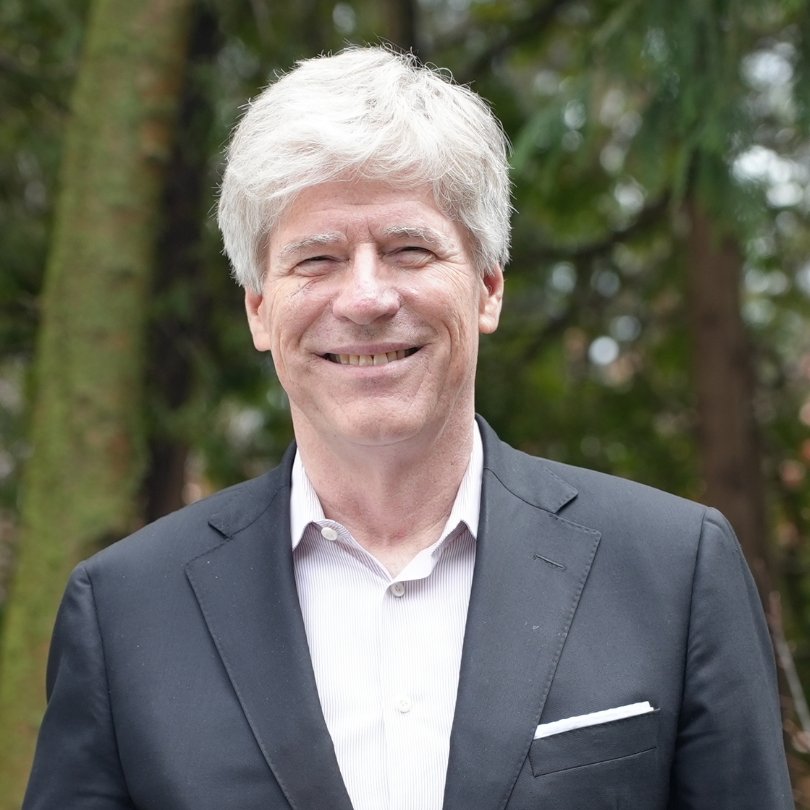
Tim Hodgson
Minister of Energy and Natural Resources of Canada
21
APPEARANCES
11
PODCASTS
Oct 7, 2026


Tim HodgsonGUEST
So, uh, I'm sure many of your listeners have, uh, listened to the Prime Minister talk about what's happening in the world right now.
Tim HodgsonGUEST
We have two superpowers that are, or as he calls them, hegemons, that are battling it out for global supremacy.
Tim HodgsonGUEST
Uh, and as they, uh, look at how they compete, they are increasingly using trade, uh, as a, a mode of competition.
Tim HodgsonGUEST
So for example, the US, uh, is restricting access to certain technologies to China.
7 MINS LATER

Amber MacHOST
What can government do now that it could or would not do before that will actually get some of these projects built faster?


Vassy KapelosHOST
Why should Canadians watching tonight trust that what you envision will actually materialize?
Tim HodgsonGUEST
Well, look, a, a lot, [laughs] I think as Canadians understand, a lot has changed in the last year.
Tim HodgsonGUEST
Uh, we're in the middle of the worst energy crisis, uh, in the history of the modern world as defined by the International Energy Agency.
Tim HodgsonGUEST
That was all, uh, really brought on by a war that had not started a, a year ago.
Vassy KapelosHOST
Like, what if things change again? Are we actually going to get the value you are promising from this asset?
Vassy KapelosHOST
Why should Canadians watching tonight trust that what you envision will actually materialize?
Tim HodgsonGUEST
Yeah, well, look, a lot, I think, as Canadians understand, a lot has changed in the last year.
Tim HodgsonGUEST
We're in the middle of the worst energy crisis in the history of the modern world, as defined by the International Energy Agency.
Tim HodgsonGUEST
That was all uh really brought on by a war that had not started a year ago uh we are in a very different world today we are in a world where the trans mountain expansion uh project was finished just a few years ago uh ramped up to full utilization much faster than than people thought that pipeline is now fully contracted to the maximum extent allowed.
Tim HodgsonGUEST
It's 90% of the utilization of that pipeline is fully contracted for 20 years by international buyers.
Tim HodgsonGUEST
I can tell you earlier this week we had leaders of energy companies in Vancouver for the LNG2 announcement.
Vassy KapelosHOST
Like what if things change again, are we actually going to get the value you are promising from this asset?


Catherine CullenHOST
I just want to be clear, how much public money do you foresee going into this, even if it is made all back, as you seem to be suggesting, in
Tim HodgsonGUEST
Again, typically these sorts of projects get financed 80% with debt, 20% with equity.
Tim HodgsonGUEST
The key though, Catherine, and for your viewers, is this is going to evolve over time.
Tim HodgsonGUEST
We know from all of the conversations we've been having with indigenous people, They really want to be an equity owner in this.
Catherine CullenHOST
How can you argue that building a pipeline will contribute to Canada's climate objectives?


Ryan JespersenHOST
I mean, let's not get too into the weeds, but what, what are the three stages generally speaking?
Tim HodgsonGUEST
Uh, the first is the major projects office will continue the process of consultation with the affected First Nations.
Tim HodgsonGUEST
Uh, the great news is this, uh, pipeline is gonna follow a very similar route to the last Trans Mountain expansion project, so we have a pretty good idea about what the issues and, and legitimate concerns of indigenous people are, and we have a pretty good idea how to, uh, mitigate, accommodate, and avoid those types of issues.
Tim HodgsonGUEST
The second chunk is public hearings that'll be conducted by the Canadian Energy Regulator.
Tim HodgsonGUEST
Uh, those are public hearings where people, uh, get to focus on the technical, the environmental, the social, the cultural, the health, the safety, the security aspects of the project.
9 MINS LATER
Ryan JespersenHOST
'Cause both levels of government were pretty clear within the, the f- last 12 months that they didn't see any public funds going to this pipeline.

Vassy KapelosHOST
After that, is it still going to be split 50-50 with a 10% stake maybe to Indigenous ownership as well as 10% stake optional for Pembina?
Tim HodgsonGUEST
The total price of the project is projected to be between roughly $35 and $40 billion.
Tim HodgsonGUEST
Of the portion that's funded by equity today, it's 10 percent Pembina, but Pembina has the right to increase its stake by another 10 percent up to 20 percent.
Tim HodgsonGUEST
And there is also room reserved in the capital structure for indigenous peoples to take a minimum of 10 percent.
Vassy KapelosHOST
Why should Canadians watching tonight trust that what you envision will actually materialize?
Tim HodgsonGUEST
Um, the economics of the pipeline are very good, uh, David, and we can go into that.
Tim HodgsonGUEST
Um, where, where we are today, uh, is capital allocators, uh, look at the history in Canada of getting major oil pipelines built, and they see a history of delay, and they see a history of building that goes over budget.
Tim HodgsonGUEST
We're creating a new paradigm today, uh, uh, one where we move, uh, the decision on whether a project is in national interest, uh, in the national interest to the front of the process, not at the tail end of the process, uh, where we, uh, work in partnership with indigenous peoples as the project is developed, as opposed to taking it, uh, to them when it's a fait accompli.
Tim HodgsonGUEST
Um, and, uh, what we're seeing is the private sector saying, "We wanna see, uh, we wanna see more proof.
Tim HodgsonGUEST
Uh, we have one private sector proponent, uh, Pembina Pipelines, who will be a ten percent owner.

David CochraneHOST
I get the strategic a-argument in diversifying away from the US market, but, uh, I mean, can you charge the tolls a project like this commands and make it economically viable if it requires a, a, a public backing like this?
Tim HodgsonGUEST
So, uh, you know since the day we've come into office, we have been focused, uh, on raising the competency of the government, and I, I, I really wanna emphasize this point.
Tim HodgsonGUEST
Uh, we, we layered, uh, we layered regulation on top of regulation on top of regulation.

JP TaskerHOST
What do you say to Mr. Lewis, and, and what would stopping any future oil and gas development do for our economy, especially in the current context when we're dealing with the trade war?

Tim HodgsonGUEST
Look, I believe that, uh, Prime Minister Carney and, uh, Minister LeBlanc will do the very best job for Canadians.
Tim HodgsonGUEST
We contr- we can control our own destiny, however, and that's why the prime minister was here in, in Newfoundland and Labrador today.
Tim HodgsonGUEST
partnership-With the premier of Quebec and in partnership with the premier of Newfoundland and Labrador to announce the largest private sector investment in the history of this country, $70 billion.
Karina RomanHOST
Um, do you believe that today's deal is better than the 2024 MOU that was originally reached?
Tim HodgsonGUEST
The Prime Minister's been clear, uh, in the face of the, these challenging times, and in particular, in the face of, uh, a trade war we didn't ask for, but, uh, uh, we have to win.
Tim HodgsonGUEST
Uh, we need to take control of, uh, things, and so we need to build, uh, and we need to control what we can control.

Jas JohalHOST
I- Is the federal government's desire to have significantly more LNG projects, maybe eight or 10 eventually, a, a s- a lot more than what we were able to get past the finish line initially, but is this goal to, to, to, to expand LNG in a significant way here in BC?
Tim HodgsonGUEST
You know, people said to me, "You said when the MoU came out, uh, that, you know, there wouldn't be any public sector involvement." And I've said to them, "Oh, well, let's, let's look at what's happened since November when we signed the MoU." The United States, uh, engineered regime change in another country, is, uh, looking to develop their oil to replace oil coming from Alberta.
Tim HodgsonGUEST
Uh, as, as said by the president of the IEA, our allies are struggling, uh, to find energy, and they're asking us for it.
Tim HodgsonGUEST
And on July 1st, the United States said, "We're done with CUSMA." Fundamentally change [laughs] in a, in a way saying what we've been experiencing, economic war on sectors of our economy, on our steel sector, on our aluminum sector, on our copper sector, on our forest product sector, uh, on our auto sector.
5 MINS LATER
Tim HodgsonGUEST
So, so the agreement says that we will, uh, the federal government will, uh, will fulfill its duty to consult under, under the Building Canada Act, where, uh, we will consult with the affected, uh, First Nations around the potential listing of the, uh, the pipeline.
Tim HodgsonGUEST
As you, you may have seen, uh, about 10 days ago, we listed three other, uh, projects.


Karina RomanHOST
Minister, the MOU with Alberta clearly refers to any pipeline as, quote, "private sector constructed and financed." So if Trans Mountain, which is a Crown corporation, is leading the charge on this, can it really be considered privately financed?
Tim HodgsonGUEST
So, uh, I think what we need to focus on here is, uh, why this project needs to go forward.
Tim HodgsonGUEST
We couldn't have seen that more clearly from the US announcements on July 1st that they don't wanna move forward with Kusuma.
Tim HodgsonGUEST
We need, uh, to build a new economy, an economy that is not dependent on one, uh, ally.
5 MINS LATER
Vassy KapelosHOST
How can you make such specific promises about what this will do for Canada without any of those, you know, numbers to point out to Canadians today?
Tim HodgsonGUEST
Well, Vashi, the, uh, the decision on exactly what is built, uh, which technologies are built, when they're built, is a decision that the provincial governments make.
Tim HodgsonGUEST
As you, uh, as your, uh, listeners may know, uh, the decision and, uh, paying for nuclear power is a responsibility of the provinces.
Tim HodgsonGUEST
What we've said is we wanna help, uh, the provinces get to the right answers, uh, by facilitating, uh, the building of nuclear.
Tim HodgsonGUEST
A great example would be, uh, with respect to Darlington, where, uh, we've used, uh, investment tax credits which make, uh, the nuclear power more affordable.
7 MINS LATER
Vassy KapelosHOST
Alberta has sort of tacitly said, "We're looking at it." But do you have evidence of anywhere outside of Ontario that is firmly planning to go ahead with something like this, or is this a very Ontario-focused announcement?

Vassy KapelosHOST
But, you know, what will ensure that other big projects that are even bigger in scale will go ahead when all this stuff kind of existed before and couldn't incentivize it?
Tim HodgsonGUEST
Ontario has just finished refurbishing eight reactors, both at Darlington and at Bruce.
Tim HodgsonGUEST
Ontario, with our help and some of the things, has decided to move forward with the small modular reactors.
Vassy KapelosHOST
Has anyone outside of Ontario, I know Saskatchewan has expressed some interest, Alberta has sort of tacitly said we're looking at it, but do you have evidence of anywhere outside of Ontario that is firmly planning to go ahead with something like this? Or is this a very Ontario-focused announcement?


Tim HodgsonGUEST
This mine will generate $2 billion of export revenues for Canada that makes us stronger, which makes us more sovereign, which makes us better able to resist the coercion that's going on in the world right now.
Tim HodgsonGUEST
Canada has to make sure that what happens is good for Nunavut and good for Canada.
Sean BoydGUEST
So as we think about the opportunities in front of the North, but also Canada and putting in additional infrastructure to build out the economy of the North, a lot of these mining infrastructure investments will really sort of fit in nicely with new investments that the government's making.
Tim HodgsonGUEST
The Prime Minister has announced over $12 billion worth of projects in the north from Iqaluit over to Inuvik.
Tim HodgsonGUEST
We've now got agreement on how we get to net zero with Alberta using a market price of a hundred and thirty dollars a tonne.
Tim HodgsonGUEST
That allows private capital to flow into projects that will drive down emissions, and that's a huge win.
Tim HodgsonGUEST
The first of those would be the Pathways Project, which would take the equivalent of almost five million cars a year off the road in carbon reductions.
Tim HodgsonGUEST
But it also, uh, uh-Fixes and, and, and creates clarity for an additional 70 projects that are underway based on a, uh, predictable carbon price going forward, and that's another $60 billion worth of investment in, uh, reduction in emiss- in emissions.
Tim HodgsonGUEST
What Premier Eby and, and I talked about yesterday was British Columbia wants to make sure, um, uh, the projects that are important to British Columbia are getting the same focus as, as Alberta is getting.
Jas JohalHOST
The market wasn't responding, and by lowering these number and perhaps dragging it out further to 2040, this is a much more realistic number that can, can drive some of that private sector investment you want to see.
Tim HodgsonGUEST
We've now got agreement on how we get to net zero with Alberta using a market price of a hundred and thirty dollars a ton.
Tim HodgsonGUEST
That allows private capital to flow into projects that will drive down emissions, and that's a huge win.
Tim HodgsonGUEST
The first of those would be the Pathways Project, which would take the equivalent of almost five million cars a year off the road in carbon reductions.
Tim HodgsonGUEST
But it also, uh, fixes and, and, and creates clarity for an additional seventy projects that are underway based on a, uh, predictable carbon price going forward, and that's another sixty billion dollars worth of investment in, uh, reduction in emiss- in emissions.
Tim HodgsonGUEST
What Premier Eby and, and I talked about yesterday was British Columbia wants to make sure, um, uh, the projects that are important to British Columbia are getting the same focus as, as Alberta is getting.
Jas JohalHOST
The market wasn't responding, and by lowering these number and perhaps dragging it out further to twenty forty, this is a much more realistic number that can, can drive some of that private sector investment you wanna see.


Tim HodgsonGUEST
So, um, you know, what I'd, I'd say is we have been building pipes, and we just approved the Taylor to Gordondale pipeline, uh, from northeastern BC, uh, into Alberta.
Tim HodgsonGUEST
Right now we rely on other countries for our diluent to, uh, make sure we can move our oil.
Tim HodgsonGUEST
Um, that pipeline is gonna, uh, significantly reduce our use of foreign, uh, diluent.
11 MINS LATER
Tim HodgsonGUEST
Uh, so we have a, uh, we have a, uh, a trading partner who has, uh, decided to reorder how, uh, the economic world works.
Tim HodgsonGUEST
Uh, they are, uh, essentially saying we have to pay them to send goods to their markets.
Tim HodgsonGUEST
Uh, there is no more stark example of this hinge moment and the economic rupture than what is happening to British Columbia's forest product sector.
Tim HodgsonGUEST
Uh, we all watched, uh, how President Zelensky was lectured about how he had no cards, and he had to submit to the will of another country.

Tim HodgsonGUEST
Uh, so we have a, uh, we have a, uh, a trading partner who has, uh, decided to reorder how, uh, the economic world works.
Tim HodgsonGUEST
Uh, they are, uh, essentially saying we have to pay them to send goods to their markets.
Tim HodgsonGUEST
Uh, there is no more stark example of this hinge moment and the economic rupture than what is happening to British Columbia's forest product sector.
Tim HodgsonGUEST
Uh, uh, we all watched, uh, how President Zelensky was lectured about how he had no cards and he had to submit to the will of another country.