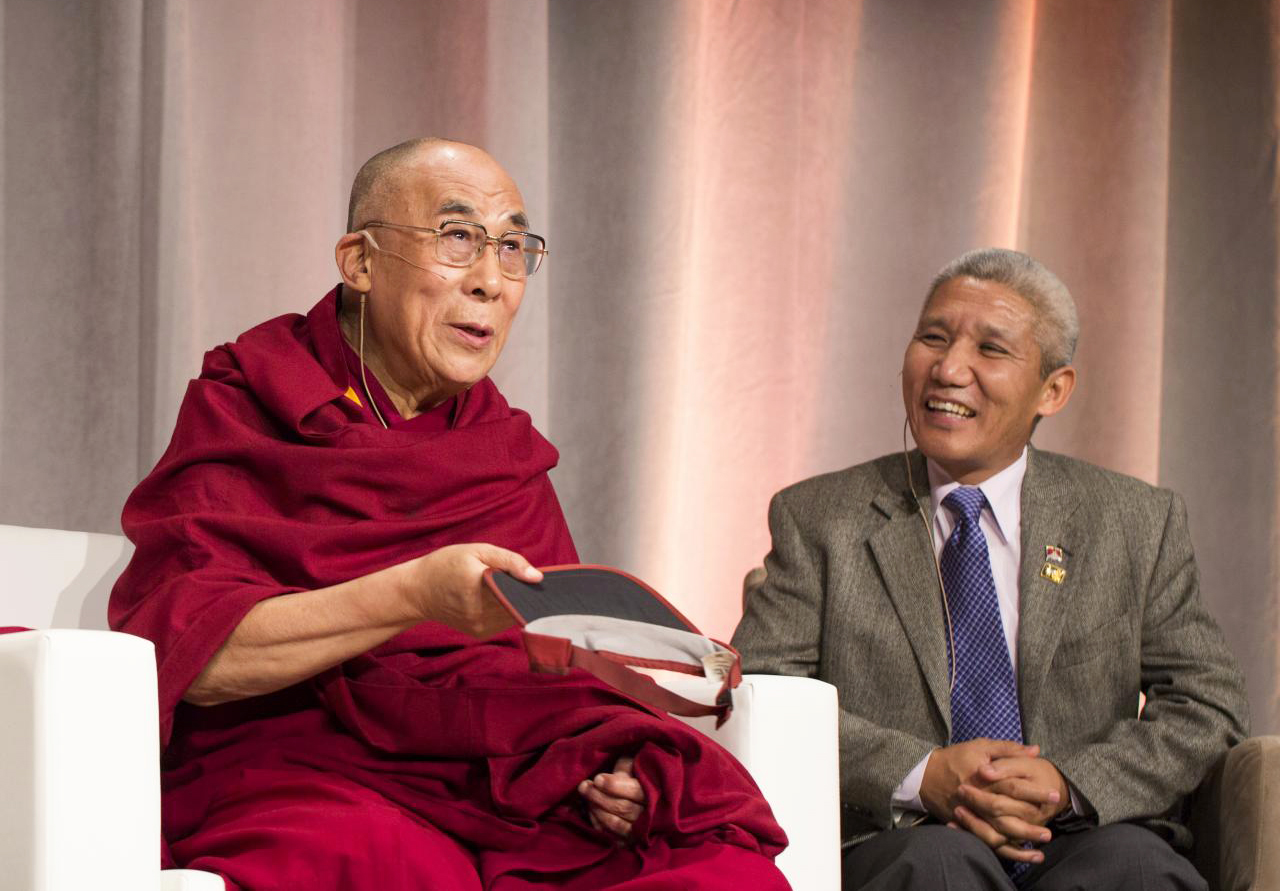
Thupten Jinpa
Former monk
3
APPEARANCES
2
PODCASTS
Sep 18, 2026

Thupten JinpaGUEST
So if we turn our attention inwards and look for our self, and in fact even though in response to particularly to threat, you know, challenging experience, our sense of self becomes even more palpable and striking.
Thupten JinpaGUEST
But if you look at each of the sensory modalities, the information that we are receiving, none of them actually have a kind of a, a label saying, "I'm experiencing this." You know, I'm experiencing this is something that we attach on at the level of interpretation.
Thupten JinpaGUEST
You know, one of the key message that I would like to share with many who take Buddhism seriously, not just as a kind of a philosophy, but also as a guideline for living, one of the very fundamental insights in Buddhism or the Buddha's teaching is the role our mind plays in defining our experience in the world.
40 MINS LATER
Daniel AitkenHOST
And so I was wondering what your thought on is he making-- is Vasubandhu making metaphysical statements saying that the external world doesn't exist alongside this psychological explanations about how we experience the world?

Thupten JinpaGUEST
of his work? By the time I began to serve His Holiness, of course, I was in my late 20s, had been exposed to the culture, lived within the culture, chosen to be a monk, studied many of the Buddhist texts.
Thupten JinpaGUEST
So I knew quite a lot about the concept of compassion and the Tibetan meditation practices to cultivate them.
Thupten JinpaGUEST
But what was very unique about my experience experience of working for His Holiness was that His Holiness had by then developed a very universal secular language around compassion which you don't see in the Buddhist context texts or in the tradition and he has come to really connect his understanding of compassion with a more evolutionary kind of scientific understanding of human existence and how kind of social nature, as humans, as social creatures, has really informed his reframing of compassion as a very natural human quality.
Thupten JinpaGUEST
And by then, he had also started to engage deeply with scientists, and he's looking for kind of vocabulary and framework and structures from science because his belief is that whatever science does and whatever science kind of brings, the language is going to be universal.
18 MINS LATER

Gabe SchnickelHOST
What does that framework look like and is that part of the mission of Compassion Institute?

Thupten JinpaGUEST
Uh, in a sense, what he's trying to do is he's trying to be To, uh, uh, you know, bringing into a much more, um, sort of, you know, uh, detailed Nagarjuna's point where he says that, uh, without relying on the conventional, ultimate cannot be accessed.
Thupten JinpaGUEST
So, so the, the attainment of nirvana or liberation is contingent upon, you know, gaining insight into the ultimate truth, but gaining insight into ultimate truth requires relying on the conventional truth.
7 MINS LATER
Daniel AitkenHOST
Yeah, they didn't negate enough, right? And so can you tell us about, um, that side of the coin?