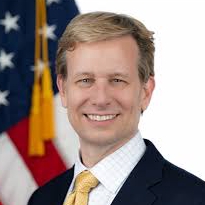
Thomas Keane
Dr. Thomas Keane, MD, MBA — Assistant Secretary for Technology Policy and ninth National Coordinator for Health IT at HHS.
5
APPEARANCES
4
PODCASTS
Nov 2, 2026


Michael KeeganHOST
How do those seemingly separate worlds of engineering, clinical medicine, and federal policy come together to shape how you think about the mission of the Office of National Coordinator for Health IT?

Thomas KeaneGUEST
You know, network digital computing really started out Sometime in the early to mid 90s, and it's transformed every aspect of the world from banking to travel to the way that kids relate to each other and socialize.
Thomas KeaneGUEST
The one area where it's promised really hasn't been realized is in health care.
Thomas KeaneGUEST
And the fact that I'm both a technologist and a clinician and a federal policymaker has given me insight into what needs to happen in order to allow the promise of network digital computing to transform healthcare for the benefit of patients, for the benefit of providers, and for the benefit of the system overall.
Thomas KeaneGUEST
As a clinician, I understand that tech has to support the provider and the patient.
10 MINS LATER


Julie YooHOST
Can you actually just educate the audience on what is ONC, what was the origin story of this department, and what is the mandate for what you do?
Thomas KeaneGUEST
So when I took the office, it was actually called the Assistant Secretary for Technology Policy slash National Coordinator for Health IT, which technically gave me the longest title in all of government.
Thomas KeaneGUEST
We did a reorganization, and so now I'm the National Coordinator for Health IT.
Thomas KeaneGUEST
So ONC's job is to oversee information technology and health information exchange.
Thomas KeaneGUEST
And the organization was started by executive order under President Bush in 2004 with the vision of getting all hospitals to use electronic health records within 10 years.
6 MINS LATER

Michael KeeganHOST
How do those seemingly separate worlds of engineering, clinical medicine, and and federal policy come together to shape how you think about the mission of the Office of National Coordinator for Health IT?
Thomas KeaneGUEST
Network digital computing really started Sometime in the early to mid 90s, and it's transformed every aspect of the world from banking to travel to the way that kids relate to each other and socialize.
Thomas KeaneGUEST
The one area where it's promised really hasn't been realized is in health care.
Thomas KeaneGUEST
And the fact that I'm both a technologist and a clinician and a federal policymaker has given me insight into what needs to happen in order to allow the promise of network digital computing to transform healthcare for the benefit of patients, for the benefit of providers, and for the benefit of the system overall.
Thomas KeaneGUEST
As a clinician, I understand that tech has to support the provider and the patient.
10 MINS LATER
Michael KeeganHOST
Uh, how do those seemingly separate worlds of engineering, clinical medicine, and federal policy come together to shape how you think about the mission of the Office of National Coordinator for Health IT?
Thomas KeaneGUEST
You know, uh, network digital computing really started, um, sometime in the early to mid-'90s, and it's transformed every aspect of the world from banking to travel, um, to the way that kids relate to each other and socialize.
Thomas KeaneGUEST
And the fact that I'm, uh, both a technologist and a clinician and a federal policymaker has given me insight into what needs to happen in order to allow the promise of network digital computing to transform healthcare for the benefit of patients, for the benefit of providers, and for the benefit of the system overall.
Thomas KeaneGUEST
As a clinician, I understand that tech has to support the provider and the patient.
10 MINS LATER

Thomas KeaneGUEST
So CMS, under the vision of Secretary Kennedy, Dr. Oz, and Amy Gleason, who are running the CMS Health Tech Ecosystem Initiative, the vision is to use the government's convening power and collaboration power to advance technology and advance technology solutions quickly where there has to be an intersection between the tech solution and the government.
Thomas KeaneGUEST
Who wants to join? Who wants to pledge? Who wants to meet certain pledge requirements? And who wants to collaborate with us to advance the health tech ecosystem? And the pledges included doing work on technical background stuff, like putting together a provider directory or putting together patient matching algorithms and patient facing more public facing.
Thomas KeaneGUEST
And as we saw at the rollout of the minimum viable products yesterday, there have been some absolutely extraordinary advancements just in the nine or 10 months that this has been going on.
19 MINS LATER

Tony SchuethHOST
But building on that, do you see AI as a key enabler for making complex healthcare data usable? Could we get to a point where AI tools translate raw data into personalized, understandable insights for patients and clinicians, including clinical summaries, as well as the price estimates we're talking about?