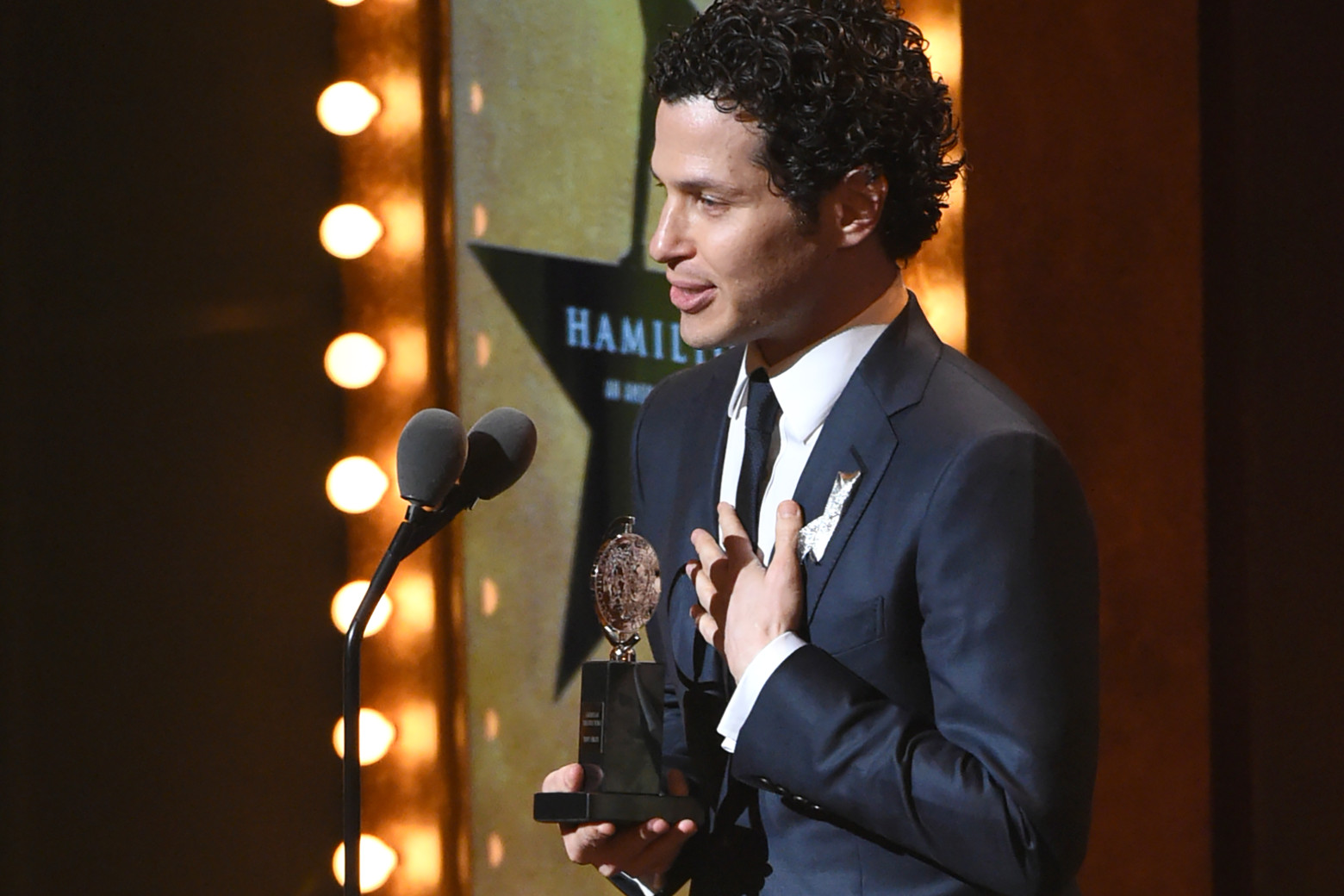
Thomas Kail
American theatre director and television producer
9
APPEARANCES
9
PODCASTS
Jul 23, 2026

ShoshanaHOST
Why is it so important to be telling this story right now with this company?

Thomas KailGUEST
I think we're living in a time where people that don't agree aren't talking to each other.
Thomas KailGUEST
This is a play about people in a family that don't always agree, but they're desperately trying to communicate.
ShoshanaHOST
And to have some folks who are so known for their screen work making their Broadway debuts in such a powerful show, what has it been like working together?
Thomas KailGUEST
it's been a joy I mean these are folks that have been doing theater in other places they just haven't done it on these particular blocks in New York City so their chops are real and to see them you know fit in as seamlessly as they have with Jin and Kara and it just it's a wonderful company and it's been a real it's been a real pleasure watching them work


Thomas KailGUEST
Well, you know, by having flesh and blood, by having two people look at each other eye to eye, soul to soul, there's an emotionality that we knew we could access that we were really excited about.
Thomas KailGUEST
And also, by having Catherine in the m- in the middle of water, it feels different.
Thomas KailGUEST
And I think that that makes all the payoffs for the, the sort of epicness of the story payoff.
Thomas KailGUEST
And, and then of course, you know, you wanna be able to release the tension with the comedy, right? Like, so-


Thomas KailGUEST
... to put something in a different order, to have different language, new jokes, new moments throughout.
Thomas KailGUEST
And also, a- again, because I come from the theater where revivals are pretty common, and your, your hope, even if you make a play that doesn't, you know, transfer to something, that someone else does it somewhere, right? Like, it, it's going to be interpreted.
Thomas KailGUEST
We're just, "How can we honor the culture? How can we celebrate the Polynesian people? How can we take this story and, by putting it and, you know, and standing it up on its feet with flesh and blood, what's gonna, what's gonna come from that?" And so it breathes differently.
6 MINS LATER


Alicia VitarelliCORRESPONDENT
And now you're working with his score, this Disney magic, and actually making your feature film debut.
Thomas KailGUEST
You know, the chance to be back with Lin, Lin and I met in 2002, and I was 25 and he was 22, and we just started making stuff in a basement.
Thomas KailGUEST
So when we were sitting in the village of Montanui, right next to each other with his kid running next to the dolly track.
Thomas KailGUEST
It feels like you're carving it into something that will be around for a long while.


Thomas KailGUEST
And there was something about this opportunity to make something that was lasting and could endure with this story, with human beings, that really made me sit up straight.
Thomas KailGUEST
I, I just, I, I was very interested in that idea and the, the notion that we could, you know, have this kind of transposition.
Thomas KailGUEST
A-again, because I work in the theater, the, the idea of doing a revival where text is the same or, or similar, but the interpretation of it is what allows it to be new and fresh.
5 MINS LATER

Justin HillHOST
So I would love to know, with Moana, the live action film, what did you learn and what did you feel that you taught to all of these wonderful people who have worked on the film?

Thomas KailGUEST
Starting the movie that way gives you an opportunity to then go to the m- fantastical places and know that you're grounded.
Thomas KailGUEST
Now, it was 111, so let's call it, I don't know, is that 30, 48, 57 degrees Celsius?
Thomas KailGUEST
But we weren't ever afraid to, uh, you know, have a different scene, to try this a- approach slightly differently, to have things, you know, that, that, that felt like they were ours.

Jason FraleyHOST
Did you have sort of a creative household? Did you put on plays in the living room for the parents? How was it at a young age?
Thomas KailGUEST
I'm in the middle of two sisters, which is one of the most defining things about me.
Thomas KailGUEST
And two, I grew up in a family where I was playing sports mostly and was obsessed with you know, like listening to like the skins games or, you know, and I wanted to be a sports broadcaster and, you know, John Miller.
13 MINS LATER


Alison StewartHOST
Thomas, what did you wanna honor about the original play? And what was something that you wanted to change about it for a modern audience?
Thomas KailGUEST
You know, uh, one of the things that I, uh, adore about the theater is that by doing a work that has existed, you stand shoulder to shoulder and in line with all of the productions that have already existed, and then all that, that will come after you.
Thomas KailGUEST
And so there's, there's something about being a link in a chain that I found very moving.
Thomas KailGUEST
Um, before that it was in the late '70s, and then there was one in the, the '50s.
26 MINS LATER