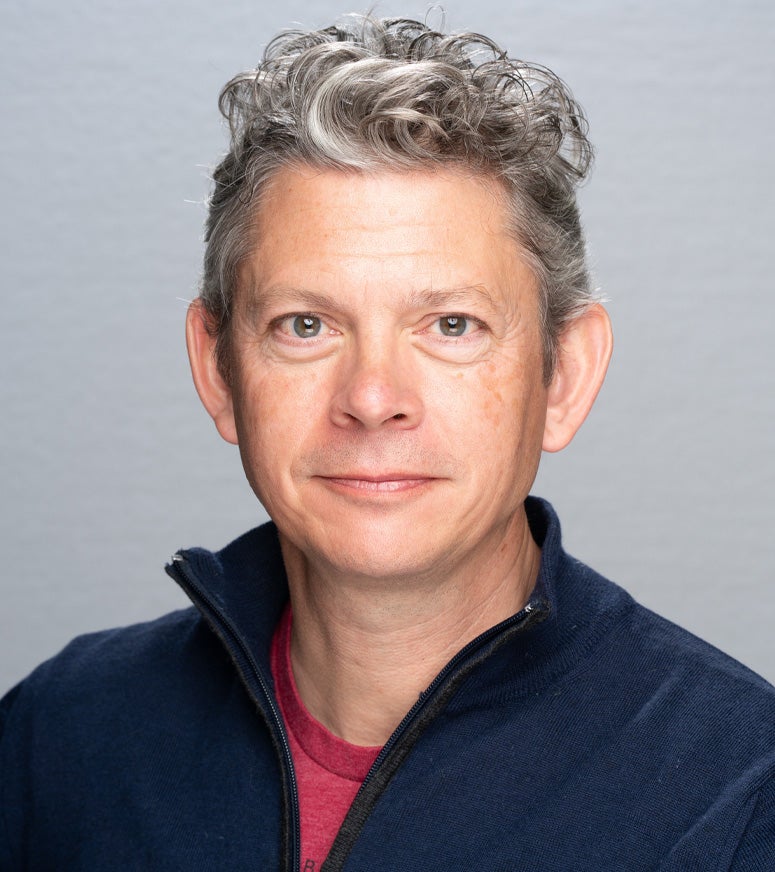
Thomas Goetz
Writer
6
APPEARANCES
5
PODCASTS
Nov 6, 2026

15 MINS LATER

Emily DreyfussHOST
Who are the people who say that? What is their evidence? And what tweaks are they talking


Claudia WilliamsHOST
I'm wondering what new insights or what new layers of understanding around that frame you've developed in doing this deep dive on all these drugs? Is that framework still very robust in your head and it proves out? Do you have a different set of understandings about both why we have not built health and how we might build health? What do you think? What have you learned?
Thomas GoetzGUEST
Yeah, so it is absolutely still kind of the informing conceit of the show, and it is still what I'm trying to communicate.
Thomas GoetzGUEST
So the idea of social determinants of health and commercial determinants of health is very wonky and very academic.
Thomas GoetzGUEST
And the way academia traditionally approaches these problems, it's very hostile and oppositional to commercial forces and often many social forces or the kind of the drivers of policy and whatnot, which is kind of the way that public health has traditionally found its leverage to manifest change is to identify problems, confront them, work the levers of power and community building, what have you, to try to change something.
Thomas GoetzGUEST
And What I realize is that, oh, maybe the key is to actually help more people understand these systems and structures in a way that is not actually academic, but just to understand how people living, the people who are actually in those societies and those commercial environments are just living their lives.
Claudia WilliamsHOST
Can you say a little bit more about that episode and that portion of it where you're talking about the green revolution and industrial ag and all of that stuff?

Mike PescaHOST
And given the costs and constraints of taxpayer-funded messaging, is it possible that the profit motive didn't just sell Lipitor, but put cholesterol awareness into the culture more effectively than the government ever would have?

Thomas GoetzGUEST
So, so there is a profit motive in, uh, pharmaceuticals, right? That's, that's part of the, that's part of the kind of bargain that society has made.
Thomas GoetzGUEST
They get a 20-year patent to own the drug, be the sole manufacturer and distributor of a drug, and they...
Thomas GoetzGUEST
They get to charge what- whatever they, the- whatever the market will bear for that drug.
14 MINS LATER

Mike PescaHOST
So I just wanted to get at that idea, that did you want to demonstrate early on that it was through no one's fault that maybe we were doing things that were not helpful to the public health?
Thomas GoetzGUEST
Yeah, I think part of the... one of the concepts that I, that I've always kind of, uh, enjoyed kind of exploring is this idea of, of groping our way towards the truth.
Thomas GoetzGUEST
And with, with EpiPens, you know, well-intentioned people, well-intentioned bodies of medicine, in this case, the American Academy of Pediatrics, um, they thought that the best guidance to give parents was to have them avoid peanuts.
Thomas GoetzGUEST
Uh, have their kids, their newborns or their young children, avoid peanuts until they were, like, two or three.
Thomas GoetzGUEST
But it turned out eventually, it took 15, 20 years to discover this or to prove it, but it turned out that that was exactly the wrong advice.
Thomas GoetzGUEST
What, what is better is to expose your kids, expose them as early as you can, like six months, to peanuts and other potential food allergies or allergens.
Thomas GoetzGUEST
Um, now, the, the, the intention was what falls, what's being described as the precautionary principle, which is like, do no harm, right? Better safe than sorry.


David EaglemanHOST
And speaking of pain medications like opiates, where are we now with that? Now that opiates are considered persona non grata, what's the future of pain control?
Thomas GoetzGUEST
One of the things about opiates that was that was again kind of an unintended consequence was that it it they were really widely prescribed when pain experts started to recognize that and argue that pain should be acknowledged should be a was worthy of treatment because pain was really not considered and doctors were not treating patients for their pain.
Thomas GoetzGUEST
So there was a program around the late 90s, early 2000s called Pain as the Fifth Vital Sign, where they instructed doctors, they were recommended doctors, ask people, just like they took their blood pressure or their breathing rate, they said, okay, a fifth vital sign would be ask your patients whether they're experiencing pain.


Michael EsquivelHOST
So how have these experiences brought you to where you are today and your current focus on accountability?
Thomas GoetzGUEST
What I was really invested with as a journalist was trying to help people make sense of complicated things, help them understand things that matter to them in their lives, but may not actually be cognizant of or may not kind of have the wherewithal to grok.
Thomas GoetzGUEST
And so that was a fantastic journalistic project, and Wired was really good at that.
Thomas GoetzGUEST
But then I was really interested, Hallie, you know, I dipped my toe into public health and came out with an idea for a book, but really was thinking about, okay, how can data... and better information drive better decision-making for individuals.
Thomas GoetzGUEST
And I was really, and this is a kind of paradigm, the paradigm of digital health writ large, and this was 2010 when my first book, The Decision Tree, came out, and that quickly led to starting Iodine.
11 MINS LATER