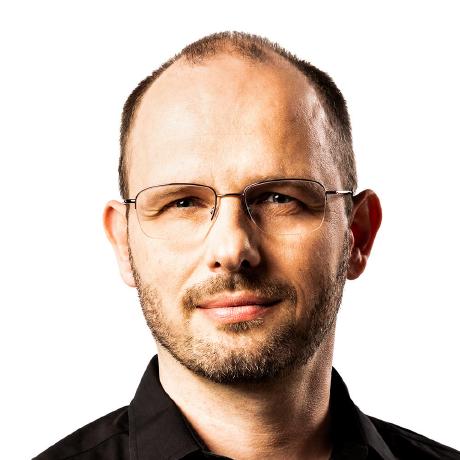
Thomas Dohmke
German software developer and former CEO of GitHub Inc.
13
APPEARANCES
13
PODCASTS
Nov 17, 2026


Thomas DohmkeGUEST
Yeah, I mean, we have set out on a mission to reinvent the software life cycle in this era of AI.
Thomas DohmkeGUEST
And today, in the middle of 2026, most developers use a coding agent To generate code out of a prompt and in this life cycle, you may still read through the code that the agent is generating, you know, during its reasoning process and when it runs tools and you may as a developer have enough knowledge to see.
Thomas DohmkeGUEST
Oh, this, you know, while everything is streaming through this looks suspicious, but more or less we went from.
Thomas DohmkeGUEST
in the 1990s and early 2000s of writing all the code ourselves to using and embedding lots of open source libraries to a process where the idea in my head, the task that I have, or maybe the bug fix I'm attacking is really just a convert this into how can I prompt it in human language, in English or in German, and then have the agent do the coding work.

Cameron AdamsHOST
Are you also viewing this as a moment where who codes or who gets involved with code is totally changing as well? It's not just software developers.

Frederic LadinoisMODERATOR
Thomas, how close are you to implementing a software factory at Entire?
Thomas DohmkeGUEST
I mean, building on what Martana has said, I think the fundamental issue is you can today run agents 24-7, and they can open hundreds, if not thousands, of pull requests, both on your internal repos and your own open source repos, or even more so on other open source repos.
Thomas DohmkeGUEST
And what happens is that those people all will go crazy about it because you're just increasing the load that somebody has to review a 10 or 100 fold.
Thomas DohmkeGUEST
You could say, in a way, you're investing into open source by running tokens, agents, harnesses against an open source project, except the maintainer doesn't necessarily want that, let alone has that as part of their roadmap.
Thomas DohmkeGUEST
And now you're forcing them to either spend human capital or token capital to review all this.
12 MINS LATER
Frederic LadinoisMODERATOR
What do you tell them?


Andrew ZiglerHOST
So Thomas, what do you think about the things that we should be storing and keeping as artifacts over time? And what in our system right now is so insufficient that's causing this runaway escaping problem of being able to keep up with even security threats? What do you see?
Thomas DohmkeGUEST
You both already mentioned shift left, which, Idan, I didn't invent, but certainly we practice it more and more.
Thomas DohmkeGUEST
I think the term also comes from analysts, and it's all about that you detect the security vulnerabilities before they reach your production system and lead to data leakage, or you have to do a press conference and explain how you lost millions or sometimes hundreds of millions of customer records.
Thomas DohmkeGUEST
If you want to go further left, then you have to sit in my brain because now I'm using my hands and my mouth, my voice, my language to feed all the ideas in my agent.
11 MINS LATER
Andrew ZiglerHOST
So where do you think about teaching and like getting the team to think in this loop like way on top of all of this data?

BenHOST
Let's jump into Antaia.
Thomas DohmkeGUEST
What is it about? The way I would frame our vision is that we want to reinvent how developer platforms work in this world where it's no longer human to human collaboration, but it's human to agent and often also agent to agent collaboration.
Thomas DohmkeGUEST
If you look at, you know, developer platforms of the past, obviously GitHub comes to mind, given I was the CEO of GitHub.
Thomas DohmkeGUEST
Before that, we had SourceForge and in between there was some things like CodePlex and others.
Thomas DohmkeGUEST
And they were all designed around the primitive of files and folders in a repository.
Thomas DohmkeGUEST
And if you go to a GitHub repo today, especially the popular ones, the first, you know, two thirds of the page is a file tree.
Thomas DohmkeGUEST
It's kind of like a modern interpretation of the macOS Finder or the Windows Explorer.
31 MINS LATER
BenHOST
Okay, yeah.

Nick LucchesiHOST
So from a developer who's based in the US, from that point of view, I was wondering if you could offer sort of your opinion on what you think is missing in the North American scene that satiates sort of this hunger for, uh, WeAreDevelopers?
Thomas DohmkeGUEST
I think it's exactly how Sayad said, which is this, um, there isn't that many events, uh, in North America that are vendor neutral and topic neutral.
Thomas DohmkeGUEST
Uh, there's a great number of AI events these days, and some of them are very targeted at, you know, engineers and others are targeted at researchers.
Thomas DohmkeGUEST
But there isn't, like, this breadth of, you know, topics, um, and the, I would call it the developer first ethos, uh, that WeAreDevelopers has both in the name and in the way that the org- uh, the conference is run.
Thomas DohmkeGUEST
And, and obviously that means, you know, as a speaker you're addressing a much broader audience, which I think is, is way more fun 'cause you have to really think about, um, you know, what, what are the stories that you're t- are telling on stage.
6 MINS LATER
Nick LucchesiHOST
What do you think a platform built from scratch for that world of humans running dozens, hundreds of agents, what does that world look like?


Alex HeathHOST
I'm curious, where do you fall on that debate? Where do you see the timelines for a world where pretty much all code in production was at least generated in part or fully by AI?
Thomas DohmkeGUEST
The first thing that always comes to my mind when we have this conversation is that we need to acknowledge that 90% of our stack today is already written by somebody else, AKA millions of open source developers around the world.
Thomas DohmkeGUEST
You know, if you look at the Verge webpage, uh, and the backend and all that, I'm sure it's 90% open source.
Thomas DohmkeGUEST
Like, the, if you count the lines of code, 90% of those are from open source libraries, um, open source operating system, programming languages, dependencies, all that.
Thomas DohmkeGUEST
And, and even, you know, the same for our friends at Microsoft, right? So we're already in a world where focusing on the thin layer on top, uh, that defines what makes our business, while we're pulling in the work of, you know, m- millions of developers from around the world to accelerate and to innovate, uh, and what have you, to secure, you know, uh, the ecosystem.
22 MINS LATER


Thomas DohmkeGUEST
Um, Microsoft's Visual Studio family, so VS, the IDE, and VS Code together has 50 million active users.
Thomas DohmkeGUEST
So you can also see how much room there is still for Copilot to grow its, its market share.
Thomas DohmkeGUEST
Um, and a year ago, we passed $2 billion in AAR, annual, uh, revenue runner-up.
Thomas DohmkeGUEST
And I think all these metrics show that both the business itself, uh, is healthy and, and keeps growing, um, the network effects that GitHub as a platform has.
Thomas DohmkeGUEST
And the most obvious thing, obvious, is that, uh, you know, Microsoft developers are using GitHub and are using Copilot.

Thomas DohmkeGUEST
Really? Early days, it was, to my memory, it was engineered as a platform as a service provider and then AWS behind the scenes.
Thomas DohmkeGUEST
It's easy to forget in today's world where lots of startups announce huge funding rounds.
1 HR 12 MINS LATER

Gergely OroszHOST
So what is your view on agents, and what advice would you give to software engineers who want to stay software engineers, but obviously want to up-level? How should we look at this thing? Because it feels like a friggin' big change.


Karen TsoHOST
Does this change now in the next wave of technology? Do you think we see more very large companies from Europe in technology? Is that a natural state of affairs?
Thomas DohmkeGUEST
That's certainly my dream as being German and being half European and half American, that we're going to see more technology companies here in Europe, in India, in Brazil, anywhere else in the world.
Thomas DohmkeGUEST
A kid today should be able to become the founder of the next Microsoft or the next Google or the next Meta.
Thomas DohmkeGUEST
And I think agents and co-pilot will enable that because it democratizes access to technology.
Thomas DohmkeGUEST
All you need today to build a startup is a laptop, a prompt, and an internet connection to build a quick prototype and to implement the ideas that you have in your head into reality.
Karen TsoHOST
What's it going to take to see your company realize the ambitions that you want to achieve and for others around you?
Thomas DohmkeGUEST
The obvious challenges here in Europe are the ones that I'm sure others have mentioned too, is the regulatory environment is complicated.


Lukas BiewaldHOST
I myself wonder how you even possibly really measure that, but do you have any sense on like what, like what the speed up is or like, like, I guess, what are you even like kind of shooting for with this, with these projects?
Thomas DohmkeGUEST
We are ultimately shooting for making every software engineering team, starting with ourselves, able to deal with the ever-growing number of lines of code and the complexity that comes with that.
Thomas DohmkeGUEST
The problem is when you compare productivity gains between without co-pilot and with co-pilot, the challenge you have is you're never working on the same thing twice.
Thomas DohmkeGUEST
You can do case studies and that's where the 55% came from where we gave 50 developers a task to do without co-pilot and 50 with co-pilot and the team with co-pilot and everybody did the same thing, right? And the team with co-pilot was 55% faster.
18 MINS LATER

Thomas DohmkeGUEST
away in the sense that nothing actually ever goes away, but will fade more into the background is this notion that everything has a highly branded web page.
Thomas DohmkeGUEST
And today when I book this trip, I go, you know, to a web page to book my plane ticket or train ticket and book a hotel on a different web page and I book a rental car or driver.
Thomas DohmkeGUEST
And so three times I've entered the same from to date and have accommodated for when I arrive and when I leave and looked at my calendar 15 times.
Thomas DohmkeGUEST
Why can I just not just go into my agent and say, hey, I'm going to Paris? You know, this is the, and you describe in natural language what you would actually describe to the human travel agent.

Azeem AzharHOST
So talk us through the steps from this human-oriented web funded by human eyeballs to an agentic web, which is about this intelligence, autonomous infrastructure that my agent or agents can interact with to build my experience.

speaker_6MODERATOR
Mm-hmm.
Thomas DohmkeGUEST
I felt, um, I was born too late, uh, to be part of the home computer revolution. Uh, but then obviously now where we are today, it's clear that there was another run with mobile, another run with cloud, and now we are in run with AI. And so, I think, you know, maybe if Microsoft buys a German company today, they would just say, "You can work from home." As, you know, hybrid work or remote-only work, uh, is much more prevalent than it was, um, uh, 10 years ago in 2014. That said though, you know, if I look, uh, at my hometown in Germany, I can come up with three things, um, that, uh, definitely lacking. Uh, and the first one is, um, school and schooling, um, which it's ridiculous to me that we don't teach kids in first grade how to code. Like, we, uh, we lo- we teach kids physics, biology and chemistry that you almost never use in life anymore, but we don't teach them how to build software for their smartphones and for their computers that we all use day in, day out, right? Like, think about that for a second. We are like, we... Th- these are the most important devices in our lives, you know, because you can barely meet anyone that doesn't have their phone in their hands, uh, anymore, whether it's in the subway, whether it's on a plane, whether it's at work. So, I'd say schooling needs to dramatically change. And, you know, it's easy to blame the system and think about, "Oh, the politics have to change." Something, I think it starts with us as parents to really encourage the schools to think ahead and, and, and think outside the box of what, you know, frontal, uh, uh, lessons are, and used to be when, when, when we went to school. The second one is startup and the startup ecosystem. It's so hard to found a company in, in, in Germany, in Austria, in many European countries. The GmbH has to go away, that's just a fact that y- you see a lot of German startups that, uh, the first thing they do is they go on Stripe Atlas and click in the Delaware LLC because that's much easier to collect angel investments, right? We have s- so much, like, regulations in, in Europe, GDPR, you know, DSA, DMA, you name it, um, that, that startups need to follow instead of building, building cool shit, right? Like, that's, I think the biggest issue we have where, um, where we need to build a new ecosystem that startups... Because we know from the innovator's dilemma that disruption is coming from startups. The big incumbents cannot create disruption. There's exceptions, of course, um, and, and, you know, hopefully GitHub and Microsoft are seen as one, but the re- the regular mode is that startups are the, the, the companies, the founders are the ones that are pushing society forward. And then lastly, you know, infrastructure, you know, my hometown on their webpage they're saying 95% of all households have broadband internet. But what they mean is 50 Mbit.
speaker_6MODERATOR
Mm-hmm. And do you see... Uh, so, you know, like, we, we live through this, um, really fast-paced, really, really fast-paced, uh, environment with, with AI. Um, do you see it now leveling the play f- playing field, uh, internationally? And again, with, with a bit of a perspective on, on Europe, what... How, how does that change, you know, the game for a small company, a startup from, from Germany, for instance?
Thomas DohmkeGUEST
I think it changes the game from two sides, and one is actually on my shirt. It says, you know, "CoPilot speaks my language," because you can use CoPilot, ChatGPT, almost all these AI, um, chatbots, uh, in, in the language you grew up with. Um, here in Austria and, and Germany it's German, right? Most six-year-old, seven-year-old, uh, first, second graders, uh, they speak mostly German or Croatian, um, or Ital- Italian, Spanish, uh, uh, while the open source, uh, uh, in the software industry are mostly English, uh, speaking. And so if you want to learn coding because you have already played Super Mario or Minecraft, uh, y- you don't want to learn English first. What you want to do is build a little game, uh, because that's what humans want to do. They want to create something. And so they can now approach this by just asking, you know, uh, in German, "How do I create, you know, a snake game or a Pong game?" Or, "How do I build a Minecraft extension?" And they don't need parents at home that have a technical background, right? Like, if you don't have anyone at home without, without AI, uh, that can help you with when you're stuck. And that's the, uh, most important moments when you learn something is when you're stuck, how do you unstick yourself so you're not frustrated and just throw it away and, and go back, uh, scrolling through TikToks. Um, that's the moment where AI is really helpful and that's where I believe there's a huge democratization, uh, going to happen. It's already happening, uh, I- in countries like, like India or, or Brazil. The second piece is, you know, the Europe has slept through the cloud transformation. Like, most European countries are way behind on the cloud transformation. Uh, it's, um, if you look in, uh, you know, t- the Draghi report that came out, uh, a couple of weeks ago, uh, of the top f- 50 tech companies only four are European. Uh, and I'm sure most of you cannot actually name those four. I can only name one, SAP. Um, and o- in the last 50 years, um, uh, uh, there has been not a single European company that has been founded that has reached, uh, more than 100 billion in market capitalization while the $6 trillion companies in the US all have been founded in the last 50 years, right? That's where the opportunity with AI is we get a fresh start. We don't, we don't need to, you know, catch up on the cloud as much as we need to be, be all in on AI, and it starts all with you, right? Like, we can always blame it on the politics and on the system and on our bosses. It starts with all us, of us embracing this new technology. I'm, I'm assuming that's why you're here today, you know, and hopefully tomorrow you're using some AI in your life or figuring out how AI works and, and how you can leverage AI in your career, your startup or, or your team.


Elad GilHOST
What are other big areas you want GitHub to evolve over the coming few quarters? Are there other big thrusts, or is it all in on AI, and that should be the focus of the company?
Thomas DohmkeGUEST
Oh, so far we only talked about, you know, the generic SPI agent where you can assign an issue and it generates the pull request.
Thomas DohmkeGUEST
But if you actually look in the developer life, the day-to-day, you know, in most companies, that's maybe two or three hours of your day that you're actually writing code and then you're spending an equal amount of time of reviewing code of your coworkers.
Thomas DohmkeGUEST
And while we don't believe that goes away from a pure security and trust perspective, you always want to have, you know, another human in the loop before you merge code into production.
Thomas DohmkeGUEST
At the same time, we believe code review agents and code review is a big topic where AI can help you, especially when you work with a distributed team in different time zones where you don't want to wait for the folks on the West Coast to wake up to get an initial loop of feedback.
Thomas DohmkeGUEST
And again, the AI part is one piece to that, but the user interface is equally important.
30 MINS LATER

Sarah GuoHOST
Does that concern like resonate with you at all? Like, can you foster the requisite depth of understanding of engineering at an abstract level when we're not writing the code or is it like a silly, silly concern?