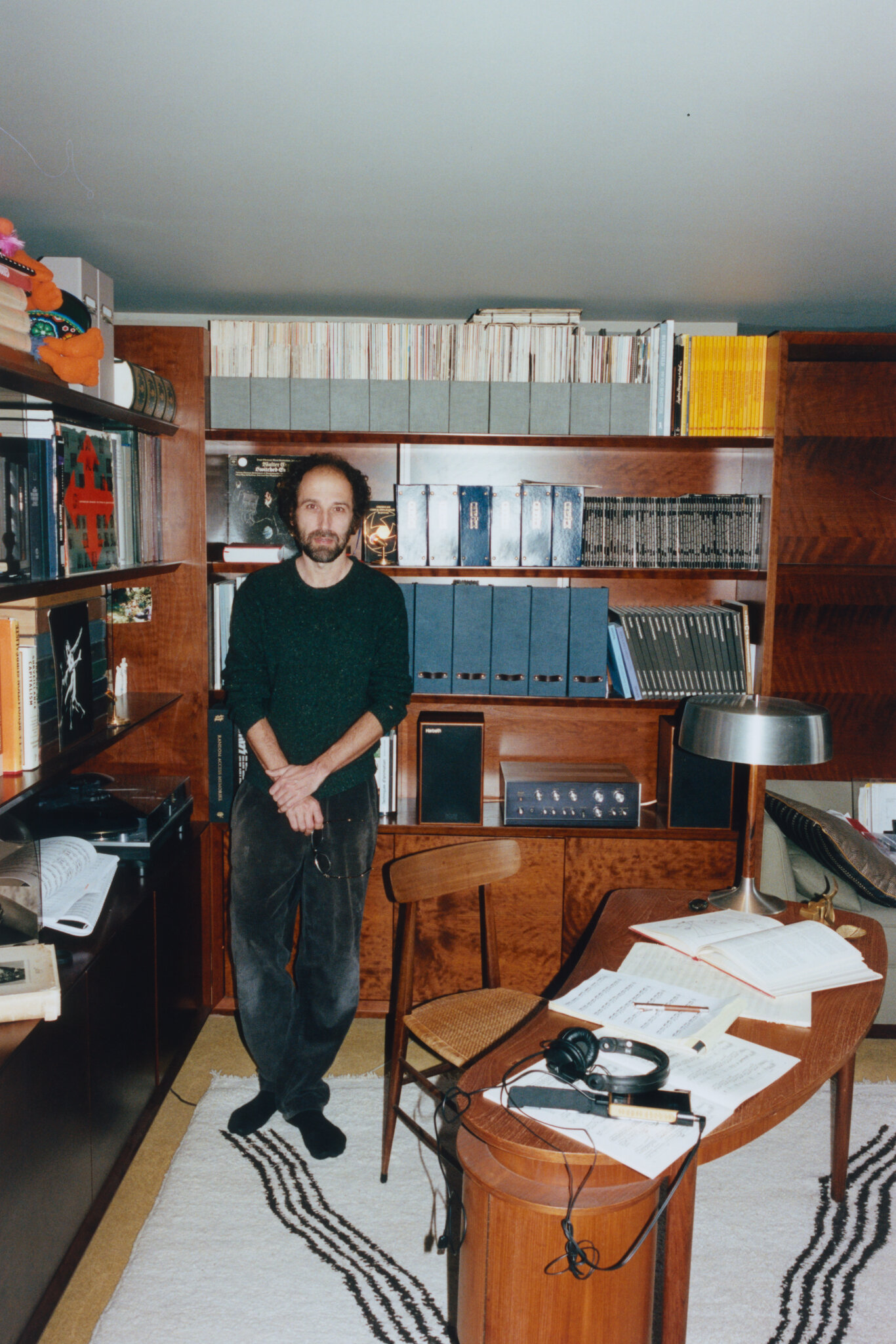
Thomas Bangalter
French musician and record producer
4
APPEARANCES
3
PODCASTS
Jul 28, 2026

Yana PeelHOST
How did the advent of Spotify and the streamers perhaps evolve the way you thought? Or again, were you just not thinking about the distribution or the audience, you were just making magnificent music that was widely celebrated?

Thomas BangalterGUEST
The interesting thing is that a- as much as not thinking about the audience, any creative act I feel is the response to the environment around you at a certain time.
Thomas BangalterGUEST
So if you're asking me to go back in my mindset in twenty ten or the years leading up to Random Access Memories, I feel that there was, uh, both a desire to think that, okay, we are at the time where the technology is allowing a lot of, of, of things musically that you can create in very easy way, and that there was this opportunity to pay a certain respect to a certain craftsmanship that was really fading, both generationally because, uh, there was a lot of people that, that were very good at, at creating a lot of these records that we loved, and they were aging, and there was this desire to interact with this older generation.
Thomas BangalterGUEST
And then there was really this idea of, uh, m- almost creating a f- a film without camera for, for an album as well.
Thomas BangalterGUEST
Random Access Memories, there are a hundred and fifty people that worked on the record and, and somehow it really felt we were directing this album almost as a director with, with, with...
Thomas BangalterGUEST
Which was very different from the process of the first Daft Punk three albums that happened very intimately in my, uh, child's, uh, uh, bedroom, where we were just, uh, working in a very reclusive way.
Thomas BangalterGUEST
And here it's the totally op- opposite, being in Paris and Hollywood and with orchestra.
10 MINS LATER
Yana PeelHOST
So I'd love to ask you where that passion from dance came from and also explore both Mythologies and Mirage.


Thomas BangalterGUEST
And, and so after that, I remember I was literally for two years, uh, I, I had, like, one piano with, like, a- A, a GoPro that I like mounted on my piano.
Thomas BangalterGUEST
I didn't open, like, any, any machines, and I, and I just, like, uh, didn't want to write and just, like, press, uh, a, a record and, and, and because I, I tend to have hard time deciphering it.
Thomas BangalterGUEST
Uh, I mean, it's actually a good, uh, advice for people to, if you play and improvise and stuff, and to be able to, I find, a, a, as a almost like a voice note, you know?
12 MINS LATER
Thomas BangalterGUEST
But so that's the first thing, and then the second thing I, I, I really realized, uh, you know, this was maybe one of the last resort to, um, hack the system in some way, this algorithmic system, when for Mythology, you know, when Mythology was released, uh, uh, on streaming platforms, I started to see, uh, you know, when you, you're listening to the song, and then after it says, "Oh, you've li- you, you, you just listened to that song.


Samira AhmedHOST
Can you tell me a little, Thomas, about how you conceived and composed the music?
Thomas BangalterGUEST
After Daft Punk, I was, uh, interested into not, um, really going back in, uh, electronic music through the process of programming, uh, sounds and program music in a step-by-step way.
Thomas BangalterGUEST
And so I started to really, um, work with, uh, some tools that were developed, uh, by Iannis Xenakis, which was an architect as well as a composer, and, uh, he had started in the '60s and '70s to, um, compose music graphically on the sheet music, uh, symphonic music.
Thomas BangalterGUEST
And in the, uh, '80s, he started to develop those tools of graphic composition for electronics, electronic music using graphic tablets, where, uh, on two axis there would be the frequency axis and the time axis, and this opportunity to really draw the music and, and, and in a very, uh, freeform way.
Thomas BangalterGUEST
And it is true that, um, this collaborative, uh, process of combining graphics and, uh, and music could be a good fit with choreography because it, i-i-it's a interface question where there's this ability to work with the, the gesture in a much more spontaneous way and shaping these, uh, electronic, uh, uh, elements and these electronic textures.
6 MINS LATER
Thomas BangalterGUEST
It's true that what I was interested in exploring with the symbolic, symbolism of the robot and the android was really at a time where there was this, uh, tension between some things that was, uh, appealing as a symbol of technology and also a little bit scary or terrifying.