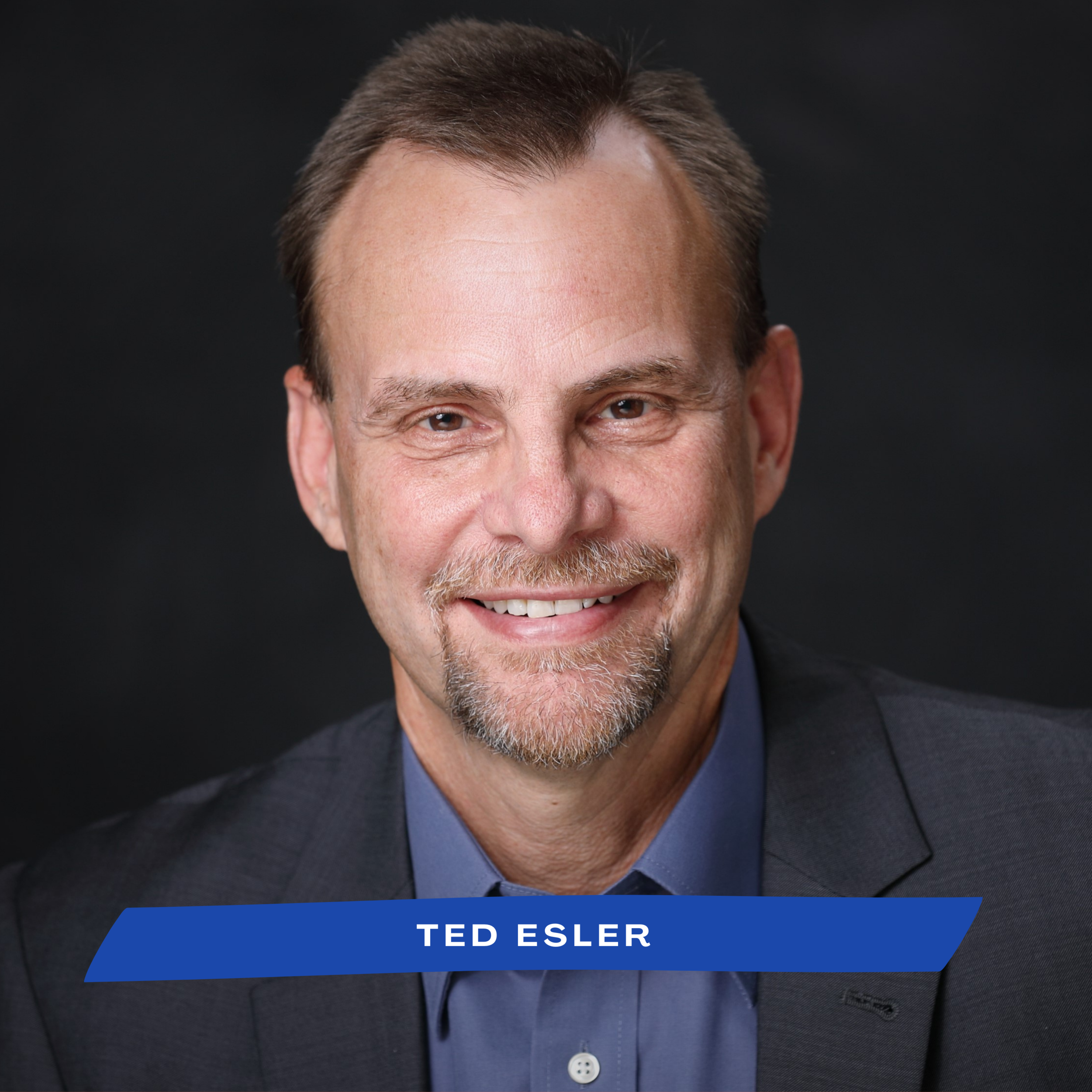
Ted Esler
President and CEO of Missio Nexus; missions leader and author specializing in global Christian ministry and intercultural studies
7
APPEARANCES
2
PODCASTS
Aug 24, 2026


Ted EslerGUEST
I mean, so I think there's a theological question there when it comes to missions.
Ted EslerGUEST
Do you believe that Jesus' command to disciple the nations, um, is something to be... that includes sending, the sending of missionaries? Or are you thinking of that as just a completely organic process in which the mixing of cultures is just gonna make it happen without a lot of additional effort? Um, I mean, my personal view is that in the, in the Bible we see the model of sending as key and crucial to accomplishing the Great Commission, and it really doesn't matter how they're sent.
Ted EslerGUEST
I mean, we talk about the fundraising model, for example, that we use in the West, a personal support raising model, very common.
Ted EslerGUEST
Um, I don't think that's ordained necessarily, but the idea that you're sending somebody to cross a cultural barrier to take a message, I think that's kind of an irrefutable truth, uh, that's in the New Testament.
Ted EslerGUEST
So, yeah, so what you're describing is something that I've seen on the field many times.
Ted EslerGUEST
So, for example, I was in, uh, India, and we were speaking with a Muslim background believer, so he was a Christian.
Ted EslerGUEST
And he was describing to us the ministry that he was a part of in which they were using more of a Muslim-friendly or Muslim contextualized church planning approach in India.
Ted EslerGUEST
And when he was first introduced to Christ, he said, "I was introduced to Christ through the Hindu church." And I said, "Whoa, whoa, whoa.

Imer SantiagoHOST
With Bushman and I being from different backgrounds, having different training and skills, and even using different drums, would we be able to jam together? It wasn't looking so good at the start.
Ted EslerGUEST
Another topic that I would say is a rising topic that actually gets me kind of excited is mutuality.
Ted EslerGUEST
And the idea behind mutuality is that when I'm with you, I'm not with you from any type of position of power.
Ted EslerGUEST
because of what I have, what you don't have, what I've experienced, what you haven't experienced, et cetera, which I think has been one of the obvious problems with colonialism is that people that were wealthier were ministering to people that were less wealthy and they used that power dynamic.
Ted EslerGUEST
And as we move into a new era of indigeneity in which people want to be able to express, their K-pop or whatever forms of culture they want to express, that we do that on a truly mutual basis where we're sharing back and forth.
Ted EslerGUEST
I don't know how possible that really is in real life based on what we see in human nature, but I think that is kind of a goal and something that we want to aim for.
24 MINS LATER
Imer SantiagoHOST
And so that's a powerful moment because It shows that I can still be teachable even after teaching 20 some years, but it empowers the student that they have ownership as well in the process of education and in the direction of our band program.
Ted EslerGUEST
You know, I would say one of the things that's being discussed in the missions community right now is about globalization.
Ted EslerGUEST
So that process you're describing, essentially there's no kind of set ethnic group that represents that indigenous people anymore.
Ted EslerGUEST
But through mixing of cultures, you become kind of a new, now I don't want to use this term in the wrong way, but let me say homogenized culture, mixing different groups together.
Ted EslerGUEST
And I think one of the concerns is that globalization has been a homogenizing force or factor.
Ted EslerGUEST
And so it's interesting that in the midst of the conversation about colonialism, now, globalism has been a new form of it, robbing people of their distinct ethnic identity.
22 MINS LATER
Imer SantiagoHOST
If your culture is closely tied to your identity, who you are, how possible is it for a missionary to really integrate into a new culture? This question takes me back to a story Ted told me at Sip and Dip, related to his time as a missionary in the Balkans.
Ted EslerGUEST
I mean, I worked in a culture that I would say has pretty high insider-outsider ideas in it.
Ted EslerGUEST
I remember meeting somebody that they were actually a British, it was a British guy that had lived in the culture for 20, 25 years, had married a person from the culture, spoke the language from my outsider's perspective fluently.
Ted EslerGUEST
But then as I became more culturally fluent and linguistically fluent, I began to learn that those people didn't necessarily see this British guy as an insider.
Ted EslerGUEST
And so, you know, I don't know how well we can ever really incarnate ourselves in another culture.
Ted EslerGUEST
Although, I mean, I think that's a goal is to be as understanding and respectful of the culture that you're going to minister to as possible.
24 MINS LATER
Imer SantiagoHOST
Ted had some complicated ideas on his mind that morning as we chewed on our donuts and slurped our coffee.
Ted EslerGUEST
The, the good news is that we've had success in global mission, and the church now outside the US is, you know, very influential.
Ted EslerGUEST
At the same time, about a third of the world's population continues to live in cultures where they will never hear the gospel.
11 MINS LATER
Imer SantiagoHOST
What price was that in regard to missions? And was it worth it? To find out, I would need to know who to talk to.

Adam JeskeHOST
In the course of that decade and change, tell me about a consequential decision you've needed to make as the president there at Maceo Nexus.
Ted EslerGUEST
Well, I mean, I would just kind of lead by prefacing this with the most consequential decisions have been the people you choose to bring on your team.
Ted EslerGUEST
But probably the biggest decision, the most difficult decision, I would say, is for a couple of years, we ran a partially self-funded health insurance program for the staff of our member organizations.
Ted EslerGUEST
And we kept hearing from our member organizations that health care costs were the biggest struggle.
28 MINS LATER
Adam JeskeHOST
In your own personal leadership, Ted, or as you think about the CEOs and executive directors within MissioNexus, what are some practices and habits that seem to be particularly helpful in sustaining longevity in the role?