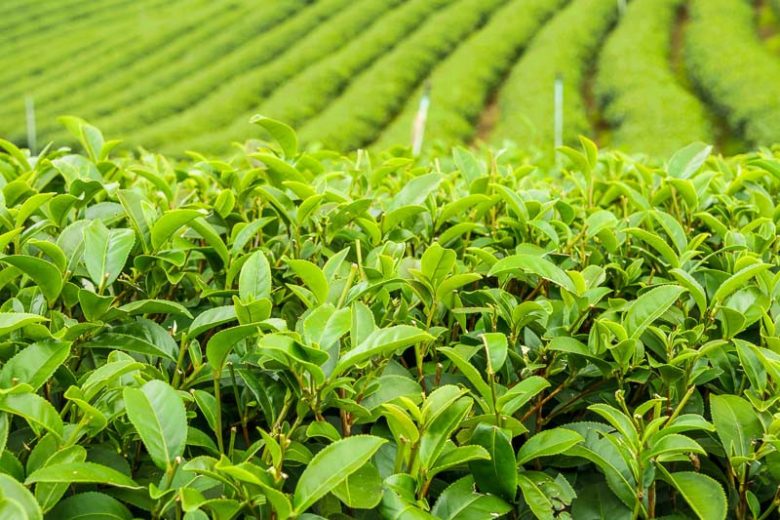
Tea plant
PlantWikipedia
59
MENTIONS
24
EPISODES
15
PODCASTS
Search complete. 59 mentions across 24 episodes found for "Tea plant".
Sep 16, 2026

Philip ClarkHOST
It's a camellia.
Sharon JohnsonGUEST
Camellia sinensis, yes, which is a family of the japonica, which is the camellia flowers, which people commonly see in the garden, the pink and the red.
PaulAUDIENCE
Yeah.
Sharon JohnsonGUEST
Big camellia flowers.
Sharon JohnsonGUEST
So it's the same family.
Sharon JohnsonGUEST
And there's two main varietals, the camellia sinensis, variety sinensis, which is grown in China.
Sharon JohnsonGUEST
and is into Nepal, and it's a much thinner, smaller leaf.
Sharon JohnsonGUEST
And then you get the Assamica, Camellia sinensis variety, Assamica, which is Kenya, India, Africa.

Maraya BrownHOST
Could it hurt your kidneys? Could it be impacting your iron level? Is it impacting your nervous system in positive or negative ways? Is it impacting your sleep? So like I said, matcha itself is green tea from the whole leaves.
Maraya BrownHOST
It's the camellia sinensis.
Maraya BrownHOST
So these leaves are shaded before harvest because that changes the chemistry.
Maraya BrownHOST
They're supposed to be higher in chlorophyll and higher in L-theanine and also bring in the caffeine.

Leigh SafarHOST
So what is tea and what is not tea, Gem?
Jem McDowallGUEST
So tea, true tea, are the leaves from the bush of Camellia sinensis.
Leigh SafarHOST
Okay.
Jem McDowallGUEST
And we touched on that in the last episode with the China, India, indigenous plants.
Jem McDowallGUEST
Again, a similarity to coffee, Robusta Arabica,
Leigh SafarHOST
Arabica.
Jem McDowallGUEST
And these are camellia sinensis variety sinensis and camellia sinensis variety asanica.
Jem McDowallGUEST
There are since then many sub-varieties of phobians which have been, you know, plant breeders have got into over the years.

Leigh SafarHOST
So what is tea and what is not tea, Gem?
Jem McDowallGUEST
So tea, true tea, are the leaves from the bush of Camellia sinensis.
Leigh SafarHOST
Okay.
Jem McDowallGUEST
And we touched on that in the last episode with the China, India, indigenous plants.
Jem McDowallGUEST
Again, a similarity to coffee, Robusta Arabica,
Leigh SafarHOST
Arabica.
Jem McDowallGUEST
And these are camellia sinensis variety sinensis and camellia sinensis variety asanica.
Jem McDowallGUEST
There are since then many sub-varieties of phobians which have been, you know, plant breeders have got into over the years.
Jem McDowallGUEST
I work for Universal Commodities, who are a large importer of tea, only tea.
Jem McDowallGUEST
And by tea, we're talking about Camellia sinensis, the true tea, not botanicals.
Jem McDowallGUEST
And I have been in New York some 26 years.
Jem McDowallGUEST
Prior to that, I worked for Lipton, previously owned by Unilever, now an independent company owned by CDT Capital.
9 MINS LATER
Jem McDowallGUEST
And there are lots of other reasons why that's difficult.
Jem McDowallGUEST
It's not only expertise, it's also what bushes are growing in the ground, which takes us back to your original question, what is tea and why are we where we are? So tea, like coffee, is an ancient beverage, grew wild, not in Ethiopia, but in the southwest Chinese provinces, into Burma and across into Assam.
Jem McDowallGUEST
And this is Camellia sinensis growing wild in these regions.
Jem McDowallGUEST
Lots of myths and legends about how it became to be a beverage.
Jem McDowallGUEST
I work for Universal Commodities, who are a large importer of tea, only tea.
Jem McDowallGUEST
And by tea, we're talking about Camellia sinensis, the true tea, not botanicals.
Jem McDowallGUEST
And I have been in New York some 26 years.
Jem McDowallGUEST
Prior to that, I worked for Lipton, previously owned by Unilever, now an independent company owned by CDT Capital.
9 MINS LATER
Jem McDowallGUEST
And there are lots of other reasons why that's difficult.
Jem McDowallGUEST
It's not only expertise, it's also what bushes are growing in the ground, which takes us back to your original question, what is tea and why are we where we are? So tea, like coffee, is an ancient beverage, grew wild, not in Ethiopia, but in the southwest Chinese provinces, into Burma and across into Assam.
Jem McDowallGUEST
And this is Camellia sinensis growing wild in these regions.
Jem McDowallGUEST
Lots of myths and legends about how it became to be a beverage.

AlbertHOST
Why is this important? Well, nobody wants to drink a suboptimal cup of tea.
AlbertHOST
But green tea is the healthiest of the six categories that come from the tea plant, Camellia sinensis tea plant.
AlbertHOST
And that and yellow, I would say, are the healthiest because yellow is also 0% oxidized in that they just have the highest amount of antioxidants, in particular polyphenols and catechins, these things that fight against free radical damage in the body.
AlbertHOST
So in other words, they fight against disease.

Betty B.NARRATOR
The ovary is three-celled with one seed in each cell, which is about the size of a cherry seed.
Betty B.NARRATOR
The tea plant is no doubt a native of India, Upper Assam, from whence it was early introduced into China, where it is now cultivated on an immense scale.
Betty B.NARRATOR
It is, however, also extensively cultivated in various parts of India, in Japan, Java, Australia, Sicily, Korea, and other tropical and subtropical countries and islands.
Betty B.NARRATOR
It is also cultivated to some extent in the southern United States, as in Carolina, Georgia, Mississippi, and California, but apparently without any great success.

Greg JennerHOST
What plant?
Yangwen ZhengGUEST
It's called Camellia sinensis, and it's a shrub, basically.
Greg JennerHOST
[chuckles] Okay.
Yangwen ZhengGUEST
A perennial, and it grows in probably one thousand to seven thousand above sea level.

speaker_0HOST
What exactly is sencha? Let's start with the basics.
speaker_0HOST
Sencha is a type of Japanese green tea made from the leaves of the Camellia sinensis plant.
speaker_0HOST
That's the same plant responsible for black tea, oolong, white tea, and many other teas.
speaker_0HOST
What makes sencha distinctive isn't a different tea plant.
14 more episodes mention Tea plant.
Create an account to see the whole feed, search across every transcript, and follow the entities you care about.