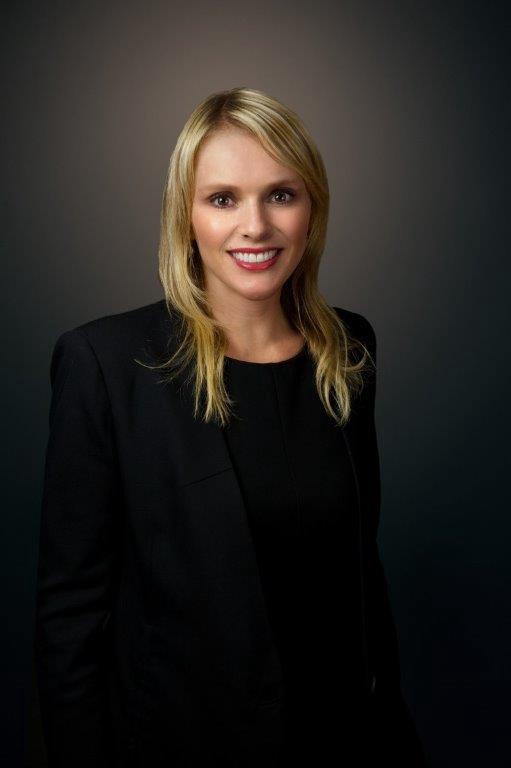
Sylvia Jablonski
36
APPEARANCES
17
PODCASTS
Nov 12, 2026
speaker_0HOST
What's your reaction to what we got this morning?

Sylvia JablonskiGUEST
Yeah, I think this is major news, obviously, for the market and for investors, and it's going to beg the question, you know, were investors investing in NVIDIA or were investors really invested in, you know, the superpower and the face of AI, Jensen Wang? And, you know, perhaps there was a little bit of both going on and we'll kind of have to separate the two out and get it back to the NVIDIA.
Sylvia JablonskiGUEST
I think look I don't think that the outlook for Ai has changed at all, you have this massive infrastructure build that's out there.
Sylvia JablonskiGUEST
You know the demand for compute continues to grow for data centers for photonics for quantum computing none of that is going away and all of that requires and video chips what i've also found interesting is that.
Sylvia JablonskiGUEST
there are a lot of ceos from other companies like corey for example you know they kind of buoyed the market yesterday arguably that have talked about working with nvidia and not even dealing with with jensen wong you know himself but rather the other the other you know employees at the firm um nvidia is a massive firm you have to imagine that there's plenty of talent there that can can continue to steer the ship forward you know i think the worry of the market will be you know but are there visionaries right and and he's arguably the visionary and um you know colette press will be a great steward to move the company forward she's been there for 13 years she's been there through the beginning and seen it involved so i think it's going to put some stability and potentially a floor into the stock but we'll have to see what the future holds in terms of you know who's going to replace the vision and the charisma because it does matter for that company
speaker_0HOST
I mean, that's just... quotes that i'm seeing from some of those out in asia right now as to why maybe some of those folks were down but you know you've got a lot of stories around today sylvia i mean interesting that the wall street journal has had a stab at kind of looking into the sales that suddenly disappeared in singapore 20 of revenue uh over the summer last year from some of the earnings reports um you know if you were an analyst on that call next week What is the most important thing that you would like to know moving forward?
Sylvia JablonskiGUEST
I would like to know that there is stability and that stability doesn't disappear with kind of the exit of one person, that the product roadmap remains intact, that the demand for the products remained intact, that all of the forward-looking investments, the credit plays, the finance, all the circular financing we're seeing very much intact and backed by the company.
Sylvia JablonskiGUEST
And you won't kind of see, you know, a domino effect here of like financing being pulled from small cap, you know, AI players or neocloud companies or things like that.

Kelly EvansHOST
Is it musical chairs for AI right now? Meaning when the music stops, Mark's trying to figure out who's not going to get a chair, right? It feels like that's a little bit of what's going on right now.
Sylvia JablonskiGUEST
They're likely to have a seat at the table and they have strong balance sheets.
Sylvia JablonskiGUEST
And yes, there's extraordinary cost that's going into this, but the growth opportunity is also absolutely extraordinary.
Sylvia JablonskiGUEST
If we think about the trillions of dollars of value that can broaden into the S&P 500, even beyond the AI hyperscalers and just the AI stocks, You know, you have to think it must be worth making this investment.
16 MINS LATER


Dominic ChuHOST
How much do you kind of think about the market dynamic, and how much do you think about demand, that total addressable market, before you conceive of some of these types of products and then seek the regulatory approval to bring them to market?
Sylvia JablonskiGUEST
Well, I think this has probably been one of the most exciting years, or the last two years in particular in ETFs, that I've ever seen, you know, in, in my ETF career anyway.
Sylvia JablonskiGUEST
You know, you're talking about $16.4 trillion worth of ETFs and, um, you know, close to 300 billion of thematics in 2026.
Sylvia JablonskiGUEST
The amount of funds that have launched so far this year is, um, is, is over 1,000, and that was the...
Sylvia JablonskiGUEST
I think there were about 1,100 that launched the entire year last year, right? So we have-- we're at, like, a 50% increase there.
Sylvia JablonskiGUEST
Um, what's changed in ETF? So to answer your question, how much do we think about it, we know the appetite is there because we've seen it in our own products, you know, especially around AI and anything that has to do with AI, AI infrastructure, and its cousins, you know, like the, the quantum, the AI power, um, the, the capacitors.
6 MINS LATER
Dominic ChuHOST
As you look at the universe that you have and the retail traders that traffic in your types of products over at Defiance, is it safe to say that, to Justin's point, since 2020, since the pandemic and, and the emergence from it, that these retail traders and investors are more sophisticated, they understand the risks better in the marketplace, and are better equipped to use the types of products that are being put out there right now, like intraday reset levered into ETFs?

0:59

And so you said it's not only just what we know, but it's now beyond, it's AI and beyond sort of what goes into all things AI, right?
Sylvia JablonskiGUEST
The trade, I think, started out with just semiconductors and maybe broad-based semiconductor ETFs or Nvidia itself, AMD, Micron, a handful of companies.
Sylvia JablonskiGUEST
And I think what investors have realized now is that there are different layers to this, right? You have an AI chip, which is like this super fast engine, but you need fuel for the engine.
Sylvia JablonskiGUEST
And the fuel for the engine is the high bandwidth memory, the, you know, memory chips, and then you need to actually move data from one place to another, and that's the data highway.


Caroline WoodsHOST
So tell us what you mean by that and what the biggest risk investors might be underestimating heading into this month is.
Sylvia JablonskiGUEST
Yeah, August was a great month for stocks, right? You had the S&P off 3%, NASDAQ was up 4%.
Sylvia JablonskiGUEST
And I think part of that is because geopolitics have fired up again, literally.
Sylvia JablonskiGUEST
And you have Fed Chair Warsh who gave his Jackson Hole speech, and he was far less dovish than I think the market had hoped for.
Sylvia JablonskiGUEST
He went as far as just saying that the inflation level of 2% were just not there and that they were going to be looking at a series of pieces of information to determine whether or not, you know, rate hikes have to happen and things like this.


Brian SullivanHOST
Sylvia, first off, from a macro ETF perspective, we're pointing out, small caps, where are you seeing your customers, your clients, where is their buying interest right now?
7 MINS LATER
speaker_0HOST
So how are you looking at this group?
Sylvia JablonskiGUEST
And the reason for that is that the big takeaway from this earnings season so far is that AI demand is certainly not slowing, it's broadening, and the CapEx continues to essentially go to that.
Sylvia JablonskiGUEST
And what's been really good about this, and it's not necessarily the Mag7 that I'm interested in, it would be more like the AI hyperscalers, and some of the Mag7 participate in that, Amazon Alphabet being good examples, companies that are spending, but they're also monetizing on AI, right? So they're seeing accelerated cloud growth, they're building AI infrastructure that's becoming monetizable, and they're just, you know, the earnings that they've provided were a clearing event for the market and brought investors back in.
speaker_0HOST
Sylvia, as you look at, I'm going to call them a group just because the name exists for the Mag7, who do you view as emerging as the winners
Sylvia JablonskiGUEST
here? Yeah, I think, again, it would just be what I would almost relabel them as is these AI hyperscalers.

Sylvia JablonskiGUEST
So it's super interesting because as we've seen this volatility in the market, and we've had a lot of geopolitical news and rate news and, and different things coming into the market, we've actually seen, again, more volatility and more shifts in where assets are going over the last couple of months.
Sylvia JablonskiGUEST
So I would say overwhelmingly, the asset flow has been into things that relate to AI, so the, the next gen, the next level of pillars that go beyond Nvidia and semiconductors broadly.
Sylvia JablonskiGUEST
So for example, uh, memory and photonics, AI infrastructure, energy, you know, lasers, um, electricity.
10 MINS LATER

Phil RosenHOST
Do you think that means it's, one, too early to be trying to invest in it, or two, maybe this is right on time before it, uh, swings upward?


Sylvia JablonskiGUEST
I think you answered the question actually really well with it, like just with your intro there.
Sylvia JablonskiGUEST
There is no hem-hawing at all, right? And I think that this year we see the speed, the veracity, the volume of ETF filings and launches from all issuers.
Sylvia JablonskiGUEST
So, it's very much a competitive world amongst us issuers out there in the market.
Sylvia JablonskiGUEST
When we have a good idea, we obviously think things through and we do all of the due diligence and the research and the correct type of R&D prior to building an ETF.
Sylvia JablonskiGUEST
We're working with an index provider to build an ETF in some cases, but it's very much doing that quickly and efficiently and trying to gain some first mover advantage in some cases.
Sylvia JablonskiGUEST
Obviously, with the thematic funds, it takes a little bit more time to actually craft an idea.


Sylvia JablonskiGUEST
Well, what I would say is that Defiance is very much one of the most innovative ETF issuers out there.
Sylvia JablonskiGUEST
And if you look at a, a lot of our 2X single name ETF products, the levered funds, you know, we span everything in terms of innovative companies in the AI space, AI infrastructure, power, space, satellite.
Sylvia JablonskiGUEST
So if anything, the edge is just experience and interest in covering these products and topics.
Sylvia JablonskiGUEST
... and you kind of, you know, go through index methodologies, on our funds, JEDI, the modern warfare fund, has a, an index clause that allows for access to satellites and space things like this.


Nate GeraciHOST
I, I guess first, if you don't mind, let's cover a few basics, and I'll start with what is quantum computing?

Sylvia JablonskiGUEST
So I, I mean, I think, you know, kind of like the formal dis-definition of quantum computing is basically a computer that uses quantum physics instead of traditional zeros and ones used by today's computers.
Sylvia JablonskiGUEST
A traditional computer could use a zero or a one, and quantum computers use qubits, which can be zero and one at the same time.
Sylvia JablonskiGUEST
Um, two just super easy examples, like if you're locked out of your apartment and, um, you know, you, you have like a, a ring of keys, right? Like the, the old school, [chuckles] I don't think buildings are like this anymore, but the super that would come with 50 keys and, you know, you try one by one by one by one.
Nate GeraciHOST
I guess talk more about that and perhaps just how you describe the overall investment case i-in this space.

Jacob GoldsteinSOUNDBITE_SPEAKER
News.
Sylvia JablonskiGUEST
It was concern over an escalation of hostilities between the US and Iran that weighed on US markets during the last session.
Sylvia JablonskiGUEST
There were clashes in the early hours of Wednesday, with Kuwait and Bahrain caught in the crossfire.
Sylvia JablonskiGUEST
And we had the S&P five hundred dropping from a record high by seven tenths of one percent, snapping a nine-day winning streak.
Sylvia JablonskiGUEST
Tech led the decline, and we had a key software ETF, that being the IGV, sinking more than four percent.
16 MINS LATER
speaker_8UNKNOWN
A lot of the top energy companies, for example, the photonics companies, the laser, you know, the Lumentums, Coherence, the, um, the, the poets of, of the universe are doing quite well because I think there's this thought that, you know, as we continue to consume energy and we're trying to build out these big AI data centers and workloads, um, you know, some of the smaller companies that are doing it and moving data in different ways will benefit from that.


Neena MishraHOST
But I was interested in your thoughts on big tech earnings and the future of the AI trade.
Sylvia JablonskiGUEST
I think, you know, the last time we spoke or maybe a couple of times ago that we spoke about, we talked a lot about the interest in AI and how much, you know, flow had been flowing into just some of these projects.
Sylvia JablonskiGUEST
I think for years, the AI trade was like the chat GPT moment and Microsoft and OpenAI and NVIDIA.
Sylvia JablonskiGUEST
And I think what we're seeing now is really that the AI trade has very much caught fire and it's now spreading into all of the different kind of like micro sectors of AI.
Neena MishraHOST
So are you concerned about the valuations at all? And are there any particular areas of the market that you like?

Sylvia JablonskiGUEST
Right, and it's really interesting that the market has rallied the way it has when we still have this geopolitical uncertainty.
Sylvia JablonskiGUEST
Is the war over? Is it not? Where do we stand? You know, I, I think that the market could turn at any time, and that's something that investors should be aware of.
Sylvia JablonskiGUEST
However, when you think about, you know, the way that you invest, when specifically talking about disruptive themes, you wanna be a longer buy and ter- you know, buy and hold investor, right? You wanna kind of weather the COVIDs.
Sylvia JablonskiGUEST
You wanna weather what's going on in the Middle East and, and keep that long-term outlook because you're not going to be able to predict geopolitics.
Sylvia JablonskiGUEST
That being said, investors should be aware that there could be volatility, and the things that get hit could be the higher growth sectors.
Sylvia JablonskiGUEST
And every time that we get good news in terms of a ceasefire or stability about that, it seems like the market really likes it and continues to rally and rally.
Kelly EvansHOST
IonQ is one where people is it a story stock or is, you know, are there real profitability there?
Sylvia JablonskiGUEST
And right now they have a backlog of 370 million in revenues, which is three times what they're doing right now that hasn't come to fruition yet.

Sylvia JablonskiGUEST
I mean, it's been an exciting year for ETFs, right? We're bumping up on that 14 trillion mark.
Sylvia JablonskiGUEST
And when you walk around the room here, so many of the conversations are around thematic ETFs, and specifically and unsurprisingly around everything that has to do with AI, and geopolitically how AI is now factoring into modern warfare.
Dominic ChuCORRESPONDENT
Are there types of funds out there that do it? Are, are investment advisors, people looking for certain companies in particular that are going to try to capitalize on this kind of AI meets the military, meets geopolitics trade?
Morgan BrennanHOST
Sylvia, let's bring this back to investors, especially in a week where we did see Palo Alto earnings and we know cybersecurity stocks, for example, are in a secular growth cycle right now.
Sylvia JablonskiGUEST
Yeah, so to bring it back to investing, both guests brought up great points about the safety concerns and regulatory needs around AI.
Sylvia JablonskiGUEST
But if you look at the investment story, you're talking about right now a $390 billion total addressable market that's poised to grow to $2.5 to $3 trillion by 2030, which is only four years away.
Sylvia JablonskiGUEST
So if we get that safety construct and if we kind of get the safety protocol and regulation, this is a huge investment opportunity.
Sylvia JablonskiGUEST
And I think where it plays out will be areas like quantum computing, for example, and AI and power infrastructure.
Sylvia JablonskiGUEST
So you're going to need a lot of energy to run all of these AI workloads, cloud computing, machine learning, things like this.

Sylvia JablonskiGUEST
And I've just been looking at a bunch of the year-end statistics and reports that the banks are sending out.
Sylvia JablonskiGUEST
And just like every bank, Goldman, whoever they might be, are talking about how retail was 25% of their equity flow this year.
Sylvia JablonskiGUEST
And there's all this information out now that over the average for the last five years prior to the last two years, millennials had a 50% allocation to single name equities, basically, right? So before that, it was like, whatever index fund they could get in their 401k plan, and now they've become traders, right? And now that number for the last two years is actually 72%.
12 MINS LATER

Shay BoloorHOST
But yeah, I mean, I would love to get your thought actually, Sylvia on, how uh just talk about the process of like first off you guys don't know like this was supposed to be last year uh government shut down affected everyone uh including us but i just i think what caught me off guard was like this process like how lengthy or how difficult it actually is and like how if you make it to the finish line like yeah wow it's a big accomplishment not just like seating but making it there and going live on the nasdaq so can you talk a little about that
Sylvia JablonskiGUEST
I think, you know, it's, it's been a stellar year for levered ETFs in general, both index based and single name funds.

Katie GreifeldHOST
When you think about the quantum space and the different names that populated, what is your view heading into next year?

Caroline HydeHOST
So cooperating here is market sentiment not or is market sentiment going to shift to the positive again?
Sylvia JablonskiGUEST
Well, you know, barring external factors, which we've seen a lot of, right, throughout the last year, whether it's been geopolitics, whether it's been tariffs or things like this, you know, if we're on pace here for kind of the trend that we have here and we do have this growth of AI, you know, I know there's news around spending being cut back and things like this, but we're still in the infancy of AI and there has already been so much spending that is now going to kind of pile into the economy, pile into these different companies, different sectors and things like this.
Sylvia JablonskiGUEST
So I think, you know, that coupled with a Fed that is likely to cut, particularly if we have a new Fed chair in, you know, in with the president and kind of, you know, knowing where the predictions will go on that, that's what the market's really looking for, right? We have a little bit of a weaker labor number.
Caroline HydeHOST
How much will political tailwinds or headwinds help or hinder some of these companies being worried about access to China? More broadly, can NVIDIA continue to lead this market higher? Yeah.
Sylvia JablonskiGUEST
Yeah, I think, you know, just to follow up point that we just discussed there, I think that AI infrastructure trade, if you're thinking about like where the puck is going, that's just another, that was a great point that was made.
Sylvia JablonskiGUEST
I thought I would jump in on that one too, that if you look at the AI powered infrastructure trade, you know, that's going to be a huge opportunity for investors, right? You're going to have to power all this stuff somehow.
Sylvia JablonskiGUEST
Yeah, I think that, you know, the potential headwinds here are look what we have going on with China, right? I mean, some of the geopolitical trade tariff types of tensions, conversations between, you know, our president and what's happening overseas in Asia, what's happening in Taiwan, currency risk, things like this are always kind of like looming over the top of us.
Sylvia JablonskiGUEST
And, you know, the other great point is we need to see some TSMC I'm sure here and you know you have a little bit of that going on in Arizona, I think if you have some onshore expansion that will bode well for the company and you know kind of keep it in the good graces in terms of the ability to to buy chips there and and import chips from from them.
5:06
Yeah, understood, I mean you did like the guidance and there were parts of the guidance and the growth momentum that tell me about that in their report what did that story really lead you to believe.

Dominic ChuHOST
What exactly is the primary driver of a lot of the optimism that we've been seeing over the last couple of weeks?
Sylvia JablonskiGUEST
And I think that we're seeing these bounces in quantum stocks as the investing public starts to see these real world use cases come to life.
Sylvia JablonskiGUEST
So what we just heard from HSBC, you know, this improvement in 34 percent growth.
Sylvia JablonskiGUEST
And when you're talking about a market where fractions of a percentage matter, this is huge news, right? It changes the face of trading and the future of really profits and risk calculation and all of these things.
Dominic ChuHOST
What exactly then should we look for next when it comes to the next development for the use cases around quantum computing?
Neena MishraHOST
So tell us, do you think that quantum computing could be the next big thing after AI? And also tell us a little bit about this ETF.
Sylvia JablonskiGUEST
The quantum ETF is actually something that launched our company, right? So it was our flagship ETF and it was launched back in 2018.
Sylvia JablonskiGUEST
And around that time, we had thought that there's going to be this multi-trillion dollar transfer, 60, 70 trillion of wealth going from baby boomers to you know kind of gen x millennial gen c alpha beta and beyond right but this this shift is happening and you know even you know even at the level of gen x like there's so much kind of retail trading and interest in the markets and interest in um trading trading you know one's own account and then the further you go along in the generations it almost becomes like completely self-directed right and so we thought to ourselves that this crowd that is really taking control of their own finances and investment management you know they're they're going to think what do they care about they care about the future they care about like not so much the classic tech etfs but what is the future of technology what does that look like and back then we thought well that looks like ai and super computing right and so We came up with this AI machine learning and supercomputing ETF, and it was really meant to be the best way to gain access to that sector.
Neena MishraHOST
So are they being used as they are intended to? Or do you think that some investors just buy them and hold them for a long time, forget about them?
Sylvia JablonskiGUEST
uh good morning and thank you for having me no um it that's not really defiance specific our etfs are in the quantum computing space right and and 6g which is the next gen of communication really so it's just that we don't happen to you know track the um the space or that particular product within our within those funds uh but that being said you know i I think that if there were an opportunity to hold Tesla, it's not something that we would necessarily be opposed to, right? I think that a lot of what's happening now is noise around politics, and there is some potential downside if this tax bill removes $7,500 worth of credit.
Sylvia JablonskiGUEST
You know, that aside, I mean, Elon Musk is still Elon Musk and, you know, the genius of robo-taxis and driverless cars, in-home robots, which one day could be a staple in all of our homes.
Sylvia JablonskiGUEST
You know, I don't count the company or the CEO out regardless of this feud.
Ed LudlowHOST
Sylvia, when you compose an ETF, is key man risk and the leadership of any given name part of the consideration?
Sylvia JablonskiGUEST
Yeah, so that can always be a factor in terms of, it depends on the type of ETF that is structured and what it does.
Scroll for more appearances