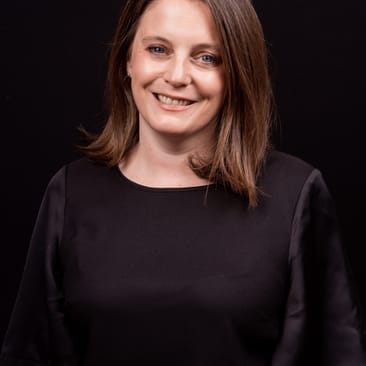
Suzanne Lynch
Journalist
10
APPEARANCES
9
PODCASTS
Sep 16, 2026


Paul CunninghamHOST
What we didn't necessarily get was a sense of direction about how Europe would be able to rebalance that.

Suzanne LynchGUEST
China had quite a presence in this speech compared, for example, to the United States.
Suzanne LynchGUEST
But yeah, I think the context here is that the EU is coming up with some measures that we expect by October at the meeting of EU leaders in the middle of October in Brussels.
Paul CunninghamHOST
For a Commission President to intervene on a Member State's election and start saying it's a great result and maybe it isn't a good result next time just began to raise a question in my mind about how the Commission President views herself.


Richard CurranHOST
Will they be watching closely and getting feelers out afterwards as to anything that Donald Trump might say privately to Micheál Martin about energy, about Iran?
Suzanne LynchGUEST
I mean, I think like Michail Martin is just back from Bratislava where he was meeting leaders from Central and Eastern Europe, for example.
Suzanne LynchGUEST
So I think the fact that a European leader is meeting Trump now, yes, people around Europe, leaders around Europe are aware of that.
Suzanne LynchGUEST
And Ireland for a long time has cast itself as this bridge between the United States and Europe, particularly after Brexit.
Suzanne LynchGUEST
And, I mean, this is this in action now, using that kind of soft power that the personal link Trump has with Ireland.
5 MINS LATER

Suzanne LynchGUEST
Well, I think the fact is we're very low spenders on defence, and that is known.
Suzanne LynchGUEST
in the last couple of years, obviously, is that the EU's focus has shifted to defence because the EU, as we know, kind of moves when there's a crisis and responds to a crisis.
Suzanne LynchGUEST
And the crisis at the moment has been that full-scale Russian invasion of Ukraine and there's been a big emphasis on defence.
Suzanne LynchGUEST
But there's kind of, I think, a paradox here because even though the EU and countries are spending more on defence, the EU as a body is limited in what it can do in defence, really.
26 MINS LATER

Suzanne LynchGUEST
Well, I think, uh, since the outset of, uh, the war in Iran, European officials have been keen to stress that this is not the same as the crisis that engulfed the European Union back in 2022, um, following the full-scale invasion by Russia of Ukraine.
Suzanne LynchGUEST
One reason the EU officials are keen to stress is that Europe has diversified its supply now.
Suzanne LynchGUEST
It's not directly dependent on the Middle East, uh, for energy imports, for example.
Suzanne LynchGUEST
Uh, it is more dependent on places like the US, Norway, although, of course, it is indirectly impacted by what's happening, uh, in the Strait of Hormuz and around that region.

Caroline HepkerCORRESPONDENT
I mean, how do you think this plays into diplomacy between the EU a- and the US given this pressure?

Suzanne LynchGUEST
Well, I think, uh, since the outset of, uh, the war in Iran, European officials have been keen to stress that this is not the same as the crisis that engulfed the European Union back in 2022, um, following the full-scale invasion by Russia of Ukraine.
Suzanne LynchGUEST
One reason the EU officials are keen to stress is that Europe has diversified its supply now.
Suzanne LynchGUEST
It's not directly dependent on the Middle East, uh, for energy imports, for example.
Suzanne LynchGUEST
Uh, it is more dependent on places like the US, Norway, although, of course, it is indirectly impacted by what's happening, uh, in the Strait of Hormuz and around that region.
Caroline HepkerHOST
I mean, how do you think this plays into diplomacy between the EU a- and the US, given this pressure?

speaker_0HOST
This EU ambassadors meeting today then and, and interior ministers meeting tomorrow, what's hoped that all this will achieve?
Suzanne LynchGUEST
Yes, um, well, this, uh, meeting, these meetings have been called, uh, following letters, two sets of letters, um, that arrived over the weekend.
Suzanne LynchGUEST
22 leaders, uh, wrote to, um, Ursula von der Leyen, Antonio Costa, the EU Council president, and the Taoiseach, calling for this min- meeting of interior ministers or justice ministers to be held, um, immediately to respond to the crisis.
Suzanne LynchGUEST
And at the same time, uh, Pedro Sanchez, the Spanish prime minister, also called for a meeting to be held.
Suzanne LynchGUEST
I mean, I think a lot of what's be- has happened over the last 48, 36 hours, has been a lot of, um, political anger across Europe from countries, particularly countries facing, um, right-wing, uh, threats politically, uh, or more right-wing governments who are concerned that these pictures that are coming, um, from Northern Africa, uh, show that the EU's not in control of migration.
Suzanne LynchGUEST
And then on the other side, you've got Pedro Sanchez, who's complained, and as you said there, kind of slammed the EU leaders for, for being selfish and polarizing, and, you know, really saying that there hasn't been much solidarity for Spain, um, and there hasn't been that much empathy for what's happening there.
speaker_0HOST
What, what actually happened there?

Suzanne LynchGUEST
And then you have that big wave of enlargement back in 2004, more than 20 years ago now, when actually Ireland was holding the presidency that year, when you had a big bloc of 10 Central and Eastern European countries join the EU.

Ciara DohertyHOST
There's a bit more of a critical view of the country because of our reliance on US tech corporations, because of our corporate tax rate, and... and because they're not necessarily that impressed by the way that we have dealt with our own security.

Caroline HepkerHOST
So what do you think is going to be the response, or what do you think is the thinking within the EU about the possibility of a change in leadership in this election? We don't know yet, but what do you think the EU's thinking?
Suzanne LynchGUEST
Well, look, I mean, as you say there, I mean, Orban has been a presence here in Europe for such a long time.
Suzanne LynchGUEST
Um, and I think it's fair to say there is an argument that the European Union has chosen, to a large extent over the years, maybe to look away to kind of hope Orban will one day be voted out of office, and that Hungary will step back into line and become a good member of the European Union.
Suzanne LynchGUEST
Now, that policy has not really worked until now because he has managed, uh, to survive politically this long in this extraordinary, uh, term.
Suzanne LynchGUEST
Even in the last few weeks there, as Zoltán ha-ha-has alluded to, we've seen an even more kind of brazen attempt by Hungary to undermine Brussels.
7 MINS LATER
Suzanne LynchGUEST
Look, France has been vocal for, for years about, uh, you know, its belief that Europe needs to be, as they put it, more strategically autonomous, that it needs to stand on its own when it comes not just to defense but also to the economy.
Suzanne LynchGUEST
And, you know, I think it, for some of the stereotypes, uh, Caroline, in Europe are sometimes close to bone.
Suzanne LynchGUEST
I think France has taken a more, we would say, protectionist approach, uh, to how the single market works for years in the EU.
Suzanne LynchGUEST
So yes, France has been pushing this, and the French Commissioner, Seydoux, uh, is in the lead on this.
Caroline HepkerHOST
Um, Suzanne, do you think that there will be a target for the share of European products that are domestically produced? For example, will it go that far? Do these rules have the potential also to make Europe more self-sufficient in certain really, really key areas like, you know, defense, for example?


David GuraHOST
Trump's decision to take those additional tariffs off the table has alleviated some of that pressure, but it's left many EU leaders feeling unsure that the status quo will hold.
Suzanne LynchGUEST
The question is, will they do that again? And I think that, look, there's a broader issue and a broader s- soul-searching going on in Europe now about how they've handled Donald Trump.
Suzanne LynchGUEST
For years, for decades, the European Union has always said, and rightfully so, that, look, their big plus, their big advantage is their single market.
Suzanne LynchGUEST
It's got a lot of power in the regulatory space, for example, regulating tech companies.
Suzanne LynchGUEST
So its force as an economic power is much more powerful than its force as a defense power, for example.
9 MINS LATER
David GuraHOST
I'm wondering how much the temperature has come down as a result of President Trump backtracking in the way in which he, he has.