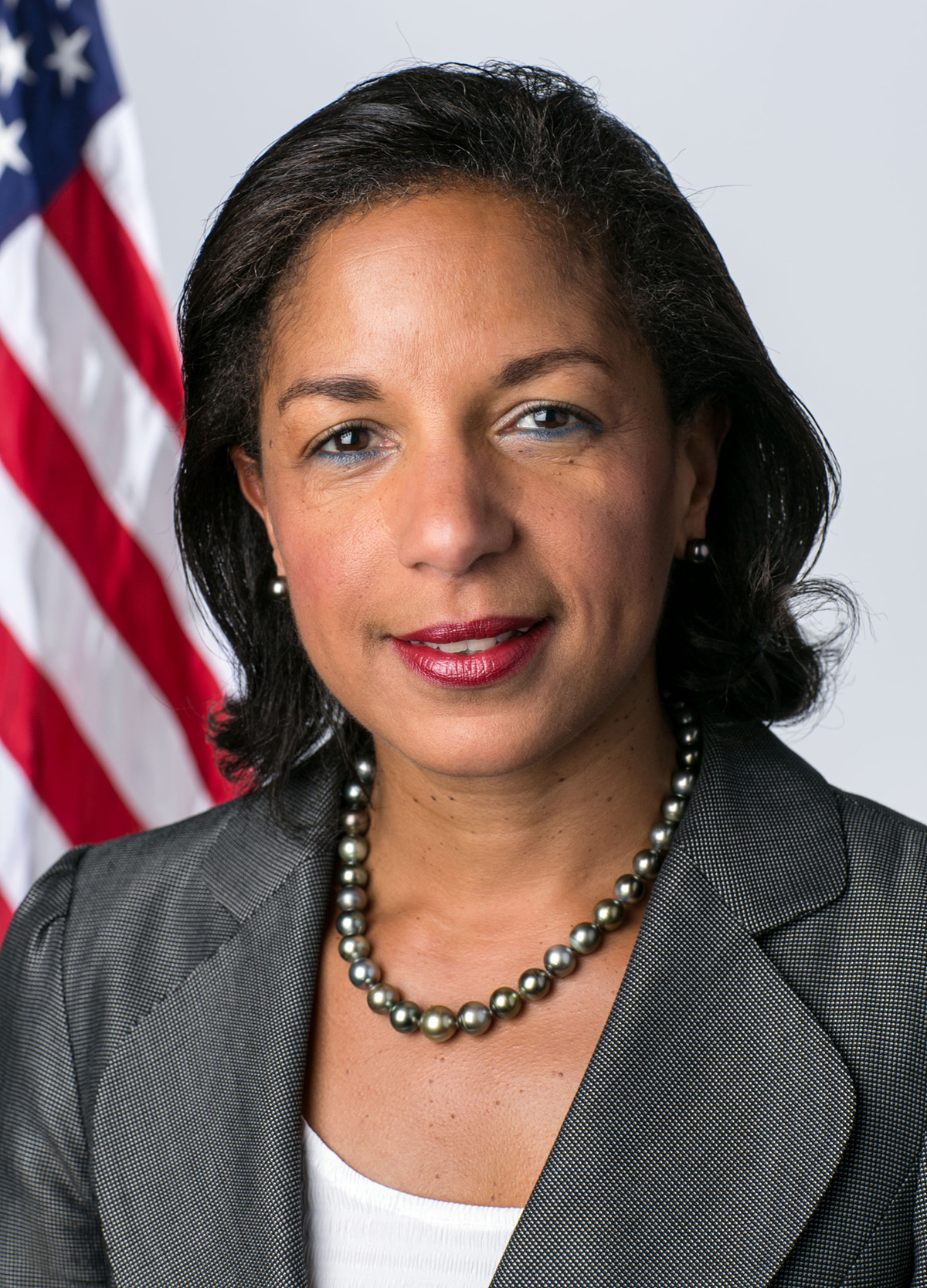
Susan Rice
Former United States Ambassador to the United Nations
34
APPEARANCES
23
PODCASTS
Oct 13, 2026


Susan RiceGUEST
You know, there may be, you know, value and benefits from AI in terms of medical advances or, or what have you.
Susan RiceGUEST
But what we do know and what is increasingly indisputable is that from a national security point of view, AI poses at least two really proximate and dangerous threats.
Susan RiceGUEST
The first one is that AI has been demonstrated to be able to be used by anybody, a terrorist organization, the proverbial guy sitting on his couch in a basement, a hostile state, to develop exceedingly dangerous weapons of mass destruction, whether those are cyber weapons that can take out the electricity grid or break the internet or crash the global financial system, or, uh, biological weapons, including novel pathogens that may kill on a scale that we've never seen before.
11 MINS LATER

Tim MillerHOST
Do you see that kind of thawing a little bit? Do you see people's backbone stiffening as his numbers get lower or, or not really?


Harry LitmanHOST
Does it feel to you from people you've spoken with that have we crossed the threshold to a point where AI poses a real threat to human civilization?
Susan RiceGUEST
And it may not be something I've written about a lot, but it's something I've been thinking about and concerned about for several years.
Susan RiceGUEST
Uh, and you know, uh, it, it really first came on my radar screen when I was a domestic policy advisor and, uh, you know, that was when the early versions of ChatGPT had come, uh, into the public, uh, domain.
Susan RiceGUEST
And, um, I had the opportunity to spend time with a number of the folks who were in the labs creating, uh, these tools and came to understand very, almost immediately from a national security perspective, given that was my background, quite how dangerous, uh, this could become.
Susan RiceGUEST
And as the pace of AI development has accelerated and we are really approaching the point, um, called recursive self-improvement where the, the models basically create their next, uh, evolutionary, uh, iteration without human input, um, that's where you get up the exponential curve to super intelligence and we have, uh, agents and models that are able to run circles around humans on all dimensions.
Susan RiceGUEST
But what has worried me the most, and I have a lot of concerns as a mother, uh, uh, about, you know, the mental health pieces, chatbots, you know, taking over friendships, employment for young people coming out of school, um, you know, the environmental impacts, I go, you know, disinformation, misinformation, discrimination, all of those, uh, are concerns.
14 MINS LATER


Aaron ParnasHOST
What have you seen based on your experiences as national security advisor, then working domestically? How have you seen the world order shift?
Susan RiceGUEST
Well, it's shifted, uh, I think quite e- enormously, and the biggest shift I, I'm sad to say, has come from how the United States is comporting itself internationally.
Susan RiceGUEST
Um, I've said in other contexts and, and I would say again, you know, we are in the process, sadly, of committing superpower suicide.
Susan RiceGUEST
Um, we are, you know, coddling dictators from Xi Jinping and his, you know, f- uh, airport greeting and red carpet treatment to Vladimir Putin who, you know, gets a, a warm embrace and a happy birthday from the president when, you know, we don't know what biological weapons he's unleashed on the world and while he's trying actively to, to start conflict in Europe.
Susan RiceGUEST
Uh, we're having to withdraw from our, uh, bases in the Middle East, um, and now withdraw combat aircraft from the UK because we started an absolutely stupid, costly, pointless war with Iran that is costing the average American family additional $1,200, uh, in terms of increased fuel costs, uh, grocery costs, uh, everything else.
Susan RiceGUEST
That's on top of the $1,100 American families are having to pay for Trump's tariffs.


Stacey AbramsHOST
Can you talk a little bit about how you see the role of the UN in a moment where we are seeing such a fracture in international accord and this continued assault on democracy across the world?
Susan RiceGUEST
world?Well, you know, the UN, as folks will recall, was created right after World War II by the United States, uh, as the principal architect, uh, to try to prevent world war from recurring and, uh, to prevent and resolve conflicts and to uphold human rights and the, um, sovereignty of nations.
Susan RiceGUEST
And, you know, today we have a president of the United States who goes to the UN and stands before the General Assembly at that, uh, very s- you know, hallowed podium, and very casually threatens to annihilate another, uh, UN member state, uh, as problematic and, and dangerous as that, uh, government may be in Iran.
Susan RiceGUEST
And so, uh, we really are, have come full circle to, uh, a time when the United States at least purported to stand for stability, international law, uh, security, um, and human rights to a time where we, you know, joy in the trampling of all of the above.
Susan RiceGUEST
And it does make it extremely hard in that context for an organization like the United Nations, very flawed as it is, um, to e- even serve a fraction of the purpose it's meant to.
Susan RiceGUEST
Um, and most people think about, you know, the Security Council, where the Big Five permanent powers, US, China, Russia, the United Kingdom, and France, uh, you know, uh, make decisions about, uh, the issues of the day.
22 MINS LATER


Erin BurnettHOST
Is all of this tough talk doing that wiping civilizations off the map, blowing an entire nation up? Or at some point, could there be teeth to it?
Susan RiceGUEST
Well, we've heard this administration and President Trump for many months issuing bombastic threats and engaging in rhetorical jabs of the sort you've just heard.
Susan RiceGUEST
But none of that changes the fact The United States has blundered into a very costly, protracted conflict decided by a president who claimed that there would be no more wars of choice, no more foreign wars, particularly in the Middle East, and that he would put this country first.
Susan RiceGUEST
Instead, the cost the American people are paying for this war increased by the day in terms of fuel, diesel, food prices.
Susan RiceGUEST
And then the direct cost to the American taxpayers has exceeded $40 billion and is counting.
Susan RiceGUEST
Money that could have been spent in this country on health care at a time when we're cutting Medicaid or on food at a time we're cutting SNAP benefits.
Erin BurnettHOST
But when you look at Xi Jinping's, what I just laid out, looking at America's military position, what he could perceive as unprecedented and unexpected weakness, what are the chances he would agree to self-halting on AI?


Ben MeiselasHOST
But I say focus on what's happening behind the scenes because all of this is the most important stuff that's not getting a lot of coverage.
Susan RiceGUEST
There, there are reasons to be deeply concerned, um, about what's going on under the hood within our, our armed forces.
Susan RiceGUEST
The, the Hegseth purges, uh, of our most experienced, uh, capable, and talented flag officers, generals and, and admirals and the like, um, is really horrific.
Susan RiceGUEST
He is casting out people who are supremely highly qualified, uh, some seemingly on the basis of race, or the fact that they may be women, or the fact that they have, uh, e-executed the, the policies and the orders of prior administrations, um, or they just aren't bought into, um, you know, the, the priorities and the e-excesses of, of the Pentagon under Pete Hegseth.
Susan RiceGUEST
All of these people are being purged, and we have half the number of Army, uh, you know, four stars in position than we had just, you know, a year ago.
7 MINS LATER
Ben MeiselasHOST
But I say focus on what's happening behind the scenes because all of this is the most important stuff that's not getting a lot of coverage.
Susan RiceGUEST
There, there are reasons to be deeply concerned, um, about what's going on under the hood within our, our armed forces.
Susan RiceGUEST
The, the Hegseth purges, uh, of our most experienced, uh, capable, and talented flag officers, generals and, and admirals and the like, um, is really horrific.
Susan RiceGUEST
He is casting out people who are supremely highly qualified, uh, some seemingly on the basis of race or the fact that they may be women or the fact that they have, uh, e-executed the, the policies and the orders of prior administrations, um, or they just aren't bought into, um, you know, the, the priorities and the e-excesses of, of the Pentagon under Pete Hegseth.
Susan RiceGUEST
All of these people are being purged, and we have half the number of Army, uh, you know, four stars in position than we had just, you know, a year ago.
7 MINS LATER

St Michael SingersSOUNDBITE_SPEAKER
Take my serpents, I will give,
Susan RiceGUEST
When Jesus received the news of John the Baptist's death, he withdrew by boat to a lonely place where they could be by themselves.
Susan RiceGUEST
So as he stepped ashore, he saw a large crowd, and he took pity on them and healed their sick.
Susan RiceGUEST
When evening came, the disciples went to him and said, This is a lonely place, and the time has slipped by.
Susan RiceGUEST
So send the people away, and they can go to the villages to buy themselves some food.


Andy BeshearHOST
Well, we've got to start, given your experience in dealing with Iran years ago, advising a president on it, your take on what we're seeing, because certainly from my perspective, it seems like President Trump started a war, eventually defined what success looked like according to him in the war, and then reached absolutely none of those objectives.
Susan RiceGUEST
Well, I'd agree with that, except it's not clear that he ever defined what success looked like.
Susan RiceGUEST
He definitely started a war that never should have been waged, that has set us back in terms of our strategic interests and national security quite dramatically.
Susan RiceGUEST
and has not accomplished any of the myriad things he set out to accomplish, whether that's regime change initially, dealing with the missile program, dealing with the nuclear program.
Susan RiceGUEST
None of that has happened, helping the people of Iran achieve their democratic aspirations.
Susan RiceGUEST
And what we have is a flimsy two-page, 14-point memorandum of understanding that is so thin that you might think it's innocuous.
24 MINS LATER
Andy BeshearHOST
Your feelings on the dismantling of the Voting Rights Act and the impact it's going to have on our democracy.


Susan RiceGUEST
Under the Obama nuclear deal, they couldn't have relief from oil sanctions until the deal was fully implemented, not just preliminarily, uh, uh, agreed.
Susan RiceGUEST
Secondly, they get access to tens of billions of dollars of frozen assets in the very near term, within the next 60 days, contingent only upon the memorandum of understanding, this flimsy two-page document, being implemented.
Susan RiceGUEST
That means essentially once they've opened the strait, they get all the access to their frozen assets without any constraint on how they spend it.
Susan RiceGUEST
In the Obama era deal, they could only spend those frozen assets on humanitarian things, food and medicine.
5 MINS LATER
Susan RiceGUEST
Apparently, Sam Altman has proposed, uh, an idea to the administration that they take an equity share in the large AI companies.
Susan RiceGUEST
You had Vice President Pence on earlier, talking about how it's the antithesis of conservatism for the government to be taking stakes in companies, which they are, rare earths, and, uh, chip companies, and the like.
Susan RiceGUEST
I mean, that, we, this is a brand-new thing, and Bernie didn't actually, uh, wasn't the first to, to, to get it done.
Susan RiceGUEST
We, we have a military that is not constructed for the world in which we're living, and that's the big thing that has to change.

Susan RiceGUEST
So I think that kind of character with the mission that the president has overtly given him, uh, to go in there and, uh, you know, find evidence of rigged elections, um, and to go after, uh, people within the intelligence community who are longstanding experts and, and rid them of the place, that's quite worrying.
Susan RiceGUEST
And I think if we care deeply about our national security, which we must, at a time when we're dealing with Russia and China and Iran and terrorists, we need somebody as director of national intelligence who's serious.
12 MINS LATER

Bill MaherHOST
So we put that aside for the Iran deal and said, "We just wanna deal with the nuclear." Was that right to decouple those?
Susan RiceGUEST
Let me explain w- what we did and why I think it was the right thing and why I think, unfortunately, we're really on the wrong course right now.
Susan RiceGUEST
First of all, Iran, as you said absolutely correctly, poses threats on multiple dimensions, its missile program, its support for proxies in the region, its human rights violations.

Susan RiceGUEST
... uh, who showed up to give praise to the man who wants to be the dear leader of the world.
Susan RiceGUEST
And it's embarrassing, uh, for the United States, um, for our leadership, but it also underscores how profoundly unserious this is.
Susan RiceGUEST
$10 billion that he claims the United States government, that means you and I as American taxpayers, are giving to an entity that isn't an international organization.

Jen PsakiHOST
What kind of impact does that behavior have on our relationships? Um, and, and how will it be recovered, which is a big question.


Preet BhararaHOST
Do you have any thought about whether or not in year two, some of these institutions, private and otherwise, will think twice and will fight more?
Susan RiceGUEST
Yeah, I think things are starting to change a little bit, and I hope the change will accelerate.
Susan RiceGUEST
First of all, what is happening, and is the most important positive development, is how the American people, regular, average citizens, have come together and stood up and peacefully insisted that we don't want this kind of lawlessness and state-imposed violence perpetrated on our streets.
Susan RiceGUEST
The people of, of Minnesota, above all, have shown us how bravely it is possible to come together and to have an impact, and to do so through peaceful, nonviolent mass protest.
Susan RiceGUEST
So I think that is a very important sign, and I think it will have knock-on effects in many other parts of the country.
Susan RiceGUEST
And we are seeing, you know, increasingly mass mobilization for peaceful protests, but it needs to be much broader and much more sustained.
Susan RiceGUEST
It can't just be, you know, uh, as great as the No Kings marches have been, and, and I s- support them, you know, I, I wish that we could muster that kind of energy with greater frequency.
32 MINS LATER

RichHOST
So my question to you is, when you look at what ICE is doing, I don't know if you're an abolish ICE or a reform ICE person, but Is there a foundation that can work for ICE in the United States, given our federal laws that have been passed by Congress and that have been vetted by the Supreme Court? Or is ICE fundamentally built on a broken foundation and does it need to be abolished?
Susan RiceGUEST
I think it has been abused by Donald Trump in both of his terms and turned into something that it hasn't been and needn't be.
Susan RiceGUEST
You know, people weren't... you know, freaking out about ICE for the most part, you know, during the Obama administration, during the Biden administration, you know, yes, there were those who said, you know, they're still deporting people.
Susan RiceGUEST
When people commit violent crimes, when people have final orders of removal, You know, they have then exhausted their legal remedies and there needs to be some targeted ability to remove them, but remove them with basic respect for human rights and human dignity, consistent with the rule of law and a court order, consistent with the Constitution.
31 MINS LATER
TimHOST
Yeah.

Susan RiceGUEST
[upbeat music] I think the point of all of this is to intimidate, uh, is to quell a legitimate First Amendment dissent, uh, and to, um, make it difficult for everyday Americans, much less, you know, corporate leaders, and, and university presidents, and l- l- leaders at law firms, um, to speak up and oppose what is clearly a widening authoritarian power grab.
Susan RiceGUEST
Um, but, but, um, I believe that the vast majority of Americans are not interested in surrendering our constitutional rights.
Susan RiceGUEST
We're not interested in surrendering our right to free speech, to free assembly, to worship as we will, uh, to exercise our, our, our legal right to vote.
Susan RiceGUEST
Um, and, and I don't think at the end of the day we will stand idly by and let all of those rights be taken away from us before our very eyes.
Susan RiceGUEST
And the people of Minneapolis and Minnesota, more broadly, uh, when they are peacefully, uh, organizing and peacefully demonstrating to stand up for those very rights that we all need and cherish, are showing us the way.

Susan RiceGUEST
I think you and I would both agree that there are differences and divisions within the Republican Party.
Susan RiceGUEST
There's a sort of what's left of the traditional conservative element of the Republican Party that has long been strong on national defense and national security and clear-eyed about who our adversaries are and who our allies are.
Susan RiceGUEST
And we have to very clearly question their willingness to exercise their influence, to thwart what may be this president's inclinations that are destructive of NATO and destructive of our traditional alliances and our standing in the world so far.
Susan RiceGUEST
they have taken a pass as Trump has dismantled every facet of our soft power, such as USAID, such as Voice of America.
7 MINS LATER
speaker_6ADVERTISER
Yeah, poor Iceland.


Kaitlan CollinsHOST
Given this new round of talks, and we've seen so many of them throughout this war, is there any kind of new pressure that you believe the United States can use in this new round to try to break this stalemate that's been playing out?
Susan RiceGUEST
There's been a bill waiting in Congress for many, many months that the president has not given the green light to, which would put some additional economic pressure on Russia.
Susan RiceGUEST
There's obviously also Ukraine's very deep need for financial resources and for military equipment of various sorts that they've been requesting and haven't been granted by the United States.
Kaitlan CollinsHOST
But as the former United Nations ambassador, I wonder what you make of who was on that stage today and the president's suggestion that this board of peace could replace the United Nations.


Susan RiceGUEST
Uh, s- can, can I just start? One of the very first things that the Trump administration did, and you touched on it a little bit, was, uh, do away with USAID.
Susan RiceGUEST
Um, that kind of followed along with the America First, uh, uh, stuff that they're talking about.
Susan RiceGUEST
I mean, because truth is, is that, you know, I'm just a farmer in North Central Montana and, you know, besides shipping a little bit of food, why the hell should I care about USAID that's going to countries in, in Africa or some other place in the world? Who cares? I mean, who cares about those people? I care about my profitability.
14 MINS LATER


Susan E. RiceGUEST
I think, well, as I'm sure we'd all agree, to a substantial extent, the NSC itself, its structure, its function does need to reflect the style and the orientation of any given president.
Susan E. RiceGUEST
However, since the National Security Act, 1947, there has been some degree of consistency, some degree of structure and process and rigor, which I think has traditionally served our nation well.
35 MINS LATER

Susan RiceGUEST
Uh, and, you know, we have had so much hate-fueled violence and political violence in this country over the years and, in particular, in recent years.
Susan RiceGUEST
And first thing anybody who's a decent human being has got to do is, you know, condemn this and acknowledge that, you know, there is no excuse.
Susan RiceGUEST
Whether it's speech or thoughts or actions, that, that in any way, shape, or form justify the use of political violence.
26 MINS LATER
Tim MillerHOST
What, what, what do you think about kind of the Putin testing NATO here and what we've seen from Trump?


Anderson CooperHOST
While the Trump administration and President Trump is saying they will... they're open to some security guarantees, he's now talking about kind of European countries doing it with coordination from the US, whatever that might mean.
Susan RiceGUEST
The only meaningful security guarantee that anybody in Ukraine could take to the bank would frankly be Ukraine's membership of NATO.
Susan RiceGUEST
And then, uh, protection of Ukraine would be a treaty obligation of the United States and the other members of NATO.
Susan RiceGUEST
Uh, and you know, it wouldn't depend on the whim of a president or his successor.
Susan RiceGUEST
Now, in the absence of that, the administration, the Trump administration is talking about, you know, Article V-like guarantees.
Anderson CooperHOST
I mean, that, that's as if that didn't happen and even the very idea that there has to be a ceasefire, which is something he has spoken to repeatedly in the past, also seems to have disappeared.
Susan RiceGUEST
He did indicate, uh, Trump indicated earlier, uh, that today that he intended to call Putin after the meeting with the Europeans and Zelensky.
Susan RiceGUEST
The fact that he interrupted the meeting, uh, to call him, uh, is- is a bit of a twist.
Susan RiceGUEST
Uh, it may suggest that he was trying to confirm, uh, a perspective or position that he thought he heard from Putin.

Nicolle WallaceHOST
Um, what do you hear when you hear him say that at a, an 11 and a half minute news conference?

8:20

Uh, Zelenskyy thanking Trump over and over and over, in contrast to the last time they met.
Susan RiceGUEST
Uh, and even the, the, uh, prolonged pool spray in the, uh, in the Oval Office, which preceded the meeting, uh, largely avoided any rancor.
Susan RiceGUEST
But I think we have to set this against the larger backdrop, which is that President Trump went to Alaska, rolled out the red carpet, quite literally, for Vladimir Putin, uh, and had gone in demanding a ceasefire and threatening sanctions should he not get that.
Susan RiceGUEST
Walked away without a ceasefire, uh, w- withdrew his threat of sanctions, uh, and now we know he has, uh, adopted what is essentially the Russian position, which is that a ceasefire isn't necessary, even if it might yet be desirable, but rather, uh, to continue the fighting, uh, while prolonged negotiations ensue about, uh, a, a lasting peace.
9:44
Eh, how much does that matter? How much sway do they hold over President Trump or President Putin's next move?
Susan RiceGUEST
But if this were meant to be preparatory towards a trilateral with Zelenskyy, um, you would want to put the United States and Ukraine in the strongest possible position going in.
Susan RiceGUEST
That would have meant having imposed the secondary sanctions, uh, as well as tariffs that, that he had threatened and promised multiple times, not just on India, but also on China, which is Russia's, uh, biggest, uh, trading partner and supplier of military equipment.
Susan RiceGUEST
You would have ramped up military assistance to Ukraine in a very significant and sustained way.
Jen PsakiHOST
it could be significant, it could be serious they were seeking our data, but that would've normally been, I think, front and center at any president's agenda, probably o- of either party.
Scroll for more appearances