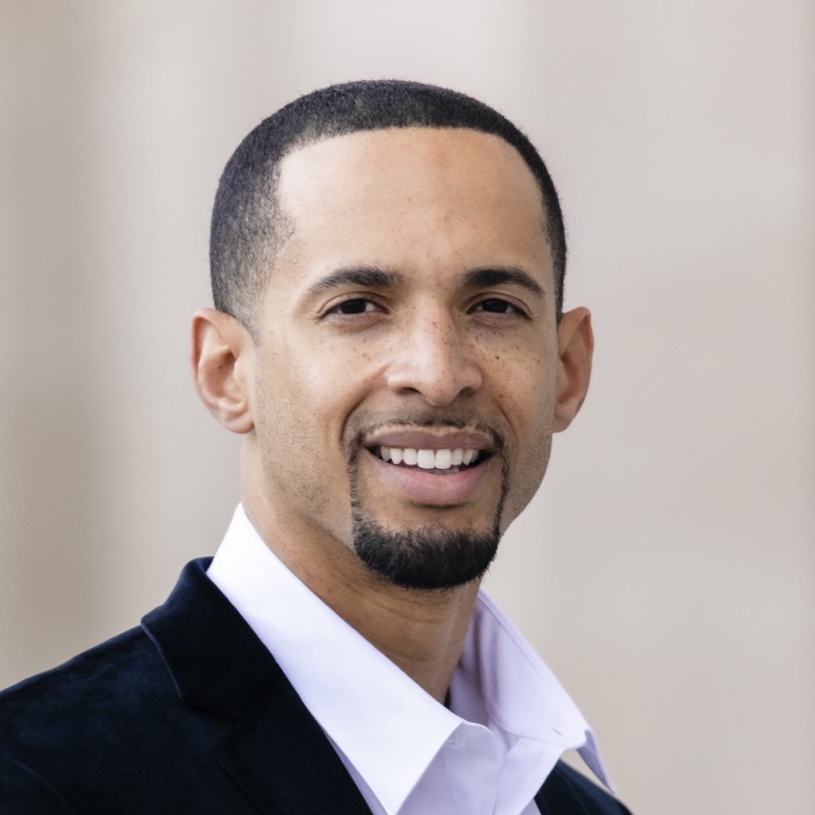
Steve Rolle
Entrepreneur, investor, author, and former U.S. Army service member who built businesses generating over $100M in sales and hosts the Rolle With Steve podcast.
12
APPEARANCES
12
PODCASTS
Nov 20, 2026


Steve RolleGUEST
All of us that want to be a life of control and are looking for options should be experimenting on a lot of different things, experimenting on our interests and finding out where our interests align with opportunities for us to also make money.
Steve RolleGUEST
Why is it important for your interests to align with where you make money? Because everything meaningful in life is going to be hard.
Steve RolleGUEST
And to the extent that you have a natural interest in the thing that also makes you money, it's much easier to get through those hard days.
Steve RolleGUEST
It's much easier to decide that you're gonna do it anyway because you're pursuing a passion that you already have an interest in.
16 MINS LATER


Matt UhlerHOST
So can you share with us some of that concept? No, it's a really incredible thought
Steve RolleGUEST
And it makes me wonder like, why is that? I've always been described as someone who was very ambitious, wanted a lot of things, extremely internally motivated.
Steve RolleGUEST
And I don't think that there's people that struggle with motivation and those that don't.
Steve RolleGUEST
They just haven't found where their natural interest aligns with what they're pushing themselves forward.
12 MINS LATER


Nickolas NataliHOST
I would love to know more about what you test today to distinguish something that has a repeatable business operation or like what levers do you pull to ensure that you can get those repetitions in as opposed to, like we mentioned, some favorable circumstances.
Steve RolleGUEST
Yeah, I've got a four-part system that I use both for filtering and then building engines around to prove a business.
Steve RolleGUEST
And we say scalable, we have to define what does scalable mean? Scalable just means that it's not just dependent on you and what you can do, but you can bring in others, you can bring in money.
Steve RolleGUEST
and hire people and they can go and reach the potential of what you cannot do on your own.
Steve RolleGUEST
So building a scalable business starts by you looking at a bunch of different opportunities and filtering those opportunities through a four part system.
48 MINS LATER
Nickolas NataliHOST
So my angle on this would be, if I'm a 45-year-old guy, I got two kids, I got a mortgage, I got a pretty good white-collar career, what would you advise me to do or to accomplish in the next year knowing that AI might be looming?


Mike NelsonHOST
Can you give us the background on that side hustle that became something huge for you? And then also maybe get into why the side hustle first makes the most sense rather than just quitting the job and jumping in full steam.
Steve RolleGUEST
Yeah, I think we've developed this sexy path of entrepreneurship because we're so into the startup vibe in the Silicon Valley.
Steve RolleGUEST
People forget there's somebody giving them hundreds of thousands of dollars or millions of dollars to quit their day job and go in full-time into their full-time startup.
Steve RolleGUEST
In fact, if you're a first-time business owner, who wants to give you money to do anything? Your idea better be phenomenal.
Steve RolleGUEST
And so the better pathway and the more common pathway for most people is to have a side business where they've identified a problem and a customer, and they've found a repeatable way to make money that they think, I can now scale this up.
28 MINS LATER
Mike NelsonHOST
Do you have any words of wisdom there that can solve this problem for Derek and I as far as hiring salespeople?


Steve RolleGUEST
You know, I have such a strong aversion to dependency and that comes from my formative years.
Steve RolleGUEST
It comes from the knock on the door and then bringing food to our house where I realized we are not living lives of independence.
Steve RolleGUEST
So that's important to note because that formulates my worldview on dependency.
Steve RolleGUEST
And so as I think about the aversion to that and go in the opposite direction, I want to be eternally independent because I'm not pursuing money.
19 MINS LATER

Todd GettsHOST
But if someone is sitting there right now and they're thinking to themselves, "Okay, well I don't have any skills that I could use to start a business with," are you saying they should get another job? Are you saying, you know, to, to get that skill set? Are you saying they should, uh, start something on the side to learn that skill set? What are the options for learning that skill set?
Steve RolleGUEST
I think the most important thing is to understand how you learned anything else in life.
Steve RolleGUEST
'Cause when you think about having marketable skills and persistent marketable skills, what we're really talking about is knowing that I'm a lifelong learner, first off, and I have the confidence to know that anything that I ever set out to learn, I was able to accomplish that.
Steve RolleGUEST
Might not have been easy, may not have come to me very quickly, but I have the confidence to know that I'm someone who can figure things out.
Steve RolleGUEST
And so for the person who's looking at their skill set today and they say, "I don't know how I would turn this into a business," first I would challenge that to say, "Hey, are there other people who have figured out how to take the skill set that you have and turn it into a business? Let's do some research around that first." But maybe you're right.
7 MINS LATER
Todd GettsHOST
One of the other questions I have is how do you know when it's safe to make the leap? Like, if you have just one or two successful months in your business, is that still safe? Or i- is there some other metric or number that you're looking for to know that, okay, my business is stable and it's gonna be able to provide for me and it's, it's safe to, to quit the job now?

Steve RolleGUEST
I had built something great, and it was making $50,000 to $100,000 a month in profit.
Steve RolleGUEST
But I didn't really understand the levers in the business of what made it grow, what made us flatline.
9 MINS LATER

Mark HaywardHOST
obviously once a business gets to a certain point you need to specialize and that's one of the hardest things for entrepreneurs and people in the business to understand that you need to specialize in that role in their roles to be able to grow that business going forward i wanted to ask you about founder dependency you talk a lot about the dependency on founders what for you does that mean because it sounds like you've experienced it yourself and and how does someone fix that idea of founder-led dependency on a business is it making that step away is it making hiring i believe hiring is the most important skill that a business zone actually has but for you what for you is the way that you can recognize and also do something about founder-led dependencies I think

speaker_2UNKNOWN
Mm.
Steve RolleGUEST
They will keep you stuck in a job that you don't like, working for a boss you don't like, a commute that you hate.
Steve RolleGUEST
And although those are the four dependencies, there's a key that can unlock each of those dependencies.
17 MINS LATER


Steve RolleGUEST
You want a position somewhere that your day job and your opportunities are an apprenticeship where you're learning on somebody else's dime.
Steve RolleGUEST
And so as I'm working for them for 18 months, taking a commission on revenue, and we start to find a lot of success by doing the three things that I identified, that if we do these things, we're gonna make a lot more money.
Steve RolleGUEST
We went from 10 to $15,000 a month to $150,000 a month without making any changes, just, uh, focused on keep things in stock, run some ads to it, and basically pay attention to what the data is telling us.
18 MINS LATER

Steve RolleGUEST
You want to position somewhere that your day job and your opportunities are an apprenticeship where you're learning on somebody else's dime.
Steve RolleGUEST
And so as I'm working for them for 18 months, taking a commission on revenue, And we start to find a lot of success by doing the three things I identified that if we do these things, we're going to make a lot more money.
Steve RolleGUEST
We went from $10,000 to $15,000 a month to $150,000 a month without making any changes, just focused on keep things in stock, run some ads to it, and basically pay attention to what the data is telling us.
Steve RolleGUEST
But what I'm seeing instead is now reviews are pouring in from people who go, this is great, love these brands, love the soap and shampoo.
16 MINS LATER

Greg L. FrankHOST
So what's your advice? What's your playbook on hiring? this high impact role in your company.


Steve RolleGUEST
You know, I, I was born and raised in the DC area, homeschooled all the way through tenth grade.
Steve RolleGUEST
Eleventh and twelfth grade, I actually went to school for the first time, and I had no direction of what I wanted to do with my life at that point.
Steve RolleGUEST
And like everybody else who was entrepreneurial when they were younger, I had these lawn care customers, and I was shoveling snow.
26 MINS LATER

Steve RolleGUEST
Whether you are building a SaaS product, whether you're working in e-commerce, you've found a way to leverage technology and turn that into a business.
Steve RolleGUEST
Because when you think about e-commerce, it's very different from building inside of technology.
11 MINS LATER

Harry SardinasHOST
So tell us a little bit more about scaling up and this online in-person game.