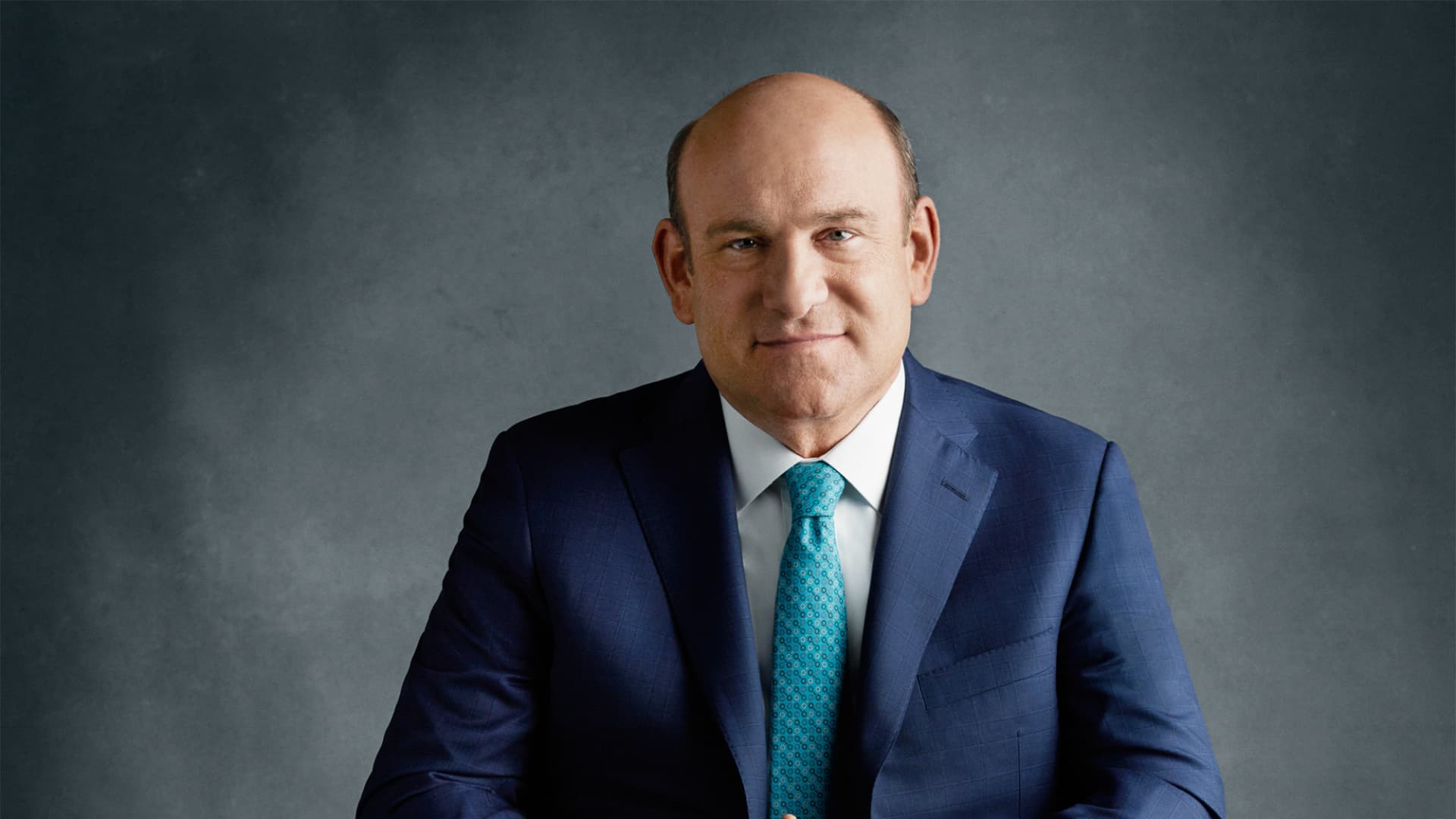
Steve Liesman
American journalist
64
APPEARANCES
9
PODCASTS
Nov 3, 2026


Stephanie RuhleHOST
Then isn't that a double whammy for Elon Musk money? If he's putting all this money in because he doesn't want to get investigated and life is really expensive, I would think that's a one-two punch.

Steve LiesmanGUEST
I was just wondering if you had a better story to tell, would you have to spend so much money telling it? The interesting thing, maybe I could take some of the numbers that were given earlier and bring them down to things people can digest.
Steve LiesmanGUEST
If you use the number that's bantied about in Maine of $400 million on spending and divide it by the number of people in Maine, it's $353 per person.


Jeremy HobsonHOST
And you brought that up, but... you know how does that play out here in this election that people think not only is the economy not working but it's rigged against uh the ordinary american
Steve LiesmanGUEST
um you know again i was surprised in our poll to see corruption rocket to the top of concerns it really is a story that's out there and and i think many average americans are aware of what's going on and You know, in my reporting career, which spans I think three or four decades at this point, there used to be corruption stories and they were stories you would get on the QT from an anonymous source.
Steve LiesmanGUEST
The corruption in this administration is so brazen, is so out there with the president's sons doing business with the government, the president himself reaping billions of dollars, and not even caring at all about the appearance.
Steve LiesmanGUEST
What interests me here is not what we know, but if there should be a Democratic Congress and they should have some investigative powers, it's the stuff we don't know.
Steve LiesmanGUEST
We've heard these stories about... what was it, Haba in the New York Times the other day? Helena Haba, the president's former lawyer.
Steve LiesmanGUEST
Helena Haba, the president's former lawyer, and then, I guess, for a few minutes, temporary attorney general in New Jersey.
7 MINS LATER

Steve LiesmanGUEST
I think people are not motivated, especially by what's happening with their 401Ks.
Steve LiesmanGUEST
A lot of them come into the stock market through their pension plans, through their IRAs.
Steve LiesmanGUEST
It's not something that's as visible to them as the cost of living, and I think that's the thing that would motivate people.
9 MINS LATER
Stephanie RuhleHOST
Is anyone buying this argument from Trump about lifting Russian oil sanctions because of it's about lowering diesel prices?

Nicolle WallaceHOST
Um, but people didn't seem to care about the corruption until their own economies collapsed, and I wonder if you can just give voice to what is happening to the economy right now.
Steve LiesmanGUEST
now.Well, you know, y- y- you could even go further than that, Nicole, and suggest that President Trump was elected largely on the promise of bringing prices down, which he said he would kinda do on, on day one, or maybe that was a day two promise, and that the, uh, electorate rejected the Democrats because of their inflation record.
Steve LiesmanGUEST
Um, a- and this seemed to be the line that, uh, was drawn in the sand by the, by the electorate, and one that has, has said, "You know, we just can't tolerate this." He came in and said, "I was gonna lower rates or, and lower g- gasoline prices," and all that has gone the wrong way.
Steve LiesmanGUEST
There was a, a, a, a, a record of high inflation under the Biden era, but it came down and, and I was just looking at, look, look, look at the record, the Federal Reserve raised interest rates by 500 basis points or 5 percentage points under Biden, brought inflation down over that time period from 9% to about 3%, which was the handoff to, uh, President Trump.
12 MINS LATER
Stephanie RuhleHOST
Mr. Liesman, what is your take on what we heard from Secretary Bessent in that interview?
Steve LiesmanGUEST
When he first said, "I am the house," m- most of the people who I talk to in the bond market, uh, kinda laughed at that because he is specifically not the house unless he has a very large cache of cash, which he doesn't really have.
Steve LiesmanGUEST
And the effort of taking on the, the $40 trillion bond market, it requires a lot of money that Bessent didn't have.
Steve LiesmanGUEST
So he said that, and most of the people who trade these bonds and, and, and have large trillion dollar portfolio, portfolios of them didn't think much of the comment.
Steve LiesmanGUEST
And of course, you could see how much they thought of the comment by what you just reported, which is what happened to bond yields.
Steve LiesmanGUEST
They went s- specifically and, uh, in, in a very, uh, uh rigorous way, the other way on him.
Steve LiesmanGUEST
Everybody is probably on board here, with the exception of the administration, of raising rates in order to bring down inflation if it gets us to a better place.
Steve LiesmanGUEST
There was good support, I think, Stephanie, during the last part of Powell's tenure.
Steve LiesmanGUEST
He was raising interest rates by 75 basis points in several successive rate hikes in order to bring down inflation.
Steve LiesmanGUEST
And Republicans and Democrats weren't really protesting that much because inflation is such a burden on most Americans.
Steve LiesmanGUEST
the economic connections between the US and Canada to show how bonkers this whole thing is.
Steve LiesmanGUEST
Um, w- the only reason why we now have a deficit with Canada is because several years ago we started importing cheap Canadian oil, or cheaper Canadian oil than the US.
Steve LiesmanGUEST
Guess where we ship back the gas? Back to Canada, where we make more money on it.
Steve LiesmanGUEST
Um, so the whole idea of this idea of, of there's a trade deficit with Canada, and somehow we're losing money, it doesn't make any sense.
Nicolle WallaceHOST
All caps, "Lower the rate or I'll stop trading with countries with which we have a deficit." Do you think Trump understands, and I'm guessing you don't because of the story you just told about Canadian oil, a trade deficit?
Steve LiesmanGUEST
reality.Well, it's, it's clear that we've had a major downshift in job growth, and I, I think there's two potential sources there, and actually it's the second one, the one people don't talk about, that is the one that's more worrisome to me.
Steve LiesmanGUEST
The first, uh, downshift in growth, uh, for jobs, uh, comes from the idea that, um, uh, maybe the economy is cooling some and, and you've had all of these speed bumps along the way, these, uh, self-inflicted speed bumps if I can mix a couple metaphors there.
Steve LiesmanGUEST
Um, the first one being, uh, the tariffs, the second one being the war in Iran and the spike in gas prices.
Steve LiesmanGUEST
This thir- the, the other element which is more worrisome to me, 'cause you can go through these cyclical issues and you can bounce back and things can be okay, um, is this idea that we have basically, uh, decided not to have any labor force growth.
Steve LiesmanGUEST
Um, you have, uh, very little population growth, uh, domestically among, uh, the native population, and we have decided not to allow many immigrants into the country and kick a bunch out.
Steve LiesmanGUEST
So what's happened, Nicole, is that the, uh, what you would call the average number of jobs needed, uh, in this economy, or the amount of labor force available, has come way down.
8 MINS LATER
Steve LiesmanGUEST
the last two decades, I'm the one on CNBC at 8:30 that gives the embargoed government data.
Steve LiesmanGUEST
Because of the context of that for me, this announcement by the president makes me wanna puke, literally puke.
Steve LiesmanGUEST
Because when I think about the role of government, anything it does well, the provision of public good and p- and data is a public good, is in the first instance.
6 MINS LATER

Steve LiesmanGUEST
The first one is that the way I look at this is snatching, uh, defeat out of the jaws of at least a modest victory.
Steve LiesmanGUEST
I think that's the way to maybe put it best, which is all this stuff is going on, stuff that would trigger hearings that would go on for months and would outrage the public.
9 MINS LATER
Stephanie RuhleHOST
What does that tell you about the concentration of economic power that we are now seeing, and how fractured the economy is?
Steve LiesmanGUEST
It's like one of those, um, you know, tabs that you put into the dryer these, or to the washing machine these days.
Steve LiesmanGUEST
And essentially what's going on is the US economy is benefiting from this massive investment in AI right now.
Steve LiesmanGUEST
Uh, if you take that away, uh, there's questions as to what's going on in the rest of the economy.

Steve LiesmanGUEST
We're, we're approaching what the, uh, head of Exxon calls the operational minimum.
Stephanie RuhleHOST
... and he was willing to tell that truth on your air today? That's the point I wanna make.
Nicolle WallaceHOST
What is the impact historically of a crisis that is described by folks like yourself as historic, an historic energy crisis?
Steve LiesmanGUEST
They're trying to see if this can end re- relatively quickly and work its way through and not create an inflation problem.
Steve LiesmanGUEST
3.2% on the core rate, 3.5% on the headline rate, and what I'll explain to you is that I'm not worried about the headline rate.
8 MINS LATER
Nicolle WallaceHOST
And after seeing Orban tossed out, I think he knows that it's possible, even in an, an authoritarian system.
Nicolle WallaceHOST
Making CO2 devours energy, so the steep rise in natural gas prices since the UK attacked Iran and Tehran closed Hormuz, ha- has imperiled international supplies." Um, your thoughts on what we're sort of staring at?
Steve LiesmanGUEST
I'll take a step back and notice, Nicole, that you're talking about foreign countries.
Steve LiesmanGUEST
And at the moment, when it comes to the worst of the effects of the Iran war, it's our war and mostly their problem.
Steve LiesmanGUEST
There are countries that are cutting back on asking people to, to work at home.
Nicolle WallaceHOST
I mean, since February 15th of this year when gas was $2.91 a gallon to April 15th, which was Tuesday, it's now $4.11 a gallon.Um, for the vast majority of American households, that's a real, that causes a real reorganization of spending and priorities and choices you didn't have to make as of February 15th.


Steve LiesmanGUEST
Um, I'm thinking of inflation right now as a badly cooked layer cake, and, and I got, at the base, I start off with inflation a little bit thicker than I wanted it.
5 MINS LATER


Steve EismanHOST
Any thoughts on when Kevin Walsh finally gets in? What type of changes he might make? I
Steve LiesmanGUEST
The fact, I was there the day and reporting the day when Jeanine Pirro, did you see that press conference that she had? Oh my God.
Steve LiesmanGUEST
Who was that? She is the former Fox News host who is now the Attorney General for the District of Washington.
Steve LiesmanGUEST
Uh, a- as you say correctly, the, the Strait of Hormuz is a major conduit for not just oil, but fertilizers and other food stuff.
Steve LiesmanGUEST
So the in- inflation we'll see will be a- across other products as well as just oil.
Steve LiesmanGUEST
I, I do wanna set the stage, though, in terms of the US and oil, 'cause the situation has changed over time.
Steve LiesmanGUEST
A very resilient US economy that, among other things, produces a lot more oil, uses a lot less oil for growth.
7 MINS LATER


Ari MelberHOST
Uh, but first, I wanna get you on the most newsworthy part of this, which is, what did you hear in the president's view, or we could call it a theory, to be charitable, o-on the economics of this war in the days ahead? He, he made some kind of broad statements about why things economically will ultimately be okay.
Steve LiesmanGUEST
Well, if I could take a step back, Ari, I, I think the question here is one that was just raised, which is, is this something the president can turn off? I, I generally agree with the idea that the president looked at the situation in the markets, looked at the situation with oil prices, and decided take a step back.
Steve LiesmanGUEST
Certainly, his rhetoric about this ending very soon is different from his rhetoric in his tweets on Saturday, where he talked about a continued extensive bombing campaign against Iran.
Steve LiesmanGUEST
What the key to the situation is here economically is one journalist tried to get at it.
Steve LiesmanGUEST
There wasn't a follow-up, unfortunately, which is the opening of the Straits of Hormuz.
Steve LiesmanGUEST
Twenty percent of the world's oil goes through there, and the extent to which there is an economic-- a continued economic impact from what's happening, it will be key as to the ability of the US government or a-allies to keep open the Straits of Hormuz.
Steve LiesmanGUEST
They are closed now, as far as we understand, and what's unclear is if the president stops now, does that-- is, can the US open, can the US keep them open and resume the flow of oil? That will be the key.
Ari MelberHOST
A-and Steve, did he sound to you like someone who had been meaning to get around to a, an energy and economic update and, and now is doing so, or, or did he sound reactive or day trading off the terrible start to the week for the markets and by extension aspects of the Trump plan?
Nicolle WallaceHOST
Um, just more broadly, your, your reaction to what the Supreme Court decided on tariffs.
Steve LiesmanGUEST
Well, it's good, I think, ultimately, for the restoration of the separation of powers.
Steve LiesmanGUEST
I think from a business standpoint, that's probably a good thing, that you don't have a president who can raise, uh, as much revenue as he wants in any particular way, basically levy a massive tax on the American public.
Steve LiesmanGUEST
Uh, th- I think they do have to still deal with the, uh, the question of whether or not the president can spend any money he wants without the authorization of Congress.
Steve LiesmanGUEST
But right now, the revenue thing and this idea, I think, to the extent to which some uncertainty has been lifted, this particular emergency tariff rule allowed the president to impose almost any tariff he wanted immediately, um, and with no congressional review.
Steve LiesmanGUEST
Now, the, what's not been removed, Nicole, is this idea that he's now saying, and the treasury secretary said this, they intend to replace all of the revenue that they have raised and will raise from the emergency tariffs in other sections.
Steve LiesmanGUEST
So this is not going away, and in many respects, it may be even worse from an uncertainty standpoint, in that a new patchwork of tariffs will now be assembled, which has been very, very difficult for businesses, especially small businesses, to navigate.
Nicolle WallaceHOST
Do you think his response to the Supreme Court, calling the six justices, three appointed by Republicans or three appointed by Democrats, will cause any business leaders unease, where he basically calls them disgraceful?
Steve LiesmanGUEST
Same thing on Liberation Day, the stock market, the bond market, they're the only constraints on Donald Trump right now, and y- you know, I've, I've talked to these guys, and behind the scenes, they're like, "This is...
Steve LiesmanGUEST
You know, I gotta- I have the responsibility of a company to run." I think what you're saying, Stephanie, is an interesting question as to whether or not there's a backlash in the future against those who don't step up.
Steve LiesmanGUEST
And one of the problems Biden World had was they were very hostile to the media.


Steve LiesmanGUEST
Well, you know, this was the sell America trade that we had a, another time in April, Liberation Day, when those tariffs came on.
Steve LiesmanGUEST
So y- bond yields fell, which means people sold bonds, US bonds.... stocks fell, which means they sold US stocks.
Steve LiesmanGUEST
What rose? Well, gold went up, and I think there were two components to that, Chris.
Steve LiesmanGUEST
I think the first component is that immediately the gov- the market is factoring in the economic effects of tariffs, and they tend not to be good.
Steve LiesmanGUEST
What are you thinking here? Well, I hate to start off with my first two answers to you being corrections, but I want to just say that I think you're conflating something in your question that I try to separate, which is the market and the economy.
Steve LiesmanGUEST
And I love the idea that you're thinking about economic growth and the market in GDP terms.
Steve LiesmanGUEST
A lot of people are looking at technical charts and they're looking at momentum and doing this.
Steve LiesmanGUEST
And they're not thinking about it the way you just described it, which is there's a pie.
17 MINS LATER
Steve LiesmanGUEST
So this is exactly why the Republicans argue that government should not get involved, because government, they believe, doesn't (paper rustles) do anything well.
Steve LiesmanGUEST
But certainly, one of the things it doesn't do well is pick the right winners of the future.
Steve LiesmanGUEST
It warps, what we would call more, uh, clinically, is the allocation of capital, where the money goes and why the money goes there.
Stephanie RuhleHOST
What do I care?" Can you explain to our audience how important it is and specifically how important it is to the Federal Reserve as they're trying to balance this fragile labor market and, and hopefully trying to make sure inflation doesn't spike?
Steve LiesmanGUEST
You're cruising along at about 562 miles an hour, and you have a bit of a tailwind, and one of your screens just went out.... that's essentially the, what's going on.
Steve LiesmanGUEST
We've lost a big part of the indicators of, well, almost all of the parts of the indicators of where the economy is going.
Steve LiesmanGUEST
As time goes by, we will become more and more unsure of our altitude and our speed.
7 MINS LATER

Scroll for more appearances