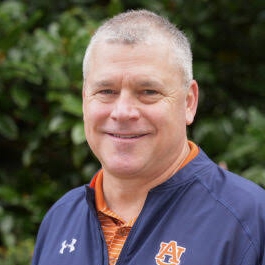
Steve Ditchkoff
Dr. Stephen S. Ditchkoff is the William R. and Fay Ireland Distinguished Professor of Wildlife Ecology and Management at Auburn University, where he leads the Auburn Deer Lab's white-tailed deer research.
2
APPEARANCES
2
PODCASTS
Nov 13, 2026


Josh LuckHOST
So have you guys taken a look at and kind of compared and contrast as like how that interaction may be if the doe movement rate is higher as well as the buck movement rate is higher?

Steve DitchkoffGUEST
No, and so, What we do see, and we've taken a look at movement rates, and we do see an increase in, I don't know, I haven't looked at movement rates per se relative to the broader.
Steve DitchkoffGUEST
We have, but we haven't really interpreted in the same way that you're asking about.
Steve DitchkoffGUEST
You know, there's been a lot of discussion in Alabama because we really didn't hunt the post-rut here in Alabama for a lot of years until we changed the season.
Steve DitchkoffGUEST
And that didn't happen until like the early teens, 2012-ish, 2014, right in there somewhere, where we extended our season to February 10th.
Steve DitchkoffGUEST
And it used to end at the end of January, despite the fact that our peak of breeding was around January 20th.
7 MINS LATER
Josh LuckHOST
So if you were looking at this data, how would you apply this to your hunting strategy?

speaker_3ADVERTISER
Visit carhartt.com/jointhetrades to learn more
Steve DitchkoffGUEST
So now we have a family tree built, and I can go back through, and we have the, we have the individuals all ear tagged, and so we can take a look at 417 had th- he sired this many offspring in, when he was one year old and two year old and three year old and four year old, et cetera, et cetera.
Steve DitchkoffGUEST
So we've done a lot of this trying to sort out who's breeding with who and why are they breeding with, with, with those individuals.
Steve DitchkoffGUEST
And, and what we're finding is, is, is it's not just that information we've gotten that from the facility as well as other things, you know, stuff that work that other people have done plus other studies we've done, has really led to, you know, it, it's not random mating out there.
Steve DitchkoffGUEST
It's you have individuals that are-- Each individual out there is trying their best to pass on their genes.
16 MINS LATER