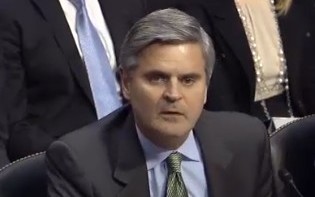
Steve Case
American businessman and former chairperson of AOL
10
APPEARANCES
9
PODCASTS
Oct 15, 2026


Steve CaseGUEST
... to be smarter, to track people's preferences, so you can provide even more personalized, customized service.
Steve CaseGUEST
But I think, you know, at least for the Exclusive Collective, given the, you know, the audience we're targeting, which are the, you know, the higher-end luxury customers, it's always gonna be, you know, people first.
Steve CaseGUEST
And we have a couple other hotels lined up, and we're now working on the amenities, experiences, and really building it as a great community, not just on that peninsula itself, but how we connect that, the people on, and the a- the adjacent community, the little town of Coco, another beach town called Hermosa-


Joe KernenHOST
it might already be too late and and this could be in spades this time right and this could be even exponentially true
Steve CaseGUEST
yeah i'm super excited about the potential of ai we've invested a number of companies in healthcare and farming and and all kinds of sectors that are using ai effectively but the pace at which it's been adopted and the impact is now having uh has created a lot of concern and about 80 percent of americans have expressed concern about it which is leading it to become more of a political issue so i think it is time that's why i wrote the up at the New York Times to get some reasonable regulation in place, starting with some disclosure.
Steve CaseGUEST
If we don't do something soon, I think we're going to run the risk of 50 states doing 50 different laws, which are going to be really difficult, or a real backlash that leads to much more onerous regulation, as we've seen with other new technologies in the past.
Steve CaseGUEST
And you're starting to see that even yesterday, as you said, in the U.N., You know, some of the leaders of these companies are saying we do need to move beyond just talking about it and put some regulation in place, starting with self-regulation, but then have some teeth in it by having Congress pass something, which is tricky.


Cameron McLainHOST
So what do you think applies today from some of the lessons from AOL? And what do you think people maybe misunderstand about AI where there might be an opening?
Steve CaseGUEST
Well, I'd say it's hard to take on the big boys in sort of the core platform AI, sort of the LLM side of things, because that's really, you know, kind of like $100 billion plus ante to play.
Steve CaseGUEST
So that one is basically, you know, whether it be the Googles or the Microsoft or others have really been, you the leaders there.
Steve CaseGUEST
Thankfully, they have some new companies, obviously Anthropic and OpenAI in particular, and OpenAI largely, I think, because of the partnership and the money from Microsoft that really fueled their growth.
Steve CaseGUEST
The big tech incumbents have a big structural advantage and that has resulted in essentially big tech getting bigger.
Steve CaseGUEST
Where it's now shifting quite rapidly is what I think is more like vertical AI as opposed to more platform AI.
8 MINS LATER
Cameron McLainHOST
But the centrality of technology to culture, both the economy, but also kind of softer culture, I think, is really accelerated over the last decade, I'd say.

FloydHOST
Like I think Flash was purchased from Macromedia.
10 MINS LATER
FloydHOST
kind of thing like a


Kelly EvansHOST
Given that we're expecting a hold today, how big are the risks around the Fed, especially as the tech sector is taking on more debt?
Steve CaseGUEST
Well, at the early stage, the startup phase, uh, the interest rates don't matter quite as much as, as for later stage companies which really need significant capital, often debt, other, other kinds of things.
Steve CaseGUEST
I mean, when we went public, AOL went public in 1992, our market value was $70 million.
Kelly EvansHOST
I don't wanna put it too strongly and say the internet is over, but the AI age I think is making people realize they don't know what is coming at them from the digital world, and they want a real, authentic human experience.


Bret BaierHOST
Um, the inspiration, you say, was to build community through connectivity, and you once said, "The killer app is community." What, what do you mean by that?
Steve CaseGUEST
Well, when we got started, uh, the idea of the internet was viewed by most as sort of fanciful, never really would happen, almost science fiction, futuristic.
Steve CaseGUEST
And, you know, the data was, was, uh, supportive of that skeptical, cynical argument.
Steve CaseGUEST
Of those 3% were only using the internet about an hour a week when we got started.
Steve CaseGUEST
Uh, so we knew it was gonna be a, a, a mountain to climb to get people to understand the power of the internet, get people to wanna be connected, get it... make, make it easier to use, more useful, more fun, more affordable.
Steve CaseGUEST
There were a lot of things we had to do, but one of the core issues was what, what was the core of the internet? What was almost the soul of the internet? And for us, it was people.
Bret BaierHOST
What, what have you learned, uh, about American cities across the country that might surprise people?


Willy WalkerHOST
As your market cap went from 70 million to 160 billion, how how'd you stay disciplined to not chase the temptations in the sense that you had so much currency to be able to go basically expand anywhere you wanted to and i'm sure you had offers to go vertically integrate into cable companies to go into pc manufacturing i mean all the various ancillary services and goods that you had to interface with at aol how did you keep the discipline on your kind of core business during that explosive growth Well, we
Steve CaseGUEST
Some were niche products like MapQuest, one of the first mapping software companies.
Steve CaseGUEST
Some of the larger companies like Netscape created one of the first worldwide web browsers.
Steve CaseGUEST
Then later, obviously, merging with Time Warner, which was a really big merger, actually the biggest merger ever.


Steve CaseGUEST
When we started this effort, initially, I started Revolution of the Venture Firm, then started doing some things like bus tours and to visit different cities.
Steve CaseGUEST
And I remember the first one we did over a decade ago, we went to Detroit and Pittsburgh, Cincinnati, Nashville, I think were the first cities.
Steve CaseGUEST
We've now made... over 200 investments in companies located in over 100 different cities.
12 MINS LATER

Steve CaseGUEST
Uh, I think in retrospect, again, the dot-com boom, whatever it was, 25 years ago almost exactly, uh, when AOL merged with Time Warner and a lot of things were happening in the, in the space.
Steve CaseGUEST
And, uh, some people decided then that maybe the internet thing was just a passing fad.
Steve CaseGUEST
But certainly there'll be some market correction, some valuations will be a little bit, uh, off.
Steve CaseGUEST
And, and what's also different is back then, 25 years ago, most of the big companies, uh, AT&T, General Electric, didn't really believe in the internet, didn't really invest heavily in the internet.

Brian KilmeadeHOST
Do you think there's humility now as we go into the AI world, to where you're not quite sure, but you're open to what might be next that maybe didn't exist in the linear world, uh, back then?

Becky QuickHOST
Does that come with government spending or is this private spending that maybe is partnered with some of that? It's a mix.
Steve CaseGUEST
Some of the government investment through the Department of Commerce on tech hubs has helped build some momentum there.
Steve CaseGUEST
The SBA has programs like the SBIC program that's trying to get more capital to more venture firms in different parts of the country.
Steve CaseGUEST
and the entrepreneurs who are going to really be creating the future and funding the future.
Steve CaseGUEST
But there obviously is a role for government play, including on issues like immigration.
Becky QuickHOST
What do you think is different now? How does this feel different to you? What's new? And I guess what's the same? As somebody who's watched all of this.