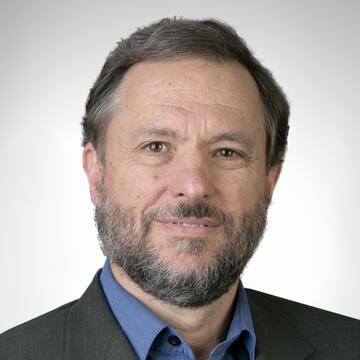
Stephen Zunes
American critic
15
APPEARANCES
9
PODCASTS
Oct 16, 2026


Stephen ZunesGUEST
I mean, in the modern era, there's a horrific civil war in the early 60s between the left-leaning Republican forces and the monarchists, and later you had the armed Marxist revolution against the British who controlled the southern half of the country.
Stephen ZunesGUEST
Then you had the unification and the tribal conflicts and And you've had all sorts of horrific goings-on.
Stephen ZunesGUEST
There was real hope in the big 2011 pro-democracy movement there, but the United States and the Saudis essentially crushed it by bringing in the Assad dictator's vice president, General Hadi, to rule, and then that led to the long-dormant Houthi rebellion in the north to end up taking over most of the country.
7 MINS LATER


Glenn ReederHOST
We spoke with Stephen Zunis, professor of politics and international studies at the University of San Francisco, where he serves as founding director of the program in Middle Eastern Studies.
Stephen ZunesGUEST
Iran put together a proposal very similar to the Memorandum of Understanding that the United States agreed to back on June 17th, but Trump has rejected, and that is to reopen the Strait of Hormuz in return for the United States lifting sanctions and lifting their blockade of Iranian ports and ensuring that there is a region-wide ceasefire.
Stephen ZunesGUEST
But Trump has rejected that, and he has also rejected Iran's promised to immediately resume negotiations, allowing for UN inspectors from the International Atomic Energy Agency to be there on the ground to monitor the situation.
Stephen ZunesGUEST
Now, this idea that having inspectors on the ground is not enough is a familiar one.
Stephen ZunesGUEST
Some of your listeners may remember how back in 2002, the Iraqis allowed for the return of inspectors from the International Atomic Energy Agency, as well as from the UN Monitoring and Verification Commission to confirm they no longer had a nuclear program and they no longer had any chemical or biological weapons or weapons programs or weapons systems.
Stephen ZunesGUEST
But the Bush administration, with support of bipartisan leadership in Congress, decided to invade anyway.
Stephen ZunesGUEST
And And unfortunately so much of the blame, uh, comes down to us policy and not just policies under the current Trump administration.
Stephen ZunesGUEST
Uh, the, um, you know, Biden was the world's biggest number one supporter of Israel's genocidal war on Gaza and it's a, uh, invasion attacks on Lebanon and the, and And, of course, much of the roots of the problems in Yemen go back to U.S. policy under the Obama administration.
Stephen ZunesGUEST
And if it's okay, I'd like to start with Yemen, because that's really the biggest news since you and I recently talked about the Houthis, who were originally the representatives of a tribal minority in the far north of the country.
Stephen ZunesGUEST
have succeeded in controlling uh the bulk of the populated sections of that nation for uh well over a decade now uh and largely because the opposition to them is so divided they are not that popular among ordinary uh yemenis uh but uh the division of the um of the opposition, as well as some support from Iran, though not as extensive as the US has implied, has definitely given them a strategic advantage.

Kris WelchHOST
The attacks on the U.S. bases are not just like, oh, well, not to worry, just housecleaning.


Rod BergerHOST
But, you know, going from an idealist by some to a hard nose analyst, do you mind talking a little bit about John Bolton and what happened that experience a couple of years ago? Because I found that fascinating and I would love to hear sort of your sort of after action report, as they might say, or, you know, in hindsight.
Stephen ZunesGUEST
Well, I was traveling with my wife in France and Italy, and I got this communication that the Oxford Forum, the famous debate society at British University, wanted me to take part in a debate on the question of whether military force was a good way to promote democracy.
Stephen ZunesGUEST
And I was joined, and my opponent, my chief opponent in that debate was none other than John Bolton, arguing, of course, that we should do this.
Stephen ZunesGUEST
I was joined on my side by Peter Galbraith, an historian who has been on a number of UN commissions and was the first U.S. ambassador to Croatia back in the 1990s.
Glenn ReederHOST
We spoke with Middle East scholar Stephen Zunas, who thinks Trump's threats only emphasize that he's stuck in an ongoing war that he started.
Stephen ZunesGUEST
It's essentially an admission that the military option, which is really the only one that Trump seriously considered, is not working.
Stephen ZunesGUEST
And so they're trying all sorts of different techniques to see if they can get the Iranians to agree to their demands, but it's not working, in large part because the assassinations at the start of the war ended up leading to a more hard-line group in charge in both the clerical leadership and in the Revolutionary Guard.
Stephen ZunesGUEST
They slaughtered thousands of them back in January, and so they are hoping that the worsening economic conditions are not going to alienate the population too much.
Stephen ZunesGUEST
They have suffered through sanctions before, through the Iran-Iraq war and more.
Stephen ZunesGUEST
And so it appears that though there'll be some real hardship for the Iranian people, that the Iranian regime is going to be able to hold on, and the stalemate is going to continue indefinitely.
Glenn ReederHOST
We spoke with Stephen Zunis, professor of Middle East Studies at the University of San Francisco.
Stephen ZunesGUEST
What Trump appears to be acknowledging is that he is finally realizing there is not a military solution to this crisis, that Iran has developed this form of asymmetrical warfare, weapons of mass disruption, you might call them, that has made international commerce crippled through a result of the ability to close the Strait of Hormuz, but also recognizing that the United States is running out of missiles, both defensive and offensive.
Stephen ZunesGUEST
And that is draining resources from other theaters where the U.S. has security commitments like Europe and East Asia.
Stephen ZunesGUEST
So he is presumably getting feedback from his generals saying this can't go on like this.
Stephen ZunesGUEST
So Trump is relying on the strengthened sanctions as well as the U.S. naval blockade of Iranian ports to see if this will force the Iranians to concede.

Stephen ZunesGUEST
Well, the United States has provided foreign aid to Morocco, both military and economic, for many decades.
Stephen ZunesGUEST
They were a bulwark of the West during the Cold War, challenging Algeria, officially not aligned, but leaning towards the Soviets.
Stephen ZunesGUEST
and indeed supported the United States and some of its interventions in the Democratic Republic of the Congo, then known as Zaire.
Stephen ZunesGUEST
They supported UNITA on behalf of the United States during the Angolan Civil War.
Stephen ZunesGUEST
So they were an important Cold War ally and more recently an ally in the war on terrorism and quite happy to support sort of the neoliberal model of development And the like.
12 MINS LATER

Adrian GoldbergHOST
they have rekindled their relationship with algeria i think in recent times they pointed out that they are the largest recipients of algeria's natural gas
Glenn ReederHOST
Stephen Zunis is professor of Middle East Studies at the University of San Francisco.
Stephen ZunesGUEST
Reports seem to indicate that Trump was leaning strongly towards dramatically escalating the bombing raids on Iran to include some critical civilian infrastructure.
Stephen ZunesGUEST
But he was talked out of it by those who recognize that Iran still had strong retaliatory capability.
Stephen ZunesGUEST
that even with continuing to intercept 90% of Iranian projectiles, enough would get through to do a lot of damage to American forces and very possibly to the civilian infrastructure of many of America's regional allies.
Stephen ZunesGUEST
But he also recognized that even if they could defend themselves more effectively than that, they'd soon run out of these Patriot missiles and other interceptors.
Stephen ZunesGUEST
not just the middle east but from various theaters around the world where the us has set up positions around bases and around allied countries so now he's going back to the negotiating table supposedly but this doesn't mean there's going to be an agreement indeed what we are looking at in all likelihood is a continuation of an on-again off-again war that could go on for many months
Glenn ReederHOST
Could this be almost like a permanent war, which of course Trump promised not to get us into?
Stephen ZunesGUEST
The 2015 nuclear agreement that was signed by the United States, Iran, and five other countries was very detailed, left no room for ambiguity.


Poh Kok IngHOST
Uh, Iran's Revolutionary Guard is now saying regional energy is, quote, "shared by all or denied to all." Is this Tehran deliberately opening a second front because pressure on Hormuz alone has not changed US behavior?
Stephen ZunesGUEST
I mean, there are certainly, uh, analysts, including many in Iran, who believe that the, uh, regime, uh, is, uh, [clears throat]Is pushing things a little too far.
Stephen ZunesGUEST
Uh, but the, uh, thinking behind the, uh, hard line Iranian, uh, leadership, which has become more hard line unfortunately as a result of the, of, of the war, is that, uh, any...
Stephen ZunesGUEST
Th- they, they want to demonstrate that they, uh, do have this power, uh, through this new form of asymmetrical, uh, warfare they have, uh, developed.
Stephen ZunesGUEST
Uh, that they, that, uh, any kind of agreement on nuclear issues or on, uh, lifting sanctions or, uh, or their missiles or all these outstanding issues there, uh, that they have the clout, they have the power, uh, to, uh, set, set terms, uh, because of their, uh, ability to, to disrupt.
Stephen ZunesGUEST
And the, the, the dilemma of course is that, uh, y- you know, any agreement that, uh, the United States and other countries, uh, uh, uh, agree to under these circumstances is gonna be, you know, less, uh, less beneficial for the West and more beneficial for Iran than the Iran nuclear deal that, uh, Obama and six other, uh, world leaders signed and that Trump broke off.

Andrea HengHOST
So what's the positioning here? Uh, is the Trump administration wading in dangerous waters at this point?

Stephen ZunesGUEST
Hezbollah is a powerful militia that also has a very elaborate network of political and social services and other operations, particularly in the Shia-dominated areas of the south and the southern suburbs of Beirut.
Stephen ZunesGUEST
Any kind of deal that the Lebanese government wants to have with Israel must include an end to the attacks and a withdrawal from the occupied Lebanese territory.
Stephen ZunesGUEST
Hezbollah, meanwhile, needs to stop the provocative actions that are giving Israel the excuse to continue attacking.
Stephen ZunesGUEST
There really has been a sea change in the past couple of years in terms of attitudes towards Israel and support for Israel.
Stephen ZunesGUEST
This is similar to dramatic shifts we saw regarding U.S. policies in Vietnam towards Iraq.


Doug BeckerHOST
And so therefore, the idea that Lebanon and Israel could come to any sort of a peace agreement is really undermined by Israeli policy.

Stephen ZunesGUEST
Let's remember that Hezbollah was essentially emerged as a result, direct result of Israel's occupation.
Stephen ZunesGUEST
in the 1980s and also very much a result of the sectarian system that the French colonialists imposed that gave the Shias the largest and poorest of the three major communities, the least political power of the three.
Stephen ZunesGUEST
They were able to use this kind of right-wing populism against the old elitist style Lebanese politics and And that, you know, this really threw things off.
Stephen ZunesGUEST
And so this idea that is saying, OK, Lebanon has to It has to destroy Hezbollah.
16 MINS LATER
Stephen ZunesGUEST
Indeed, given the backlog, the mines and everything else, it's hard to imagine the Strait reopening immediately.
Stephen ZunesGUEST
The fact that Pakistan has confirmed at least the outline of the agreement would make it appear that this is real it'll be very interesting to get a fuller reaction from the iranian side but it should be emphasized that while the reopening of the strait whenever it actually can manifest itself in real time and if this really does mean a ceasefire not just with iran but in lebanon as well there are still some very thorny issues ahead and i think we have to expect that there's going to be a long twilight to of tense negotiations, threats of resumption of war, likely periodic and continued Israeli violations, the ceasefire in Lebanon.
Stephen ZunesGUEST
This is clearly a provocation on the part of Netanyahu to try to sabotage any incipient agreement between the United States and Iran.


Nermeen ShaikhHOST
So Professor Zunes, uh, your response to the comments we just played, and to what extent you think they're representative of the Democratic Party overall.
Stephen ZunesGUEST
Well, certainly Schumer and Jeffries are among the more hawkish, uh, uh, members of the Democratic caucus.
Stephen ZunesGUEST
Uh, but we've also seen very one-sided resolutions, uh, passed by a number of congresses with overwhelming Democratic support.
Stephen ZunesGUEST
Uh, we've seen Democratic Party planks, you know, that are, are really, uh, uh, h- hawkish, uh, as well.
Stephen ZunesGUEST
Uh, uh, I think of the twenty sixteen Democratic platforms as we will not hesitate, uh, to use military force if Iran violates the agreement, even though there were already enforcement mechanisms within that agreement that would automatically, uh, put sanctions back in, even though it would have taken years for Iran to rebuild their, their nuclear, uh, program.