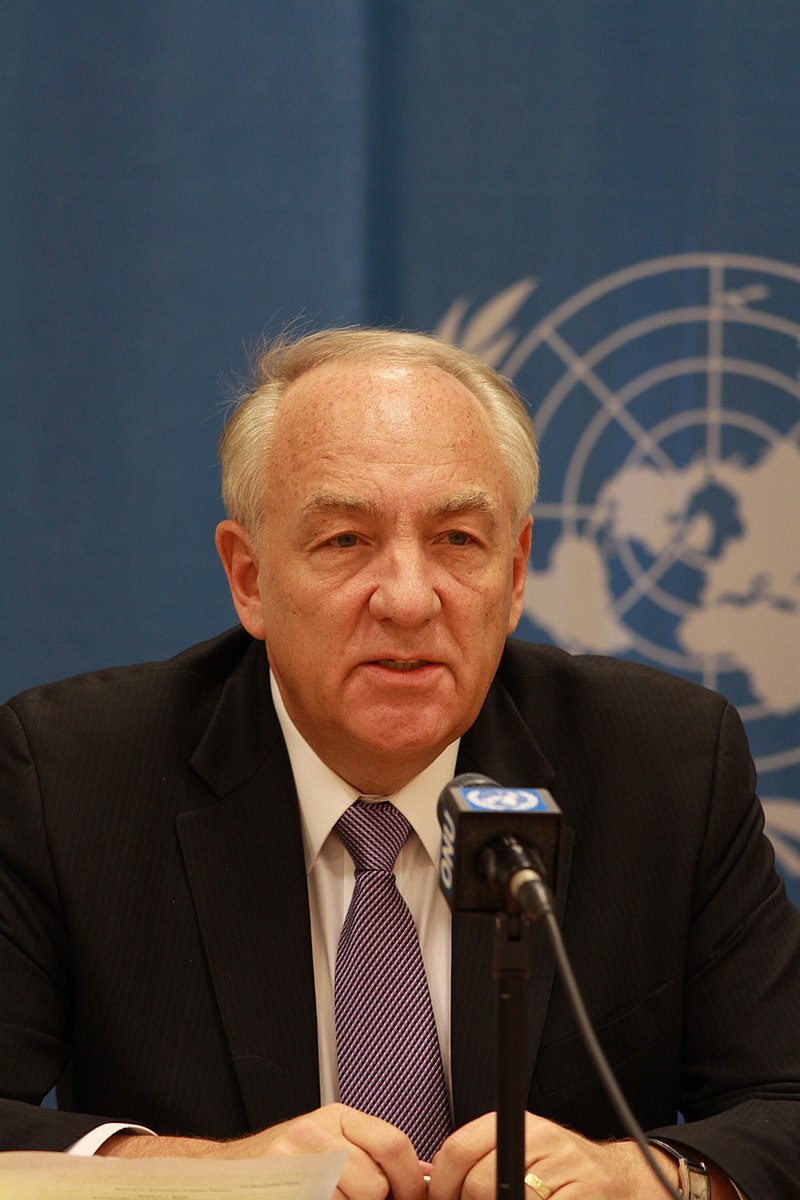
Stephen Rapp
Lawyer and former Iowa State Representative
8
APPEARANCES
7
PODCASTS
Oct 10, 2026


Nick SchifrinCORRESPONDENT
What is the significance of the Nobel committee choosing her for this prize?

Stephen RappGUEST
Well, they've chosen someone, as they said, of, of great courage and vision and, and determination who's been a real leader, uh, in, in, in the field of human rights and, and international justice.
Stephen RappGUEST
Uh, uh, it was appropriate that, uh, it was an- announced when she was at the Nuremberg Academy this morning, where she was the founding president, and in the courtroom where just 80 years ago this month, uh, we had the first judgments against the Nazi leaders.
Stephen RappGUEST
And, uh, it's, it's that commitment to, to end impunity and to hold powerful people to account that's, uh, that's motivated, uh, her throughout her life.
Stephen RappGUEST
Uh, I, I was prosecuting the media trial, and she was presiding against the, the mass media, against the leaders of Rwandan hate radio and, and won an historic judgment.
Nick SchifrinCORRESPONDENT
A- apart from the rhetoric, is there not a legitimate debate and defense against Israel's actions in Gaza?

Nick SchifrinCORRESPONDENT
What is the significance of the Nobel Committee choosing her for this prize?
Stephen RappGUEST
Yeah, well, they've chosen someone, as they said, of, of great courage and vision and, and determination, who's been a real leader, uh, in, in, in the field of human rights and, and international justice.
Stephen RappGUEST
Uh, uh, it was appropriate that, uh, it was an- announced when she was at the Nuremberg Academy this morning, where she was the founding president, and in the courtroom where just 80 years ago this month, uh, we had the first judgments against the Nazi leaders.
Stephen RappGUEST
And, uh, it's, it's that commitment to, to end impunity and to hold powerful people to account that's, uh, that's motivated, uh, s- her throughout her life.
Stephen RappGUEST
Uh, I, I was prosecuting the media trial, and she was presiding against the, the mass media, against the leaders of Rwandan hate radio and, and who won an historic judgment.
Nick SchifrinCORRESPONDENT
A- apart from the rhetoric, is there not a legitimate debate and defense against Israel's actions in Gaza?

Nick SchifrinCORRESPONDENT
What is the significance of the Nobel Committee choosing her for this prize?
Stephen RappGUEST
Yeah, well, they've chosen someone, as they said, of, of great courage and vision and, and determination, who's been a real leader, uh, in, in, in the field of human rights and, and international justice.
Stephen RappGUEST
Uh, uh, it was appropriate that, uh, it was an- announced when she was at the Nuremberg Academy this morning, where she was the founding president, and in the courtroom where just 80 years ago this month, uh, we had the first judgments against the Nazi leaders.
Stephen RappGUEST
And, uh, it's, it's that commitment to, to end impunity and to hold powerful people to account that's, uh, that's motivated, uh, s- her throughout her life.
Stephen RappGUEST
Uh, I, I was prosecuting the media trial and she was presiding against the, the mass media, against the leaders of Rwandan hate radio and, and who won an historic judgment.
Nick SchifrinCORRESPONDENT
A- apart from the rhetoric, is there not a legitimate debate and defense against Israel's actions in Gaza?

James KamarasamyHOST
I mean, that has been criticized by some human rights groups, hasn't it? What do you make of that?
Stephen RappGUEST
Well, um, you know, it's certainly the, the k- the sentence that the vast majority of Syrians who experienced the horrors, uh, uh, committed, uh, by, by men like these, uh, uh, wish, wish to see.
Stephen RappGUEST
And of course, we're always talking about survivor-centered justice and victim-centered justice and, and we're in a region, uh, where there hasn't been repeal of the death penalty and where, uh, the death penalty is, is given for ordinary murders, uh, let alone for, for, for mass murders.
Stephen RappGUEST
Uh, uh, all countries in Europe have abolished, uh, the death penalty and are unwilling, I think, largely to provide assistance, uh, to the Syrian justice process, uh, if the death penalty can be, uh, a possibility.
Stephen RappGUEST
A-and then, of course, the United Nations, uh, has taken the position that, uh, it won't support the processes in which death could be a result, uh, that caused, for instance, the withdrawal of the UN investigative mission, uh, in Iraq that was investigating the crimes of, of ISIS.
Stephen RappGUEST
So it does, it does complicate matters, and it could complicate matters when it comes to getting extradition.
James KamarasamyHOST
What about the, the, the thousands of, um, millions perhaps of, of families who have been affected by what has happened over the past many decades and, and the s- the, the, the sense of justice for all of them? Um, I mean, h- it's a huge task, isn't it, bringing justice Following the decades of the Assad regime, I mean, do the new authorities have the resources for this?


Steven RappGUEST
Well, it's, it's to be expected, uh, given the, uh [laughs], given the scale of the crimes.
Steven RappGUEST
I mean, uh, as I've often said, that what we saw in Syria were the worst atrocities of, of this, uh, twenty-first, uh, century, with more than a half a million people killed, uh, at least 130,000, uh, tortured to death, uh, by their own government in the, in the dungeons of, of the Assad regime, including the children, uh, who were, um, tortured, uh, having, uh, demonstrated, uh, hoping [laughs] that there would be, uh, uh, something like a democracy or freedom in their country, and, uh, uh, were, were tortured, and their bodies returned to their parents in, in March of, of two thousand eleven, which, which began the uprising, which was a, a peaceful uprising, frankly, until, un-until the, the, the peaceful demonstrators were all, uh, scooped up.
Steven RappGUEST
Uh, more than 200,000, uh, um, and m- more, more than even those that were demonstrating, uh, were sent into the dungeons, and then it became an armed conflict.
Steven RappGUEST
But, um, this case was the first one, uh, and it dealt specifically with the events in Daraa, a city in, in south, uh, uh, western Syria, uh, where, uh, the uprising, uh, began, uh, where, where the children, uh, you know, wrote slogans on the walls and, and, and where the, and where their parents and others took to the streets and, and, and, and sought democracy.
Steven RappGUEST
Uh, I was with the investigative judge, uh, uh, early last year when he was building this case, uh, and, and, and said, "Well, I will soon be charging Assad in it because he's responsible." Uh, and of course he was, uh, ultimately for what was happening there, that he wasn't gonna respond with any kind of, uh, any kind of reform or, or any kind of hope for, uh, for some kind of a, a acceptance of dissent in his country.

Sally SaraHOST
Steven, uh, given the volume of evidence, should this case have been overseen by an international court? Would that have made a difference?


Bianna GolodrygaHOST
that.So with joining this, uh, amicus brief, what point exactly are you hoping to express to the court that you didn't just lay out to our audience?
Stephen RappGUEST
Well, I mean, fundamentally, uh, I mean, I was ambassador at large for six years.
Stephen RappGUEST
Uh, others in, in, in my office, which served, uh, uh, under, under presidents of both administrations, engaged over time with the ICC.
Stephen RappGUEST
Uh, we were able to, uh, uh, to, to present to the ICC, uh, if they raised issues about us as they did in Afghanistan, evidence that we were doing accountability in our own system.
Stephen RappGUEST
And in the end, that case was, was deprioritized and, and won't be prosecuted.
Stephen RappGUEST
I- Israel could, uh, was doing the same thing frankly back in 2014, 2015, when, uh, uh, when, uh, the ICC gained jurisdiction over the, over the situation.
Bianna GolodrygaHOST
So does this episode vindicate what we heard from Secretary Rubio, or does the fact that Khan ha- has been fired essentially from his job support the case for the ICC?
Owen Bennett JonesHOST
Mm
Stephen RappGUEST
... they're, they're trying to, uh, train more, uh, that are defectors, uh, that defected from the, from the regime previously and are more trustworthy.
Stephen RappGUEST
And, uh, you know, we were talking with them at one point about five hundred trials in the next to five years.
Stephen RappGUEST
Uh, so they really do have to select the most serious offenders, uh, for these trials.
Owen Bennett JonesHOST
And, and do you believe, uh, you know, when that happens that just, you know, the capacity isn't there, that it's better to do this internationally at an international level?

Owen Bennett JonesHOST
Hmm
Stephen RappGUEST
...and, uh, they're, they're trying to, uh, train more, uh, that are defectors, uh, uh, that defected from the, from the regime previously and are more trustworthy.
Stephen RappGUEST
Uh, and, uh, you know, we were talking with them at one point about five hundred trials in the next to five years, and to be frank, that's probably more than they can do.
Stephen RappGUEST
Uh, so they really do have to select the most serious offenders, uh, for these trials.
Stephen RappGUEST
Uh, uh, soon we'll have the case of Al-Shaar, the former Minister of Interior, who was behind all of the planning of this and responsible, we believe, for the murders of, of tens or hundreds of thousands.
Owen Bennett JonesHOST
And, and do you believe, uh, you know, when that happens, that just, you know, the capacity isn't there, that it's better to do this internationally, at an international level?