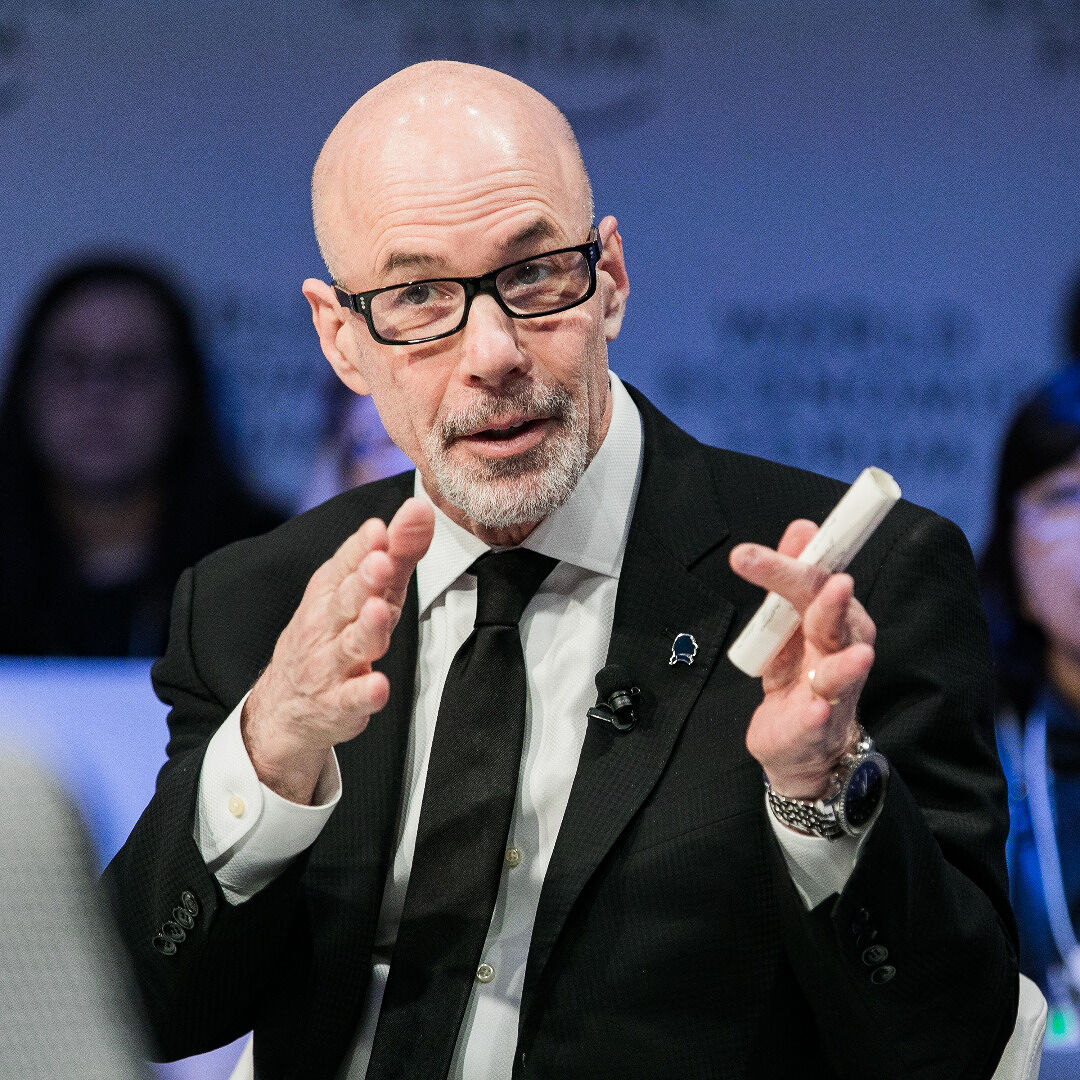
Stephen K. Klasko
American author and former CEO of Jefferson Health
5
APPEARANCES
5
PODCASTS
Sep 29, 2026


Chip KahnHOST
What should they be asking about AI vendors in a very practical way right now? And what is the first concrete step for them?

Stephen KlaskoGUEST
The first thing is that you need somebody that reports to you, not reports to somebody who reports to somebody who reports to you.
Stephen KlaskoGUEST
And, you know, I think Becker's and others have done some good writing on chief AI officers or a, you know, moving up.
Chip KahnHOST
Could a health system deploying an agent stop one within 30 minutes? And how likely is it that anyone, going to your point a second ago, has actually asked their vendor about this?


Mitch GorodokinHOST
Can you talk about some, you know, examples from your experience as to where that process has gone really well, or even more interestingly, where it hasn't gone well?
Steve KlaskoGUEST
You know, one of the things I learned at, at Wharton, uh, when I got my MBA is, um, think globally and act locally, and I think that was the real differentiator at Jefferson.
Steve KlaskoGUEST
So the way we did this, and w-- you know, one of the things that we did that was really unique is that traditionally a, a large academic medical centerWe'll take over a community academic center or community hospital system and say, "We'll give you $700 million, and you'll be a spoke in our hub and spoke model, so you can send more patients to our expensive, inefficient academic medical center." Well, I don't know about you, I-- like, I don't wanna be a spoke.
Steve KlaskoGUEST
So the way we got, like, places like Abington, which was a profitable, you know, f- few billion dollar entity that, that w- was on the, you know, five-yard line with Penn.
Steve KlaskoGUEST
I said, "What if you weren't a spoke? What if you were a hub in a hub-and-hub system?" Well, my board came to call the class go hub-a-hubba model.


Scott BeckerHOST
Talk about Health Assurance Foundation and the efforts about, of AI and how we too democratize healthcare, are at least trying to solve more of the health equity problems.
Stephen KlaskoGUEST
And, you know, part of health assurance is, is bringing healthcare to any address, bringing healthcare closer to home.
Stephen KlaskoGUEST
According to ARP, something like 50 million Americans provide unpaid care, right? Uh, for seniors, family members with Alzheimer's.
Stephen KlaskoGUEST
Getting to your point, if you're wealthy, you hire, you know, 12 people and you go and you work.
13 MINS LATER

Stephen KlaskoGUEST
Um, became a, became a private practice obstetrician, um, delivered about 1500 babies, and I have this disease where I just can't handle mediocrity.
Stephen KlaskoGUEST
So back when I was, uh, uh, practicing, uh, 97% of OB/GYNs were male, the number one performed procedure in the country was hysterectomy followed closely by C-section.
Stephen KlaskoGUEST
Uh, happened to be at a Penn State lecture listening to, as I remember him, an old, uh, male obstetrician, actually probably my age now which is a little depressing, but he was talking about hysterectomy and said, "If, uh, somebody has a small fibroid, just take out the uterus.
Stephen KlaskoGUEST
A woman doesn't need that after a childbearing age." Four of the top 10 nonfiction bestsellers when I got to Barnes & Noble were What My Hysterectomy Did To Me, The Hysterectomy Hoax, How a Hysterectomy Ruined My Life.
Stephen KlaskoGUEST
So, so I ended up, uh, leaving my private practice, taking about an 80% pay cut, starting a company called Spirit Women, um, and, you know, that was my first foray into, uh, uh, how you can take risks, make no money, uh, and, you know, uh, hopefully, uh, be successful, but actually, uh, do well and do good.
Stephen KlaskoGUEST
Uh, went to Wharton, uh, got involved in a major grant around what makes docs different than normal people or other people depending on the audience and how we handle change.
Scott BeckerHOST
I, I start with the concept of, and I'll put it in two different ways, the biggest impact that AI will have in business and in healthcare, but, but more specifically stated, i- if you had to bet your entire p- portfolio on one area where AI will create trillion-dollar value or, or, or will create huge value, what would that one area be? Would, you know, and, and are people looking in the right or wrong place? What's the one area you think, this is where we should be all in on in terms of AI and, and impact?


Christina FarrHOST
So I'm curious for your thoughts there on just like, are we really meeting the mark when it comes to selling to health systems today? Just knowing what they're all going through, or many of them are going through.
Stephen KlaskoGUEST
So I look at everything as BC, DC, and KAC, before COVID, during COVID, and kind of after COVID, which is where we're in now.
Stephen KlaskoGUEST
And it is ridiculous to go to a health system CEO and say, I've got this great company that's going to get you ready for a future of value-based care.
Stephen KlaskoGUEST
And as one CEO put it to me, it's like, that's great, Steve, but let me explain something.
Jessie BeegleGUEST
And I think the readers will just get so much from his experience as well as I'm really excited to share my experience as well.