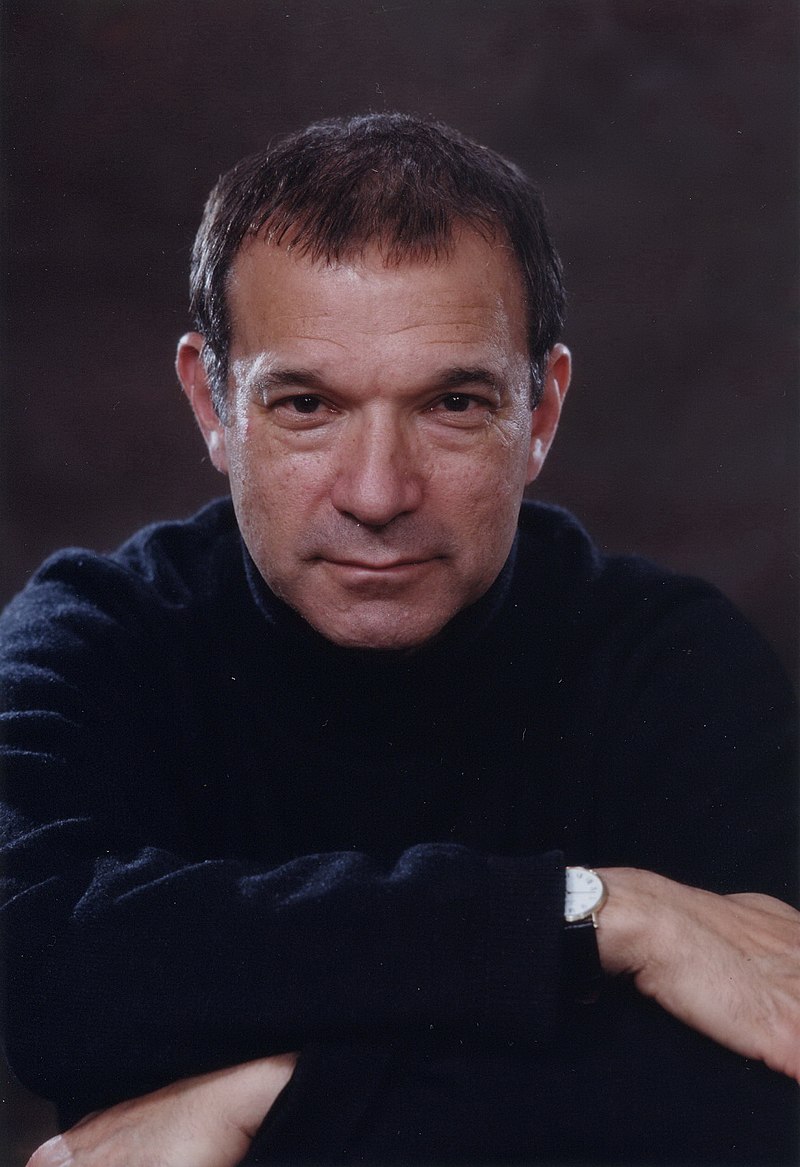
Stephen Greenblatt
American literary historian and writer
4
APPEARANCES
4
PODCASTS
Oct 15, 2026


Jared BowenHOST
Before we return to his audacity, I thought I had understood every manner of torture and punishment, and yet I would continually turn the page, and you're revealing yet another means by which people were just basically dismantled on public corners.

Stephen GreenblattGUEST
Our penitentiary system in which we lock away gigantic numbers of people, alas, it doesn't exist in the 16th century.
Stephen GreenblattGUEST
There are prisons, but there are prisons in which you generally don't spend very long.
Stephen GreenblattGUEST
But you do have a world in which the discipline, if that's the way to put it, is established by torture, tearing people apart, cutting off their ears, nailing them to death.
Jared BowenHOST
But at the same time, the Queen seems to like it while never attending in person, it seems.

Stephen GreenblattGUEST
Uh, and I imagine someone incredibly intelligent, imaginative woman and a, at, around a campfire coming up with this, uh, story, but the story that then becomes the truth for millions of people even now, however unbelievable it is, with a, a garden with magical trees, and a talking snake, and all, uh, and so forth.
Stephen GreenblattGUEST
I mean, it's obviously marked out as fiction in its origins, and yet it becomes true.
Stephen GreenblattGUEST
Anyway, I was obsessed with that story and with how it happens that, that such a obviously fictive story becomes the truth for millions of very intelligent people, Saint Augustine or Saint Thomas Aquinas, the smartest people in the world.
Stephen GreenblattGUEST
Anyway, because I have a friend at Harvard who runs a research station in western Uganda, works on chimpanzees, I went and observed the chimpanzees, thanks to his invitation, and lo and behold, you know, the alpha male of the chimpanzees is exactly the figure you describe.
14 MINS LATER

Ryan HolidayHOST
May- maybe talk to me real fast, what is the swerve as you define it? I've tried, I, I read the book and I was like, "Oh, I get it," and then every time I've tried to be like, "So I read this book, The Swerve, and here's what the swerve is," they're like, "What are you talking about?" [laughs]

21:57

But for those who say there's a bit of hyperbole there, can you justify for me how important Tamburlaine was in Elizabethan theatre?
Stephen GreenblattGUEST
One curious fact that marks at least a little bit of the impact that the play must have had is that a few children in Tudor England after this play was performed in London, a few parents gave their children, rather oddly, the name Tamburlaine.
Stephen GreenblattGUEST
And there's other evidence having to do with For example, Robert Greene's attack on the play.
Stephen GreenblattGUEST
But for me, most of all, the impact that the play has to do, and we know that the play was successful, and that there was a, as happens on our, obviously, in our own entertainment industry, when something is successful, they call for an immediate follow-up, second season, as it were.
Stephen GreenblattGUEST
And Marlowe was called upon, clearly, to write Tamblyn Part 2, because Tamblyn Part 1 was a success.
Stephen GreenblattGUEST
But for me, most of all, The key to the impact of the play was Marlowe's, in effect, creation of blank verse, of unrhymed iambic pentameter.
8 MINS LATER

Stephen GreenblattGUEST
The Privy Council issues a, a very handsome reward for anyone who can identify the author of this menacing poem.
Stephen GreenblattGUEST
They can't find Marlowe, but they find his former roommate, Thomas Kyd, the playwright who was the author of The Spanish Tragedy, and they look around in Kyd's room to see if there's any evidence, the authorship of this anti-immigrant placard.
7 MINS LATER
Elinor EvansHOST
He obviously leaves such wealth behind him, and I wanted to get your take, Stephen, as we begin to wrap up this episode, with your understanding or your characterization of Marlowe's legacy.