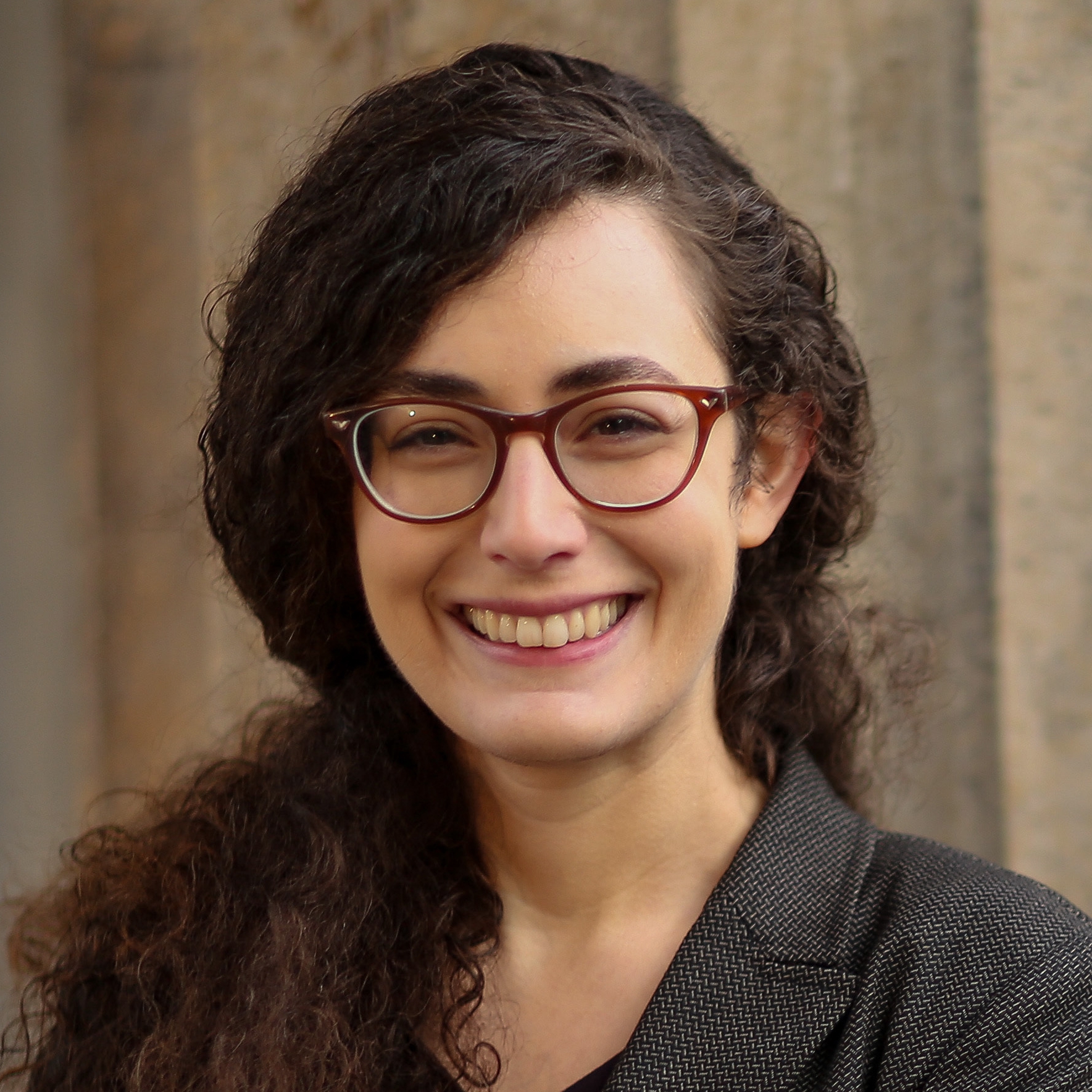
Sonia Gollance
Associate Professor of Yiddish Studies at University College London; scholar of German-Jewish literature, dance, and theater whose book "It Could Lead to Dancing" explores mixed-sex dancing and Jewish modernity.
6
APPEARANCES
5
PODCASTS
Jul 10, 2026

Seymour RechzeitSOUNDBITE_SPEAKER
Picture a vast

Sonia GollanceGUEST
stateroom with women dressed as famous ancient queens and goddesses and our masked narrator having fun dancing with them.
Sonia GollanceGUEST
We danced a melodious, passionate tango, which dramatized free love and eroticism.
Sonia GollanceGUEST
Fragrant perfume wafted around us in harmony with the music and general elegance of the environs.
Sonia GollanceGUEST
The orchestra began a waltz and we moved in new forms of musical expression.
41 MINS LATER


Sonia GollanceGUEST
Um, so thank you for the introduction, and it's, um, really great to be on a panel with, uh, with Ron and Josh.
Sonia GollanceGUEST
In 1948, a Polish-born American writer named Samuel Bershtyn wrote a short piece in Yiddish called Der Maskin Bal fun Fedorbenheit, or in English, The Masked Ball of Depravity.
Sonia GollanceGUEST
Not surprisingly, given its title, this story describes the most decadent masquerade ball scene I've found in Yiddish literature.
Sonia GollanceGUEST
And I say this as someone who has built a career on finding bonkers scenes of dance in literature.
42 MINS LATER

Seymour RechzeitSOUNDBITE_SPEAKER
Picture a vast
Sonia GollanceGUEST
stateroom with women dressed as famous ancient queens and goddesses and our masked narrator having fun dancing with them.
Sonia GollanceGUEST
We danced a melodious, passionate tango, which dramatized free love and eroticism.
Sonia GollanceGUEST
Fragrant perfume wafted around us in harmony with the music and general elegance of the environs.
Sonia GollanceGUEST
The orchestra began a waltz and we moved in new forms of musical expression.
41 MINS LATER

Seymour RexiteSOUNDBITE_SPEAKER
Picture a vast
Sonia GollanceGUEST
stateroom with women dressed as famous ancient queens and goddesses and our masked narrator having fun dancing with them.
Sonia GollanceGUEST
We danced a melodious, passionate tango, which dramatized free love and eroticism.
Sonia GollanceGUEST
Fragrant perfume wafted around us in harmony with the music and general elegance of the environs.
Sonia GollanceGUEST
The orchestra began a waltz and we moved in new forms of musical expression.
41 MINS LATER


Josh LambertHOST
Like, like how, how did that start for you? Why did that become the focus of, of the work you do?
Sonia GollanceGUEST
Well, thank you, and it's, it's really great to be having this conversation with you because as, as you mentioned, we've known each other for a while, and actually it's very fitting that we're speaking here at a, a YIVO Institute event because we actually met when we were both studying in the, the YIVO summer program, uh, years ago.
Sonia GollanceGUEST
Um, I had just started high school, and I had, um, an older relative, the, uh, the, the younger brother of my great-grandfather, who had functionally been a great-grandfather for me, and he had been born in 1905 in, uh, what's now Belarus, and he told me I should learn Yiddish, which was the language that he grew up with.
Sonia GollanceGUEST
Um, this was my Uncle Peter, and he's one of the two uncles that the book is dedicated to.
Sonia GollanceGUEST
And so when I heard that, him say that I should learn Yiddish because it was a very expressive language, um, I was, I was already interested in, in genealogy and, um, you know, family history, and I thought, you know, I'm curious about learning all sorts of languages.
11 MINS LATER
Josh LambertHOST
Can, like, d- does, is, is there an example that comes to mind, like, earlier in the process, that sort of made you understand that you could do this as a book?
Josh LambertHOST
How you got on the track to being a scholar of Yiddish and German literature, cultural history, how did that start for you? Why did that become the focus of the work you do?
Sonia GollanceGUEST
And it's really great to be having this conversation with you because, as you mentioned, we've known each other for a while.
Sonia GollanceGUEST
And actually, it's very fitting that we're speaking here at a YIVO Institute event because we actually met when we were both studying in the YIVO summer program years ago.
Sonia GollanceGUEST
I had just started high school and I had an older relative, the younger brother of my great-grandfather who had functionally been a great-grandfather for me.
11 MINS LATER
Josh LambertHOST
Is there an example that comes to mind like earlier in the process that sort of made you understand that you could do this as a book?