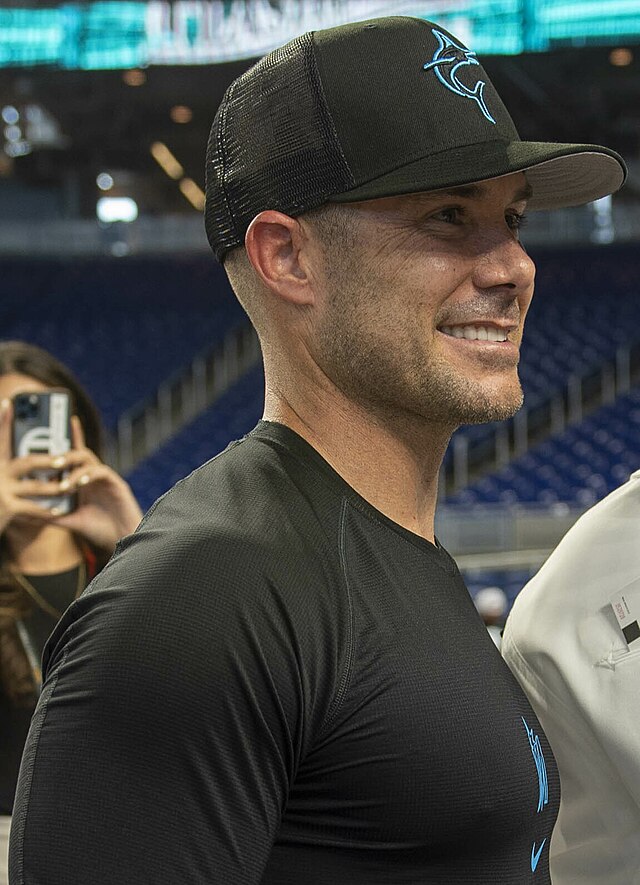
Skip Schumaker
American baseball manager
7
APPEARANCES
5
PODCASTS
Sep 4, 2026


Evan GrantHOST
subject with me because all i've wanted to do in my long career is like give a guy a nickname or something or get his walk-up music that's stuck and i got nothing and sean's just throwing out mob deep or whatever the the group is and

Skip SchumakerGUEST
You know, John, a very similar situation in spring training was Zeke, you know, with, uh, with, uh, with lats trying to figure out exactly what the role is.
Evan GrantHOST
Is that the same way that you look at it? At this point, the stats and the record numbers, they don't matter.

speaker_5SOUNDBITE_SPEAKER
You're doing a lot of things better than you did at the beginning of the season.
Skip SchumakerGUEST
Well, you don't know who your team is yet at the beginning, beginning of the season, and some of the guys that, you know, have come up or have filled in for, you know, different guys because of injury, you know, are, are, had different profiles and different strengths.
Skip SchumakerGUEST
And, you know, when you have some guys that come up that are, you know, like the Nicky Lopezes of the world, who have very good bat to ball skills and can run the bases and are very smart and instinctual, and Zeke Duran now playing every day, it, the lineup looks different.
Skip SchumakerGUEST
Um, Evan Carter, you know, getting on base more, the lineup looks different.
Skip SchumakerGUEST
Um, you know, you can talk about, we just talked about Evan Carter, of, of him, you know, learning how to bunt more this year.
speaker_3SOUNDBITE_SPEAKER
How do you negotiate that with your players, uh, you know, trying to tune all of that out as best you can?

Tim McKernanHOST
skip you were talking about the the experience in the pressure and then you know dug in martin talking about the the superstars who get into managing or start working in front offices we now see what's going on and with uh... buster posey taken on the role in san francisco outside of the element of the money players are able to make there's also the the pressure that you guys were referencing and i'm curious Would losses eat at you as a player and then compare that experience when you're a manager and it's a loss? And I also would put under that a subset of the following, when a player just doesn't execute but you've got to wear it as the manager, you can't say anything about it, or where you look at one of your decisions and does that keep you up or wake you up in the middle of the night? So what is that experience, comparatively speaking, following a loss from the player to the manager side?
Skip SchumakerGUEST
I think the moves always eat at you as a manager of what you could have done, especially bullpen-wise.
Skip SchumakerGUEST
Could you put another guy in there that could have thrown up a zero, and then you kick yourself for maybe holding a guy on or keeping a guy out there too long or what you could have done differently.
Skip SchumakerGUEST
As a player as well, you go home at night and you think about what you could have done to help your team win the game and were you the reason why you lost the game or what you could have done better.
9 MINS LATER
Tim McKernanHOST
But then it's a different ballgame, man, when you're watching your son play the game and obviously have success.
Tim McKernanHOST
And does that keep you up or wake you up in the middle of the night? So what is that experience, comparatively speaking, following a loss from the player to the manager side?
Skip SchumakerGUEST
I think the moves always eat at you as a manager of what you could have done, especially bullpen-wise.
Skip SchumakerGUEST
Could you put another guy in there that could have thrown up a zero, and then you kick yourself for maybe holding a guy on or keeping a guy out there too long or what you could have done differently.
Skip SchumakerGUEST
As a player as well, you go home at night and you think about what you could have done to help your team win the game and were you the reason why you lost the game or what you could have done better.
9 MINS LATER
Tim McKernanHOST
But then it's a different ballgame, man, when you're watching your son play the game and obviously have success.

Skip SchumakerGUEST
It still means something that he is in our lineup, hitting at the top of our lineup.
5 MINS LATER

Jim RomeHOST
As somebody who played 11 years in the bigs, was the goal always to be a major leaguer, or was getting a college scholy actually the thing that you were most focused on?


Whit MerrifieldHOST
But if you were to pinpoint one thing that needs to change to get back to where you wanna be, what would it be?
Skip SchumakerGUEST
Well, I think our, our offense has to, um, to get going and I think the, uh, we have the type of lineup for a really good offense to happen during the season, during at least 162.
Skip SchumakerGUEST
Um, we had some guys that, um, were hurt or injured, uh, throughout the season that just couldn't get back on track.
Skip SchumakerGUEST
Um, and I think that was probably the biggest, um, uh, you know, outlier last year and I think we're hoping just to get these guys back on track to their career norms and I think there will be a lot, uh, a lot different outcome.
6 MINS LATER

Tricia WhitakerHOST
But how do you balance that by watching what he did with the previous culture and then also kind of making this team your own?

Skip SchumakerGUEST
but I, uh, I didn't get to see one high school baseball game, uh, the first couple years.
Skip SchumakerGUEST
Um, and that, as you know, you guys all have kids, um, you wanna feel like, uh, you're present with your family and your kids.
Skip SchumakerGUEST
And missing out on, uh, s- some really special moments, uh, you know, it takes a toll on you.
Skip SchumakerGUEST
It, it's, the kids, uh, aren't affected as much as you think, but, um, I definitely, um, wore that.
5 MINS LATER

Kyle GlaserHOST
Some guys didn't show up till, you know, we were on the line stretching before the game." When you hear that, going into it as a manager and what you saw, [clears throat] can you change that environment? Do you have to talk to certain guys and say, if that was the case, do you have to go to certain guys and be like, "Hey, I need you to be more energetic." Because I think Corey Seager would be like, "Well, I'll just go and hit homers and I'll just do what I do." Can you change that as a manager? Because if you look at your last job with the Marlins, you got a lot out of not that much, and I think that can happen with the Rangers too.