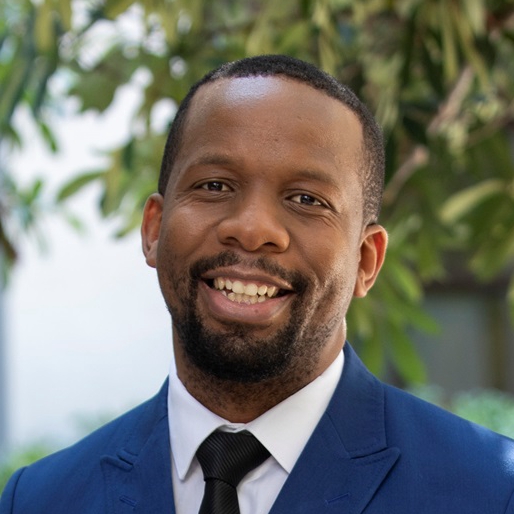
Siyabulela Nomoyi
Quantitative Portfolio Manager at Satrix Investments, specializing in index-tracking solutions, ETFs, and quantitative research.
4
APPEARANCES
3
PODCASTS
Aug 4, 2026

8:56

Maybe the other thing to just touch on here for us is whether or not a benchmark is always an index or can it be something else? Just take us through the differences there between hedge funds and non-only funds and how they think about this stuff.

Siyabulela NomoyiGUEST
In index, we would think about as, okay, there's constituents, create ways for those constituents, and this is the index that I want to follow.
Siyabulela NomoyiGUEST
Yes, a lot of people, including myself, always think of a benchmark as an index that's made up of constituents.
Siyabulela NomoyiGUEST
For instance, S&P 500 or the All Bond Index or just the FTSE JSC Top 40, for instance, there's that index.
Siyabulela NomoyiGUEST
So institutional investors like pension funds do use non-index benchmarks.
12:52
So I actually do that all the time when I look at a particular stock and I think to myself, okay, what would make sense? how would i compare this to for example the jse it's actually quite easy to go and get a traded price for a satrix etf because the point is that's an investable benchmark as opposed to an index which you can't actually buy you need to go and buy an etf that tracks the index and then there's a very small layer of fees which of course is the satrix brand promise is to do this as cost effectively as possible and once you subtract that then you actually get an idea of the investable index and you can then use that as a benchmark now you are certainly an expert on indices so you live and breathe this stuff so perhaps you can just walk us through any other characteristics you want to raise of an index that you would look out for when you're actually choosing a benchmark you've already mentioned so many is there anything else that you think is worth highlighting for the listeners


Stephen GrootesHOST
Are there particular warning signs that this is about, you know, this is a fame trap?
Siyabulela NomoyiGUEST
I saw a couple of people online who were buying, just going back to the SpaceX example, who are buying the stock based on the fact that they were seeing other people buying it.
Siyabulela NomoyiGUEST
And when that stock actually hit 200 and went down back to 150, you're sitting there at home and you have no idea.
Siyabulela NomoyiGUEST
So there's quite a lot of things to actually watch in terms of the price movement, because what...
Siyabulela NomoyiGUEST
There will always be a tie between the price and what the earnings are doing for the company.
Stephen GrootesHOST
Do you try and time the market when you're making an investment in something like this?


Siyabulela NomoyiGUEST
Uh, the first one would be, uh, to, it's a way of measuring the performance and, and the risk as well.
Siyabulela NomoyiGUEST
So if there's a, if there's an investment committee that's sitting and looking at the portfolio, portfolios that they've chosen, or you are a retail client that you, you, you're looking at your own portfolio, it helps you to just have a look at the performance and, and also evaluate the risk as well, whether it matches what you want, um, and, and, and, and what that portfolio that you have is aiming for.
Siyabulela NomoyiGUEST
And then if you've got a risk team or yourself as well, it, it outlines the market exposure the portfolio should actually be matching to.
Siyabulela NomoyiGUEST
So what is the money for? Uh, when do I need it? And what are the risks that I accept, um, for that? So, um, you set up that benchmark based on that, um, based on the level of risk that you can actually, um, a- accept.
Siyabulela NomoyiGUEST
Uh, and those are usually, uh, through volatility limits or maximum drawdowns, ones you can get from your portfolio, um, to actually set those up and, and understand what the risk is.
Siyabulela NomoyiGUEST
Uh, the first one would be, uh, to, it's a way of measuring the performance and, and the risk as well.
Siyabulela NomoyiGUEST
So if there's a r- if there's an investment committee that's sitting and looking at the portfolio, portfolios that they've chosen, or you are a retail client that you, you, you're looking at your own portfolio, it helps you to just have a look at the performance and, and also evaluate the risk as well, whether it matches what you want, um, and, and, and, and what that portfolio that you have is aiming for.
Siyabulela NomoyiGUEST
And then if you've got a risk team or yourself as well, it, it outlines the market exposure the portfolio should actually be matching to.
Siyabulela NomoyiGUEST
So what is the money for? Uh, when do I need it, and what are the risks can I accept, um, for that? So, um, you set up that benchmark based on that, um, based on the level of risk that you can actually, um, a- accept, uh, and those are usually, uh, through volatility limits or maximum drawdowns, ones you can get from your portfolio, um, to actually set those up and, and understand what the risk is.