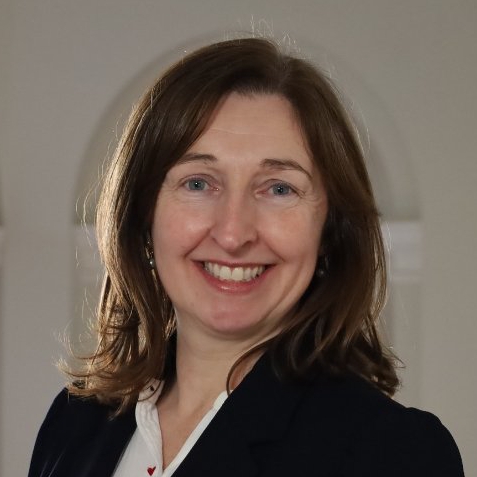
Sinéad Ryan
Irish journalist, broadcaster and Irish Independent columnist, presenter of The Home Show on Newstalk and consumer expert on Lunchtime Live.
21
APPEARANCES
8
PODCASTS
Oct 6, 2026


Sinead RyanGUEST
I mean, the program for government has childcare fees dropping to 200 euros a month, uh, by the end of the term.
Sinead RyanGUEST
Uh, they did come down this year, so they're going to be capped from 2027 at 550 euros a month.
Sinead RyanGUEST
Whether it'll make the childcare sector happy is another question, because we know they've been leaving the market in droves.
7 MINS LATER


Sinead RyanGUEST
I mean, the programme for government has childcare fees dropping to 200 euros a month by the end of the term.
13 MINS LATER


Gavan ReillyHOST
How can I compete with that? Do you see much or do you hear much even discussion around how the government is supposed to make work pay or to try and make people feel materially better off by spending their days out in the trenches? Do
Sinéad RyanGUEST
And I think the reason I haven't is because we have a full employment economy and we have had it for many years now.
Sinéad RyanGUEST
not working at any time of who could be working and and that's usually regarded for by people who can't through illness or injury or or someone that's that's really really small so actually there is work for anybody who wants to work the difficulty is trying to keep pace with wage inflation and this is going to become a big feature of tomorrow's budget because that is something that affects everybody you've got employers on one side saying well we literally can't afford to pay anybody more And successful employer groups like the hospitality industry managed to get extras across the line on that basis.


Clare McKennaHOST
But of course, that big question, how are we going to fund it? Tell us a bit about the SUSI Grant.
Sinéad RyanGUEST
So, this is the, uh, state's, um, universal student grant system, and it's incredibly popular, and, uh, it has been very successful.
Sinéad RyanGUEST
Uh, and it was recently increased in the last budget, so there's really very little reason not to go ahead with it.
Sinéad RyanGUEST
So one of them is, for instance, uh, towards the student contribution, which we know is, uh, two or 3,000, [laughs] depending on what the budget decides each year.
Sinéad RyanGUEST
Uh, and there's also what's called a maintenance grant, and, and that is an allowance that is paid, uh, recognizing people who live more than 30 kilometers from their home.
Sinéad RyanGUEST
Now, it doesn't pay for rent or books or anything like that, but it does give a few bob towards the additional transport that is required.

Sinead RyanGUEST
Well, they're certainly doing a lot of a better job than when maybe you or I had small children and were trying to find creche places and get back to work.
Sinead RyanGUEST
So kudos for better and stronger social policies around maternity benefits, in particular maternity care, than there used to be.
Sinead RyanGUEST
Well, for a start, I think the weather gods might have now got wind of this because it is so cloudy outside my house.
Sinead RyanGUEST
It looks as if it's about to lash rain, which will kind of save me having to kind of break the law.
Sinead RyanGUEST
But honest to goodness, I can fill the watering can 10 times, but I'm not allowed to spray some water on my hydrangeas.

Ciara KellyHOST
So do you think that they should have held fast in the face of quite enormous protests about water charges? And that would have been, I suppose, that maybe would have resulted in us being in a different position now.

Sinéad RyanGUEST
Some of them were actually quite avant-garde, and you'd think this is a very buttoned-up period in America, and it was, but there were public information films telling girls about periods, for instance, or talking to young couples on how to be respectful towards women when you're dating.
Sinéad RyanGUEST
So lots and lots of that stuff, and it was kind of probably beyond its time, and it was, you know, a little bit quaint and old-fashioned and using terminology that we wouldn't use today.
Sinéad RyanGUEST
Um, but they served their purpose, which was public information and to create, I don't know, like a, a kind of an adult, uh, citizenry, and, um, they were fantastic.
5 MINS LATER

Sinead RyanGUEST
Some of them were actually quite avant-garde, and you'd think this is a very buttoned-up period in America, and it was, but there were public information films telling girls about periods, for instance, or talking to young couples on how to be respectful towards women when you're dating.
Sinead RyanGUEST
So lots and lots of that stuff, and it was kind of probably beyond its time, and it was, you know, a little bit quaint and old-fashioned and using terminology that we wouldn't use today.
Sinead RyanGUEST
Um, but they served their purpose, which was public information and to create, I don't know, like a, a kind of an adult, uh, citizenry, and, um, they were fantastic.
5 MINS LATER

Andrea GilliganHOST
But it's funny, you know, there's something kind of sad about the value, the price that you put on that weekly time together, though, over a shared meal.
Sinead RyanGUEST
And look, I mean, life is busy and people have things on and kids are running hither and thither.
Sinead RyanGUEST
But I think it's a shame that even just once a week on the so-called day of rest that we don't do that or we do that less and less because.
Sinead RyanGUEST
I mean, my kids are all gone now, but when they come back, when they boomerang back to the house on a Sunday, all they want to eat is a roast dinner.
Andrea GilliganHOST
You struck me as the kind, Sinead, that would be making homemade Yorkshire puddings.
Ciara KellyHOST
So what useful advice do you have for people that might help them, I suppose, get started financially?
Sinead RyanGUEST
Well, I think the important thing is to realise that home ownership has always been very, very expensive.
Sinead RyanGUEST
What has changed is the degree, the gap between the wages you need to earn and the house price that you have to buy.
Sinead RyanGUEST
So for instance, in 1970, house prices cost effectively about 4.2 times your salary.
Sinead RyanGUEST
But I mean, look, it's wedding season and... it's very lovely to get an invitation to somebody's nuptials and to help celebrate with them.
Sinead RyanGUEST
I remember years ago being stuck in Lanzarote Airport overnight with a baby and a toddler, one of whom needed an asthma inhaler.
Andrea GilliganHOST
And in Niamh and Dermot and Danielle's case, because they stayed in the airport, are they entitled to any level of compensation?
Sinead RyanGUEST
I mean, we know it costs a lot of money to hold a wedding, around €35,000, Andrea, is the average for the couple, but they are going to get some of that back in gifts.
Sinead RyanGUEST
And for the average guest from the experts I've been speaking to, anywhere between €1,000 and €1,500 is not unusual when you take into account per wedding, just to the cost of being a wedding guest, when you take in all of the things you've mentioned.
Sinead RyanGUEST
If somebody is kind enough to have their wedding on a local bus route and you can get home to your own bed for the evening, you're fine.
Sinead RyanGUEST
But if it's in a destination, you know, you're heading off to Sorrento and there's a hen party in Amsterdam and you're expected to have outfits for everything and you're in the bridal party and gifts and then you have to provide childminding and all the rest of it.
Andrea GilliganHOST
But if they wish to do so, like I know from the texts coming in since we mentioned this at the start of the programme, like a lot of our listeners like to do, if they do wish to give something to their children or to their nieces or nephews or grandchildren or whatever it is, are there as many benefits to doing that when you're still alive?
Sinead RyanGUEST
And I do hear this all the time, Andrea, that, you know, that some people will say, well, look, if I get the money now, then there's no tax payable or it'll save on inheritance tax later.
Sinead RyanGUEST
Gifts and inheritances all come in under the same tax rule, which is called capital acquisitions tax.
Sinead RyanGUEST
So for instance, While a child, an adult child, is entitled to inherit €400,000 from parents tax-free, which is very generous, that has to take into account any and all gifts they received in their lifetime from that parent.
CleonaAUDIENCE
that.


Anton SavageHOST
Sinead, people who may be looking at tickets in their pockets that were due to take them to Dubai, if the flights have not yet cancelled, what do they do?
Sinead RyanGUEST
Well, I think they need to start wrapping their heads around the fact that they may not be travelling at all.
Sinead RyanGUEST
All flights out of Dublin for Emirates, Etihad and Qatar Airways are all cancelled again today.
Sinead RyanGUEST
In Heathrow and Gatwick, they've cancelled all flights to at least Monday, according to their press statement.
Anton SavageHOST
Have I got any recompense? Can I say, well, there's good reason that I've cancelled, give me back my money?

Tabitha MonaghanHOST
Is this just another reason why, or do you think it was always the case that they didn't have a place in 2026?
Sinéad RyanGUEST
Well, hmm, let's go back a little bit j- just to that whole idea of, of Andrew being eighth in line to the throne.
Sinéad RyanGUEST
As eighth in line, he is a counselor of state, a- as is, by the way, Prince Harry.
Sinéad RyanGUEST
And what that means is if the monarch, Charles, is incapacitated for whatever reason, and let's not forget this is a man still recovering from cancer, then there is a number of counselors in that line of succession who automatically become kind of a council to run legislation, to sign off on things, to advise, like nearly like a regent in old times.
Sinéad RyanGUEST
So it's not that he might become king, it's that he would make a very, very poor counselor of state.
Sinéad RyanGUEST
Now, I understand that would require an act of Parliament, so it'll be interesting to see where that goes.
12 MINS LATER
DianaSOUNDBITE_SPEAKER
I think every strong woman in history has had to walk down a similar path, and I think it's the strength that causes the confusion and the fear
Sinead RyanGUEST
Well, look, like very, very many people caught in what we call the sandwich generation, looking after our ageing parents while also having kids ourselves.
Sinead RyanGUEST
You know, it gets very, very difficult when somebody's at home and you're You know, like most families juggling, you're trying to make sure they're well fed, they're looked after, they're getting to their appointments, maybe handling their posts, their correspondence, shopping, all that kind of thing.
Sinead RyanGUEST
And like many carers, I mean, there's about 68,000 registered carers in Ireland, but there's many, many more who aren't registered for anything except they're just doing what needs to be done.
Sinead RyanGUEST
for mum or dad and of course I've been in that position like many others for many many years now first with my father now with my mother so the time came then for when that was no longer possible it wasn't possible for her to be at home and then you have to kind of get into the mar of carers at home which we had very very lovely carers who would come in through the excellent home care package system that's available but I'm conscious that around the country it's not it's uneven at best because it depends on geography and budgets and all kinds of things um yeah so like many families you go through the steps and and ultimately then you end up with nursing home care and and i suppose that's where about 26 or 28 000 residents currently
Sinead RyanGUEST
by insurance companies so it's not even the customer service it's not i was charged too much it's not that i disputed anything it was the handling of the claim so um that that is a really a bad statistic for any insurer and you'd imagine they'd want to get on top of that now i think ashton has probably done everything she possibly can i'm a little curious about the broker element because normally brokers have what they call broker consultants who are liaison officers between all the insurance companies who would meet brokers they would have forums they you know they would get in touch they'd have a channel that ordinary punters like you and me and Ashley wouldn't have wouldn't have So certainly I would be curious as to why the broker let, you know, that that happened from his perspective, because the brokers is where they want the business, not the ordinary people.
Sinead RyanGUEST
One other thing I would suggest, Aisling, and it is helpful to do this irrespective of what happens next, and it is to make a formal complaint to the ombudsman.
Sinead RyanGUEST
So that's the Financial Services and Pensions Ombudsman, fspo.ie. Because in making that complaint, first of all, you're adding to the statistics, you're generating an action because they will have to do that.
Sinead RyanGUEST
This is the bit, like normally when these things drag on, it's because people are arguing with each other over what happened.
Sinead RyanGUEST
Look, I mean, when Revolut first arrived in Ireland, it was definitely seen as a disruptor.
Sinead RyanGUEST
It was fully digital and no more kind of pesky people to deal with and branch networks and all of that.
Sinead RyanGUEST
I think what Paul has realized, as many people have, is that one of the downsides of a fully digital offering is that there is nowhere that you can go for help.
speaker_1HOST
Sinead, what kind of level has inflation hit and what's driving it?
Sinead RyanGUEST
Inflation certainly is not our favourite word at the moment, and it has gone up quite considerably.
Sinead RyanGUEST
Now, it had been teetering just below 2%, which, as you know, is the European Central Bank's target.
Sinead RyanGUEST
But I think the real news is where it is significant and what's pushing it up are three old favourites, the food and non-alcoholic beverages.
speaker_1HOST
Do we expect Christmas is going to be much more pricey this year than it has been in the last year or so?

Sean MoncrieffHOST
In your mind, Sinead, is there a basic list of things people should be familiar with?
Sinead RyanGUEST
Well, I certainly think people should understand how banks work, how money flows in and out before it's flowing all the way out and nothing's coming in.
Sinead RyanGUEST
And with the explosion of fintech and digital banking, we're less likely to be handling coins and money.
Sinead RyanGUEST
So it's so easy to tap and to use contactless payments that we can lose the run of budgeting.