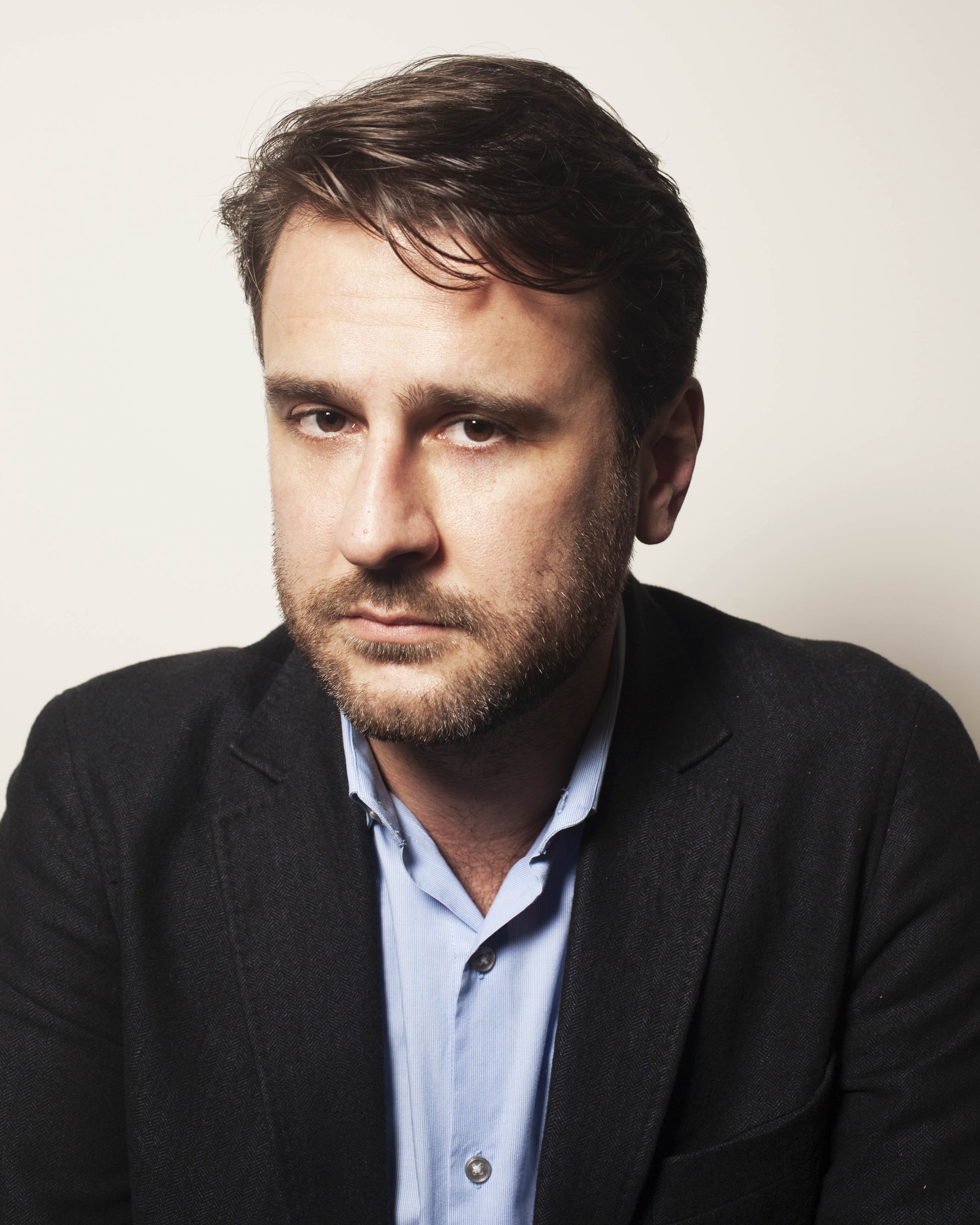
Simon Shuster
10
APPEARANCES
9
PODCASTS
Jul 20, 2026


Ian MastersHOST
And he was trying to clean up the procurement process amongst these favored companies for new technology that apparently there is some corruption within the militaries or the defense ministries or the defense industries procurement.

Simon ShusterGUEST
Yeah, there have been various scandals related to procurement going back to, I'd say, the first year of the full-scale war.
Simon ShusterGUEST
There was scandals related to how much the military was paying for eggs and winter coats for soldiers and things like that.
Simon ShusterGUEST
I'd say, you know, I've heard both sides of this debate about the procurement issue.
Simon ShusterGUEST
So Minister Fyodorov was... promoting and implementing a very decentralized approach to military procurement, one in which really the lower level military commanders could order the weapons they wanted directly from manufacturers and purveyors of those weapons.
6 MINS LATER


Grace WanHOST
And you know, Simon, in a nation that's e- uh, autocratic like Russia, how much does public discontent play into the admin- the regime's decision to stay or not stay in Ukraine?
Simon ShusterGUEST
I mean, I, I think Putin is fundamentally sensitive, uh, still to public opinion and the risk of some kind of unrest in the streets.
Simon ShusterGUEST
Um, we saw that a, a little bit in September 2022, uh, in the first fu- year of the full-scale war in Ukraine when Putin undertook, uh, the military draft of 300,000 soldiers.
Simon ShusterGUEST
Uh, that was the first mobilization of forces in Russia since the Second World War, and there were protests in the streets about that.
Simon ShusterGUEST
But r- I think, uh, right now the regime, Putin's regime, has insulated itself so thoroughly from any kind of dissent.

11:09

So if we just take a step back, Simon, Where are we in terms of the war? Where is Ukraine in terms of the war right now?
Simon ShusterGUEST
So the strikes that you just mentioned appear to be Russia lashing out and trying to take revenge and punish Ukraine for Ukraine's long range drone strikes into Russia.
Simon ShusterGUEST
So there's a clear pattern now when Ukraine launches one of these strikes at Moscow or other cities hitting oil refineries and various infrastructure areas.
Simon ShusterGUEST
Ukraine has gotten very good at shooting down most of the stuff that Russia throws at it.
7 MINS LATER

Sam HawleyHOST
[laughs] What do you mean?
Simon ShusterGUEST
You know, I've, I've been reporting on Putin for the better part of 20 years now, and this has been pretty consistent with him.
Simon ShusterGUEST
When there's a national crisis, when there's some kind of leadership struggle inside the Kremlin, he often just sort of ducks out and waits for things to calm down before reemerging and making a statement.
Sam HawleyHOST
What are we seeing from these polls? What do they show us?


Asma KhalidHOST
How unusual was it for the Russian leader to admit something like this publicly? And, and why is, is he saying what he is saying now in this moment?
Simon ShusterGUEST
Yeah, it, it's very unusual for Putin to be admitting that there is a problem here.
Simon ShusterGUEST
But I think the, the reality that Russians are experiencing, including in the very center of Moscow, became so different from what the propaganda channels are telling the Russian people about the war in Ukraine that Putin had to somehow bridge that gap.
Simon ShusterGUEST
What Russians are experiencing is massive fuel shortages because of the Ukrainian drone strikes on oil refineries and other energy infrastructure.
Simon ShusterGUEST
So every day when you go to fill up your tank in the morning, you know that something's happened.
18 MINS LATER
Asma KhalidHOST
Yeah, that's what I was gonna ask you because, yeah, Samad, we're having this conversation as the NATO Summit kicks off, and it sounds like you're saying while some of these battle gains might lead to encouraging words of support from President Trump, you haven't seen and the Ukrainians don't believe that there's a fundamental shift in US foreign policy.


Dominik PreslHOST
W- what do you think about that particular relationship? What do you think it's, it's like, and what's the reason for why there seems to be, um, such an issue? Is it something personal between the two, or is it more about the, the shared history that they've had during Trump's first term, or is it something else?
Simon ShusterGUEST
So the book, my book ends, um, during the Biden administration in, right around December.
Simon ShusterGUEST
The, the final scene is, um, Zelenskyy's first trip outside of Ukraine, uh, during the full-scale invasion when he went to Washington, um, around, uh, Christmas time, end of December 2023.
Simon ShusterGUEST
And, and that, you know, a few people I guess remember these days, but that was sort of the, um, the high point of his popularity in the United States.
14 MINS LATER
Dominik PreslHOST
Would you say that this has changed from the Ukrainian perspective how they see the United States and Trump, and what kind of an approach they choose to do? W-what I guess what I'm getting at is that basically now if I was Zelenskyy, I would be probably thinking that I just don't need to listen to Trump and what he wants anymore nearly as much, since I know that what he wants from me I'm not gonna give him, and it's impossible for me to ever win him over and get him on my team.


Allison GillHOST
Can you talk a little bit about what was going on behind the scenes at that time?
Simon ShusterGUEST
That's a great question and, and, and a very, uh, accurate point there, that the American public, uh, and to a large degree, the, the international public, saw that scandal [clears throat] of Trump's first impeachment from the, the perspective of the witnesses who testified against Trump or testified at, at the impeachment hearings and so on, right? Sort of this, the, the American point of view.
Simon ShusterGUEST
You know, we saw the transcript of the phone call, right? The perfect phone call, as Trump calls it, between, uh, Trump and Zelenskyy.
Simon ShusterGUEST
The way I experienced and reported on that scandal was from Kyiv, from the offices of the presidential compound.
Simon ShusterGUEST
I was hanging out with, uh, Zelenskyy, his, his advisors, as they were seeing this storm gathering and breaking, uh, over their heads.


Matt GallowayHOST
That led to street protests in Ukraine, but how do you understand that? How do you understand why he p- tried to pull the plug on that body?
Simon ShusterGUEST
It was to stop exactly these kinds of, uh, investigations, and I've talked to, to President Zelenskyy about his position on, uh, corruption, uh, and the, the war against, the war on corruption.
Simon ShusterGUEST
Um, you know, he says it is a priority, but it's interesting to hear him talk about, um, the way that he understands, uh, the fight against corruption as a destabilizing element, um, in a time of war.
Simon ShusterGUEST
Uh, when I talked to him about this, he described, uh, he said, "You know, Simon, look, if you have a sweeping, sprawling anti-corruption investigation looking into every part of the, uh, presidential administration, it's destabilizing, it's distracting, um, and it, uh, doesn't help you keep morale high and unity strong within the presidential team." So he has to weigh that against, um, the, the need, the other priority of fighting corruption.
Simon ShusterGUEST
Um, uh, but he does say consistently that, that fighting corruption remains a key priority and something he, uh, came to office with as a major promise of his campaign.


Nicolle WallaceHOST
Take me inside, um, President Zelenskyy's strategy for dealing with a post-Anchorage Trump White House.
Simon ShusterGUEST
I spoke to him, uh, just a few weeks after the big blow up in the Oval Office at the end of February.
Simon ShusterGUEST
But since then, he's been very consistently trying to get it back on track by convincing Trump of a couple of very simple ideas, that Putin cannot be trusted, he will not negotiate in good faith, and the only way to reach a reasonable end to this war is by showing strength, by putting pressure on Russia and continuing to arm Ukraine.
Simon ShusterGUEST
He's delivered this message very consistently, uh, through quiet conversations, back channels, and through direct talks, phone calls with President Trump.
Nicolle WallaceHOST
Um, former US Ambassador to the UN, Susan Rice, just said on our broadcast that she believes this was a setup, that these meetings are so carefully scripted, especially for the part of the meeting, it's only part of it where the full press contingent is in there from both sides filming. Is that a theory being explored by the Ukrainians?
Simon ShusterGUEST
That's interesting. Yeah, I mean, I- I think Ambassador Rice, you know, knows the- the ins and outs of the White House way better than I do. But I know President Zelenskyy pretty well. Um, and from working on his biography, writing- writing his biography, I- I got to know him, and this was in many ways pretty classic Zelenskyy. Um, one thing that he is known for and has been known for throughout his life is, you know, speaking to everyone as an equal. He has trouble with protocol, pomp, um, and he has trouble with people who talk down to him. He expects to be spoken to as an equal, and he also tends to show respect to even, you know, um, regular people he meets, his drivers, his various staff. Um, he tries to- to speak to them as- as equals. Um, so he- he doesn't have a good time, uh, an easy time sort of following the rules of diplomatic protocol and courtesy. He's straightforward. He's blunt, he's stubborn. Um, he does have trouble kind of, uh, holding back sometimes. You know, we've been hearing for- for years about these kinds of exchanges happening, emotional exchanges behind the scenes, uh, behind closed doors, even at a very high level between Zelenskyy and foreign leaders as he continues to ask for their support, but now it's all out in the open, and I don't think, uh, Ukrainians are surprised. This is the Zelenskyy in many ways that they know, but they are afraid of what the consequences are going to be.
Nicolle WallaceHOST
The consequences are- are already, uh, taking shape. Um, again, I don't know the sequencing of this decision, but NBC News is reporting this afternoon that the State Department has terminated US support of Ukraine's energy grid restoration. Goes on to say, "The State Department this week terminated a US Agency for International Development initiative that has invested hundreds of millions of dollars to help restore Ukraine's energy grid from attacks by the Russian military." According to two USAID officials, Trump, um, and Vance, uh, exaggerated the amount of money, um, that has gone to Ukraine and undercounted the amount of money that has been paid by the European allies. Why... W- w- what do they believe the exaggerations and the misinformation are about from the Ukrainian side?
Simon ShusterGUEST
I mean, th- this has been going on for the last couple of weeks as Ukraine and the US have negotiated this deal that was supposed to be signed today, uh, in the White House, uh, between President Trump and President Zelenskyy. Um, the Ukrainians have been facing a lot of attacks, a lot of disinformation. President Zelenskyy at one point actually said that, uh, President Trump, after one of his attacks, he appears to be living in a- in a world of disinformation about Ukraine. He's confused about the reality here in- in Kiev and in this country and in the war zone. So, they've sort of, uh, come to terms with that being part of doing business with the Trump administration, but really everyone here thought that we had gotten over that, that the two sides had negotiated this deal and this deal, once it was signed, was going to open up a lot of opportunities for Ukraine to maneuver, to keep the United States on its side, uh, and to try to get a ceasefire, get an end to this war that would not amount to a capitulation or a humiliation for the Ukrainian people. That's what everyone was really hoping for and counting on in this meeting. And now everyone I talk to here tonight, um, just doesn't know what is coming next around the corner. There's really a state of shock and confusion here.