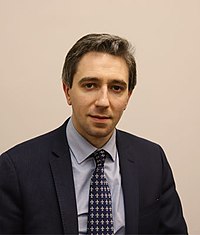
Simon Harris
Tánaiste of Ireland
10
APPEARANCES
10
PODCASTS
Sep 11, 2026


Anton SavageHOST
So is there one archetypical citizen where you'd say, when this budget comes through, their life will improve in this material way?

Simon HarrisGUEST
And it's when I ask, it's when I kind of, it's when I picture in my own mind when I'm talking about the budget.
Simon HarrisGUEST
So if there's a family watching or listening, excuse me, to this program this morning, and that family is going out to work, I want to make sure that their take home pay as a result of the tax package benefits, if they're dropping the child to creche or to a childminder, I want to increase the assistance the government is giving them with the cost of childcare.
Simon HarrisGUEST
And if they're worried, as nearly every family is, about the cost of energy, I want to look at how we can help them somewhat, somewhat with the energy bills this year.
Simon HarrisGUEST
All of those things in the round, plus significant investment in public services and their kids' schools and the local hospital.
Simon HarrisGUEST
This is whether you get up early in the morning or whether you work late at night isn't the point.
7 MINS LATER

SarahHOST
So what are you going to do?
Simon HarrisGUEST
The Taoiseach and I are at IDEM on looking at all of the various levers that are at our disposal.
Simon HarrisGUEST
We've already taken a number of measures to try and help people in relation to energy costs around excise.
Simon HarrisGUEST
We took some decisions in relation to carbon to try and help people in terms of the deferral.
Simon HarrisGUEST
What we now need to do, and we're engaging on this across government, is I think on Budget Day on the 6th of October, try and make a move that gives people certainty beyond next month.
SarahHOST
The budget would need to make really significant inroads for you to meet your pledge, wouldn't it?


Eoin McGeeHOST
But tell me what you can tell me right now about what you think the scheme could potentially look like at this stage.
Simon HarrisGUEST
Yeah, so, so you will find out on budget day, but there's a lot that I've already said, and there's a lot we can say.
Simon HarrisGUEST
In fact, [laughs] far from it, right? And there's a disadvantage to that, i.e., we haven't done it.
14 MINS LATER

Simon HarrisGUEST
He was one of our country's most successful entrepreneurs, a proud Dundalk man, educated indeed in De La Salle in Dundalk, where I know he went on to found an annual scholarship programme.
Simon HarrisGUEST
He was the founder of the incredible Glendimplex, a company that's now become a global manufacturing business.

Adrian KennedyHOST
He had that cross-border connection from early on in his career, founding the Glen Electric Group in Newry in County Down in the early 70s and then acquiring Dimplex to create what we now know as Glen Dimplex, which has gone on to become one of the biggest companies in the world.

DonalHOST
Is this another area where the consumer is suffering to effectively, and the irony of this about being, uh, competitiveness, protecting uncompetitive industries in Europe?
Simon HarrisGUEST
I mean, I think too many of the conversations around the costs being faced by, uh, individual motorists are looked at in the here and now without actually looking at the structural change that needs to happen.
Simon HarrisGUEST
We need to make it as attractive as possible for people to make the transition.
Simon HarrisGUEST
We need to make it as easy as possible for people to afford to make the transition.
Simon HarrisGUEST
People I speak to right across the country, people I speak to in my own community, they want to do right by their own family, their own environment, uh, and indeed their own cost.
Simon HarrisGUEST
So we've got to look at measures in which we can decouple some of these issues and actually try to structurally reduce costs.
DonalHOST
Um, how worried should Ireland be i, i- in this? And, and is, is there any way, uh, y- or any reassurance you can offer people that this is not part of a wider trend of tech job losses in Ireland?


Rachael EnglishHOST
But is it your intention as of now that these excise cuts will start to be phased out in September?
Simon HarrisGUEST
And indeed, we intend to legislate for that in the Oireachtas over the course of the next week or so.
Simon HarrisGUEST
We wanted to avoid a cliff edge where people would see diesel rise by 32 cents and petrol by 27 cents.
9 MINS LATER
Rachael EnglishHOST
will you then be increasing taxes in any other area? I mean, the one that's often mentioned by the IMF and others is property tax.


Miriam O'CallaghanGUEST
Okay, Simon Harris, so you're asking people to sort of check it themselves, is that it?

Simon HarrisGUEST
Um, and I, I, um, uh, my, my appetite first got whetted in this when in Greystones, the town I'm from and love very much- School principals contacted me a- and were really, really, really, really worried about the anxiety levels they were seeing in young people.
Simon HarrisGUEST
And they, they not me, were saying that it's smartphones in general actually were a part of it.
Simon HarrisGUEST
And they came together as a community, and they brought in a kind of voluntary code where parents, not teachers, not principals, not the government, not anybody telling you what to do, parents signed up and said, "We won't give our child a smartphone until they're in secondary school."
16 MINS LATER
Simon HarrisGUEST
Um, uh, but of course, we have a housing emergency, right? So it's the first thing, we want houses for young people to be able to buy, right? But secondly, it's not a good idea to run your country on the basis of the revenues earned off people selling houses to each other.


Christina FinnHOST
Do you think, first of all, has that reduced the level of abuse at all by you taking such a position? And do you think it kind of sends a strong message to people that are, you know, carrying out these sort of online abuse and threats? Does that show that there's consequences for those actions?
Simon HarrisGUEST
I worry particularly when it comes to online abuse or the fear of online abuse that people it actually prevents good people from putting their name forward in the first place.
Simon HarrisGUEST
But I remember when I first became leader of this party, or maybe even just before I was leader of the party, I remember meeting lots of people who were considering running for election.
Simon HarrisGUEST
And I remember a lot of them citing fear of online abuse as the biggest barrier.
5 MINS LATER


Gavan ReillyHOST
Um, is it official state policy now to abolish private maternity care in Ireland?
Simon HarrisGUEST
It's official state policy to deliver Sláinte Care, which by the way, I think is the policy of all political parties in Dáil Éireann, because when I was Minister for Health, I remember there was a view that we should have an all-party committee and move beyond playing tit for tat with politics, uh, when it comes to our healthcare system.
Simon HarrisGUEST
Uh, and back then it was agreed that there would be a public-only consultant contract.
Simon HarrisGUEST
And what Minister Jennifer Carroll MacG- Neal has done excellently is ensure, uh, that all hospitals, uh, live by public policy.
Simon HarrisGUEST
Um, there's been a lot of commentary in recent days about public versus private.
8 MINS LATER
Gavan ReillyHOST
Are you comfortable with the idea, just before we move on, that if the game is moved to a third-party venue, as it seems like it will be, and we'll find out later in the week, that it might be perceived in some quarters as Ireland being unsafe for Israeli visitors, or Ireland being anti-Semitic, which is a charge that we've faced a lot in the last couple of years? Does it send a good message to the world that we can't receive them for something like a sporting fixture?