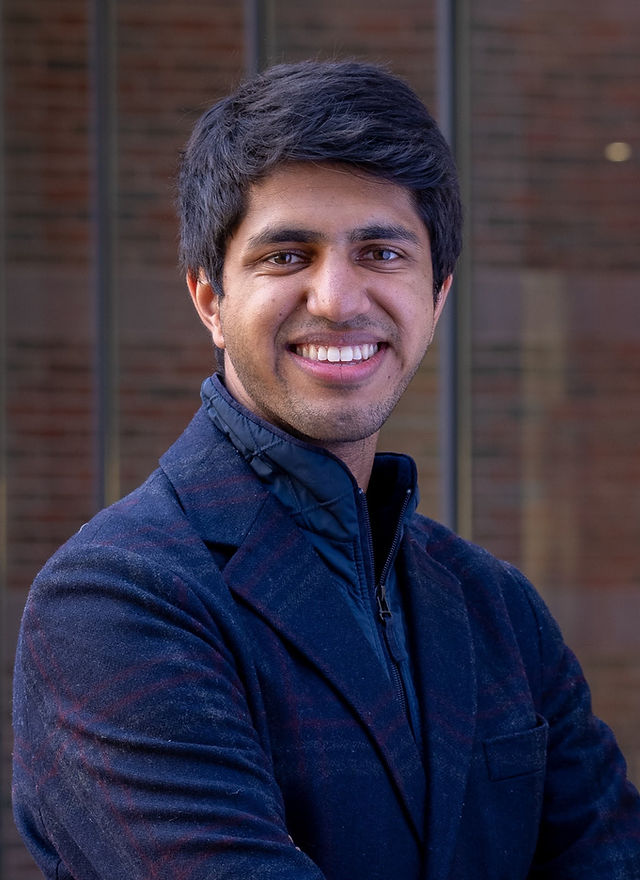
Simar Bajaj
5
APPEARANCES
4
PODCASTS
Sep 16, 2026

DavidHOST
So as we get started, um, what have been your longstanding interests in the field of science and communication?

Simar BajajGUEST
Um, I've been interested in science and medicine for the longest time, ever since I was nine, uh, really, and sort of interested in healthcare, health equity specifically, and sort of, uh, this notion of medicine as treating everyone, um, equally because, um, it's the patient in front of you.
Simar BajajGUEST
Of course, the reality of medicine is much more complicated and nuanced, and, uh, that came with time.
20 MINS LATER
DavidHOST
Right.
DavidHOST
So as we get started, um, what have been your longstanding interests in the field of science and communication?
Simar BajajGUEST
Um, I've been interested in science and medicine for the longest time, ever since I was nine, uh, really, and sort of interested in healthcare, health equity specifically, and sort of, uh, this notion of medicine as treating everyone, um, equally because, um, it's the patient in front of you.
Simar BajajGUEST
Of course, the reality of medicine is much more complicated and nuanced, and, uh, that came with time.
22 MINS LATER
DavidHOST
So why did you choose chemistry and history of science as well as global health and policy to focus on in undergrad at Harvard? Why'd you choose those?


David FergusonHOST
So as we get started, um, what have been your long-standing interests in the field of science and communication?
Simar BajajGUEST
Um, I've been interested in science and medicine for the longest time, ever since I was nine, uh, really, and sort of interested in healthcare, health equity specifically, and sort of, uh, this notion of medicine as treating everyone, um, equally because, um, it's the patient in front of you.
Simar BajajGUEST
Of course, the reality of medicine is much more complicated and nuanced, and, uh, that came with time.
22 MINS LATER
David FergusonHOST
So why did you choose chemistry and history of science as well as global health and policy to focus on in undergrad at Harvard? Why'd you choose those?


Ella YeeHOST
But do you want to speak on a few health care problems that you think are really under discussed or under prioritized right now, whether that's in terms of media or dollars or any other metrics?
Simar BajajGUEST
Yeah, I mean, I think one of them is sort of stigma, as I've mentioned before, and I'll just briefly mention it, emphasize it again, right? This is not just a story about lung cancer, but a story about obesity, about addiction, about mental health and STIs and HIV.
Simar BajajGUEST
So for all these diseases, at least many of them, they're tied to behavior, and therefore there's a sense of agency I think sort of there should be and I think there is a really interesting story to tell about the stigma that cuts across all these diseases and conditions and drives disparities and that drives sort of stigma itself is sort of something worth studying and not just within each individual silo but as a broader phenomenon as a fundamental cause of health inequity that's one thing that I've been thinking about I've been really curious about for many years Something I've been thinking about more recently is sort of this idea of preventive medicine, right? And how it's not a sort of very like the idea what i mean by that is sort of we're in this era of longevity right everyone wants to live forever there's all this attention and excitement and that's into longevity and ironically some of the best things we know um for longevity happen to be the simplest most boring ones like sleeping and waking up at the same time um getting sort of consistent like six to eight hours sleep um eating a healthy diet with less processed foods um sort of doing extra regular exercise all these things right they're not rocket science but when told through the lens of front medicine they can sometimes feel scolding or like your mom is lecturing you telling you what to do and i think something about longevity medicine has longevity science has done really well i think what learning from is this language of aspiration right it's not about and your doctor getting mad at you and you don't it's not doing something because there is this opportunity to live better to live a more amazing life live live a longer more helpful life um i mean you could even imagine this like you could rename the field of preventive medicine as longevity medicine and there'll be nothing untruthful about that right like what is preventive medicine if not trying to help you live longer But it's sort of that language of aspiration, those gain-framed messages that longevity offers versus what medicine often offers, which is like loss-oriented messages.
Simar BajajGUEST
It sounds lecturing and stern, and I think sort of medicine could stand to become, it doesn't mean you lose the loss aspect entirely.
Ella YeeHOST
What do you think excites you most about the rise of AI and what worries you, if anything at all?


Alison StewartHOST
... and it makes claims like the ones we're discussing, what questions do you have when you're trying to understand the studies? Questions like our just, our guest just had.
Simar BajajGUEST
I'm trying to understand, right? Um, is this real, right? [chuckles] Is this...
Simar BajajGUEST
[chuckles] Like, I mean, we, you, anybody can sort of find a link between two things, right? But how, what do they adjust for? What w- were they trying to answer and preemptively address some of these questions that I have the same question as, as the caller, right? Maybe it's just tennis players are just wealthier to begin with.
Simar BajajGUEST
I'm asking researchers, um, "What do you think the biggest weaknesses of your study are?" I'm trying to see how, um, open they are about admitting the limitations and putting it in context, right? This is not just about one study, but about three studies that found that a, a interesting link.
Simar BajajGUEST
That doesn't mean it's true, right? But it means sort of there's something seems to be there.
15 MINS LATER