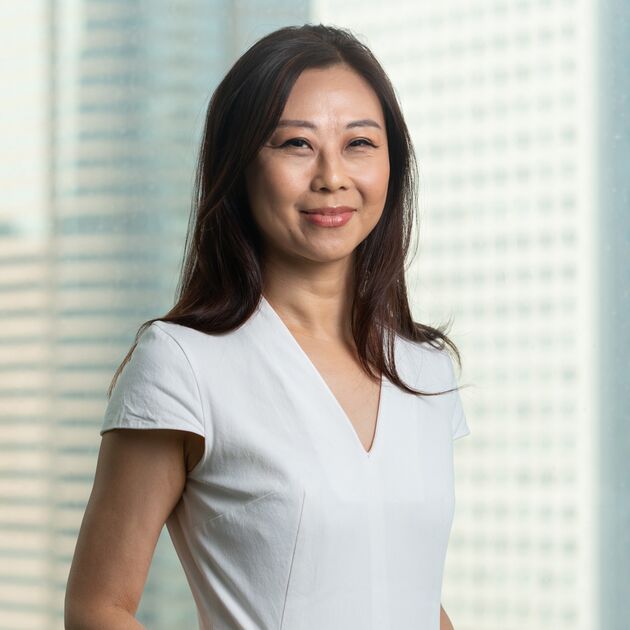
Shuli Ren
27
APPEARANCES
5
PODCASTS
Nov 6, 2026

K. Oanh HaHOST
Are you seeing that this potentially could be a turning point in the AI investment cycle? Are we heading towards an AI bubble bursting? I think

Shuli RenGUEST
it's good that we are seeing a correction right now because the AI financing boom was just too much.
Shuli RenGUEST
It was crowding out everything else, right? Like if you go to investment conferences, AI and the AI data center, they are the only things that people talk about.
Shuli RenGUEST
Even governments, sovereign governments, they are having trouble refinancing their debt.
Shuli RenGUEST
Every other sector is faced with a higher cost of borrowing because of the AI boom.
Shuli RenGUEST
Julie, where was the sell-off happening? Who's selling? I think anyone who used leverage to build big positions in the AI trade has to be selling because they have to meet margin costs and some have to cut their risk exposure.
Oanh HaHOST
Are you seeing that this potentially could be a turning point in the AI investment cycle? Are we heading towards an AI bubble bursting?
Shuli RenGUEST
I think it's good that we are seeing a correction right now because the AI financing boom was just too much.
Shuli RenGUEST
It was crowding out everything else, right? Like if you go to investment conferences, AI and the AI data center, they are the only things that people talk about.
Shuli RenGUEST
Even governments, sovereign governments, they are having trouble refinancing their debt.
Shuli RenGUEST
Every other sector is faced with a higher cost of borrowing because of the AI boom.
Shuli RenGUEST
Julie, where was the sell-off happening? Who's selling? I think anyone who used leverage to build big positions in the AI trade has to be selling because they have to meet margin costs and some have to cut their risk exposure.

Shuli RenGUEST
What we are seeing is a, a rebound in Hong Kong's asset management industry last year.
Shuli RenGUEST
A lot of, uh, global hedge funds, they were opening, uh, shop in Hong Kong, and they were actually expanding their office space.
Shuli RenGUEST
Uh, one reason is that, uh, uh, they want to be close to the deep talent pool in mainland China.
Shuli RenGUEST
For, for educated, uh, smart mainland Chinese to move to Hong Kong, it's very easy, whereas, uh, it would be very difficult for them to move to, say, London or New York.
Shuli RenGUEST
And, uh, with global hedge funds stuck in a very heated, uh, uh, talent fight and they're paying more and more money to young analysts, they find Hong Kong quite, uh, attractive.

Shuli RenGUEST
What we are seeing is a, a rebound in Hong Kong's asset management industry last year.
Shuli RenGUEST
A lot of, uh, global hedge funds, they were opening, uh, shop in Hong Kong, and they were actually expanding their office space.
Shuli RenGUEST
Uh, one reason is that, uh, uh, they want to be close to the deep talent pool in mainland China.
Shuli RenGUEST
For, for educated, uh, smart mainland Chinese to move to Hong Kong, it's very easy, whereas it, it would be very difficult for them to move to, say, London or New York.
Shuli RenGUEST
And, uh, with global hedge funds stuck in a very heated, uh, uh, talent fight and they're paying more and more money to young analysts, they find Hong Kong quite, uh, attractive.

Shuli RenGUEST
What we are seeing is a, a rebound in Hong Kong's asset management industry last year.
Shuli RenGUEST
A lot of, uh, global hedge funds, they were opening, uh, shop in Hong Kong, and they were actually expanding their office space.
Shuli RenGUEST
Uh, one reason is that, uh, uh, they want to be close to the deep talent pool in mainland China.
Shuli RenGUEST
For, for educated, uh, smart mainland Chinese to move to Hong Kong, it's very easy, whereas, uh, it would be very difficult for them to move to, say, London or New York.
Shuli RenGUEST
And, uh, with global hedge funds stuck in a very heated, uh, uh, talent fight and they're paying more and more money to young analysts, they find Hong Kong quite, uh, attractive.
17:43

Shuli says what worries her even more is the all-in mentality taking hold among some investors.
Shuli RenGUEST
I heard from a teenager from Taiwan, she was saying that the saying is, uh, "Sell your house, sell your cars, and buy TSMC." That's the problem.
Shuli RenGUEST
Until you sell your holdings, these are just paper gains that can evaporate overnight.
Shuli RenGUEST
What we saw after Japan's economy's bubble burst was that Japanese people have turned very cautious, right? Like if you get burned very early on in your 20s or 30s, that could really change your risk appetite and the risk attitude for decades to come.
19:40
Since the beginning of this year, foreign investors sold more than $90 billion in Korean stocks and $20 billion worth of Taiwanese stocks.

Caroline HepkerHOST
So it's quite interesting to understand your reporting about what's actually been happening there in the past four weeks and the impression that it gives you on the ground.
Shuli RenGUEST
And in the first two months of the year before this whole Iran war happened, exports from Yiwu actually increased 50% year on year.
Shuli RenGUEST
But in March, vendors in Yiwu say that Middle Eastern customers who are very well sought after in Yiwu, they basically disappeared.

Stephen CarrollHOST
So what sort of debate is happening now in China about the potential effects of the war and what sort of response might there be from Beijing?
Shuli RenGUEST
I mean, he always wants a weak dollar because US goods is very expensive and the US is very expensive for wealthy tourists from Europe or Japan.
Shuli RenGUEST
But the problem is when we start to see such a clear trend of a dollar weakening, international investors will have even more incentive to sell US-based assets.
Shuli RenGUEST
talking about Euro, right? For investors that are based in the European Union, if they bought into the S&P 500 in the last year, their Euro-based returns is actually none because the Euro has just strengthened so much against the greenback.
Shuli RenGUEST
So going forward in 2026, say the dollar is going to weaken another, I don't know, 5%, 6%, 7% against the Chinese yuan or the Japanese yen, that is going to be a big problem.
Caroline HepkerHOST
What does this mean for U.S. government borrowing if you have a weaker dollar?

K. Oanh HaHOST
It's been a wild ride for China this year, but as we close the book on 2025, how is China looking? What surprised you the most?
Shuli RenGUEST
most?Just the fact that the animal spirit is starting to come back in China, that's just so surprising because we just didn't feel that way, uh, at the beginning of the year, right? Like, when you talk to global investors, what they're saying is that at the beginning of the year, there was the sense that, okay, China does have the world's most powerful factory.
Shuli RenGUEST
But if AI manages, uh, to come along and d- develop further, there's a chance that, uh, you know, in the future, all the manufacturing would- will be automated and China will lose its biggest edge.
Shuli RenGUEST
And it turned out at the end of the year, actually, you know, China is [laughs] still the world's most powerful factory, despite Trump's tariffs.
K. Oanh HaHOST
So then what do you think in terms of the, the broader picture? I mean, are we seeing that fundamental shift in how foreign investors are now looking at the Chinese market as well?
Shuli RenGUEST
This year, in 2025, AI is a huge theme, and any market that doesn't have the AI exposure, they're just not going to do as well, and I'm talking about India.

Oanh HaHOST
But as we close the book on 2025, how is China looking? What surprised you the most? Just the fact that the
Shuli RenGUEST
animal spirit is starting to come back in China, that's just so surprising because we just didn't feel that way at the beginning of the year, right? Like when you talk to global investors, what they're saying is that at the beginning of the year, there was the sense that, okay, China does have the world's most powerful factory.
Shuli RenGUEST
But if AI manages to come along and develop further, There's a chance that, you know, in the future, all the manufacturing will be automated and China will lose its biggest edge.
Shuli RenGUEST
And it turned out at the end of the year, actually, you know, China is still the world's most powerful factory, despite Trump's tariffs.
Oanh HaHOST
What does it say about China that it's managed to clock so much progress in high tech, even as the U.S. was trying to hold it back by restricting sale of these advanced chips that they need to develop AI with?
Shuli RenGUEST
I think the seeds of success were sowed a long time ago, and it's only by the law of large numbers that innovation comes out in China.
Shuli RenGUEST
He blamed the U.S. society's various economic problems from the loss of manufacturing to wealth inequality to the overvaluation of dollar.
Shuli RenGUEST
In a very well-read paper published last November, he basically said that the dollar is overvalued and that it should not be acting as a reserve currency.
Doug KriznerHOST
Do you think he's likely to have much in the way of influence while he's sitting on the Fed's Board of Governors?
Shuli RenGUEST
He blamed the U.S. society's various economic problems from the loss of manufacturing to wealth inequality to the overvaluation of dollar.
Shuli RenGUEST
In a very well-read paper published last November, he basically said that the dollar is overvalued and that it should not be acting as a reserve currency.
Shuli RenGUEST
What we are seeing is that the Fed was holding the rates throughout this year until Wednesday.
Doug KrisnerCORRESPONDENT
Do you think he's likely to have much in the way of influence while he's sitting on the Fed's Board of Governors?
Shuli RenGUEST
He blamed the U.S. society's various economic problems from the loss of manufacturing to wealth inequality to the overvaluation of dollar.
Shuli RenGUEST
In a very well-read paper published last November, he basically called that the He basically said that the dollar is overvalued and that it should not be acting as a reserve currency.
Shuli RenGUEST
Like what we are seeing is that the Fed was holding the rates, right, throughout this year until Wednesday.
Doug KriznerHOST
Do you think he's likely to have much in the way of influence while he's sitting on the Fed's Board of Governors?
Shuli RenGUEST
In the first half, there was a euphoria rally, like with the benchmark index up 50%.
Shuli RenGUEST
And then the Chinese government had to scramble to bring in the national team to support the stock market.
Shuli RenGUEST
So people think that 2025 has very similar economic drop back as 2015, because just like a decade ago, the economy is in deflation.
Doug KriznerCORRESPONDENT
And I'm wondering whether that could be maybe a catalyst for some difficulty in AI stocks in China.
Shuli RenGUEST
In the first half, there was a euphoria rally, like with the benchmarking that's up 50%.
Shuli RenGUEST
And then the Chinese government had to scramble to bring in the national team to support the stock market.
Shuli RenGUEST
So people think that 2025 has very similar economic drop back as 2015, because just like a decade ago, the economy is in the deflation.
Doug KrisnerCORRESPONDENT
And I'm wondering whether that could be maybe a catalyst for some difficulty in AI stocks in China.
Doug KriznerHOST
Can we begin by having you give me a sense of scale here, perhaps a few examples of how biotech in China is advancing?
Shuli RenGUEST
Well, the revelation came really just a month ago when Pfizer agreed to pay a record $1.25 billion upfront to license an experimental cancer drug from a Chinese company called 3S Bio.
Shuli RenGUEST
Two weeks later, Bristol BioSquib said it will pay BioNTech another $1.5 billion to license a similar cancer drug.
Shuli RenGUEST
That cancer drug was bought by BioNTech from a Chinese company just late last year for $800 million.
Shuli RenGUEST
So what we are seeing is that big pharma are paying billions of dollars licensing Chinese drugs.
Doug KriznerHOST
When you look at the way in which some of these stocks have been performing, perhaps on the mainland or in Hong Kong, have they been doing remarkably well?
Shuli RenGUEST
Yeah, it's ironic, right? Because you imagine Hong Kong being a part of China will be caught in this U.S.-China trade war.
Doug KriznerHOST
When you talk to people in Hong Kong about the weakness on the mainland, what are they saying? Are they optimistic that things will begin to turn around and maybe Hong Kong can benefit from a resurgence in Chinese growth?
Oanh HaHOST
And Shuley says other companies are already trying to replicate parts of PopMart's formula for success when they're expanding
Shuli RenGUEST
And in fact, you start to see this brand called Miniso, the Chinese version of Muji, if I may use that analogy.
Shuli RenGUEST
And they are also selling toys, cheap lipstick, houseware, et cetera, right? And that they are trying to do what PopMart is doing, going overseas.
Oanh HaHOST
Just as importantly, PopMart is challenging the idea that China is just a place where cheap knockoff goods are made.
K. Oanh HaHOST
And Shuley says other companies are already trying to replicate parts of PopMart's formula for success when they're expanding
Shuli RenGUEST
And in fact, you start to see this brand called Miniso, the Chinese version of Muji, if I may use that analogy.
Shuli RenGUEST
And they are also selling toys, cheap lipstick, houseware, et cetera, right? And that they are trying to do what PopMart is doing, going overseas.
K. Oanh HaHOST
Just as importantly, PopMart is challenging the idea that China is just a place where cheap knockoff goods are made.
Shuli RenGUEST
I mean, there is the sense that the basis trade, hedge funds unwinding basis trade, created some turmoil in the treasury market.
Shuli RenGUEST
But I think what Treasury Secretary Benson said, he cited the tick data, basically.
Shuli RenGUEST
I think that's only part of the picture because this data collects information from U.S. custodian banks.
Shuli RenGUEST
So say I was a China central bank, my holdings with U.S. custodian banks will be disclosed in the treasury data.
Shuli RenGUEST
But I can also have treasury holdings with European custodian banks in Europe, say in Belgium, with Euroclear.
Doug KriznerHOST
And I'm just wondering how effective the Trump administration can be in these trade negotiations with this sword of Damocles kind of hanging over its head.
Doug KriznerHOST
Is this going to continue for a while longer, or is there a concern that is developing that maybe things have come too far too fast?
Doug KriznerHOST
So if we can use AI as a metaphor for some of the gains that we have seen in automation, in mechanized handling of certain processes, and in robotics as well, is there a risk for the overall economy in China, particularly if you start to consider Chinese workers?
Shuli RenGUEST
any of that? I think China has realized that the U.S., Trump is serious about rebalancing the economy.
Shuli RenGUEST
China sells products into the U.S., and then with the trade surplus, they in turn buy U.S. treasuries.
Oanh HaHOST
But in the end, can these tariffs really break China's grip on manufacturing at this point, Shuli? You
Shuli RenGUEST
They do feel, I mean, going back, like we know that Hong Kong listed shares, mostly Chinese companies, right? They are deep value traps.
Shuli RenGUEST
After Beijing's regulatory crackdowns on big tech and the whole property bubble burst, like the Chinese shares are very cheap.
Shuli RenGUEST
But Deep Seek basically said that, you know, China is not just a manufacturing powerhouse.
Shuli RenGUEST
It's also good with software and digital stuff, right? Like Deepsea does generative AI.
Shuli RenGUEST
And people didn't really expect that a small unknown startup, even to the Chinese until a month ago, could do so well despite all the export controls.
Doug KriznerHOST
And I'm wondering whether you're really focused on a lot of these e-commerce names that we hear so much about, like Alibaba, Tencent.
Doug KrisnerCORRESPONDENT
How would you describe what's been happening with Chinese tech right now?
Shuli RenGUEST
They do feel, I mean, going back, like we know that Hong Kong listed shares, mostly Chinese companies, right? They are deep value traps.
Shuli RenGUEST
After Beijing's regulatory cracked down some big tech and the whole property bubble burst, like the Chinese shares are very cheap.
Shuli RenGUEST
But deep-seek basically said that, you know, China is not just a manufacturing powerhouse.
Shuli RenGUEST
It's also good with software and digital stuff, right? Like Deepsea does generative AI.
Shuli RenGUEST
And people didn't really expect that a small unknown startup, even to the Chinese until a month ago, could do so well despite all the export controls.
Doug KrisnerCORRESPONDENT
And I'm wondering whether you're really focused on a lot of these e-commerce names that we hear so much about, like Alibaba, Tencent.
Shuli RenGUEST
They do feel, I mean, going back, like we know that Hong Kong listed shares, mostly Chinese companies, right? They are deep value traps.
Shuli RenGUEST
After Beijing's regulatory crackdowns on big tech and the whole property bubble burst, like the Chinese shares are very cheap.
Shuli RenGUEST
But Deep Seek basically said that, you know, China is not just a manufacturing powerhouse.
Shuli RenGUEST
It's also good with software and digital stuff, right? Like Deepsea does generative AI.
Shuli RenGUEST
And people didn't really expect that a small unknown startup, even to the Chinese until a month ago, could do so well despite all the export controls.
Doug KriznerHOST
What do you see when you look at some of these companies, Chinese firms that trade in Hong Kong?
Scroll for more appearances