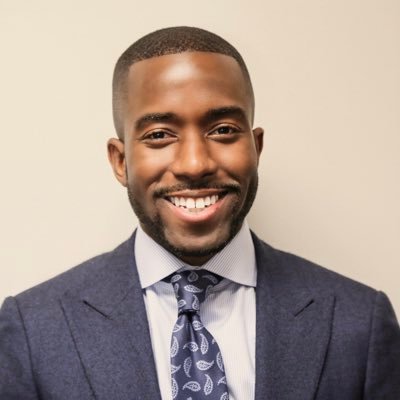
Shermichael Singleton
TV personality
31
APPEARANCES
11
PODCASTS
Sep 22, 2026

Laura CoatesHOST
what is the game plan here because obviously he knows the first amendment he's well aware he knows what happened in the past and for 50 years there's been precedent at the very least on exclusion
10:21

well look i think the president has already acknowledged that there isn't any legal standing hence we're going to appeal before there is even a due process in the case at all before it goes before a judge that said Strategically, I think the president is at his best when he's going back and forth with members of the press, whether you like the engagements or not, particularly for his base.
10:41
We're in the midst of a midterm where right now the focus should be trying to blunt potential losses for House Republicans, which we know history is against us.
10:51
There's a string of victories for Democrats in a special election since last year.
10:58
And so to me, as a strategist, I'm thinking every interaction you can have with members of the press, talk about immigration, the positive components of it, talk about these Trump accounts and how that will do great things for Americans who want to send their kids off to college or buy their first home in 18 years, from birth, that is.
29 MINS LATER

Margaret TalevGUEST
But I think this is a masterclass in how two people who don't like the other's policy beliefs and may not like the other one personally see... power and access to audiences they want to reach in one another and so it is mutually advantageous to have these sessions like what you saw and not nasty by the way that's that's part of it go ahead i mean


Anderson CooperHOST
So, Shermichael, do Republicans have a Latino voter problem if a sitting congresswoman in a district the president carried by that much is calling him out on the signature campaign issue?
13:30
Yeah, Anderson, look, it's a reminder of something Tip O'Neill used to say a long time ago, that all politics is local.
13:35
And when you're running in this type of competitive environment where we know since 1946 the party of the president has lost 18 out of the, what, 21, 22 midterms, we already have history against us.
13:47
And then when you factor in the net approvals of the president, which are substantially low, that obviously makes it harder for Republicans who may want to attach themselves to The president to find some independence and I think you have to provide that level of clarity and say do what you have to do if it means maintaining your competitive advantage or if it means winning your seat because we know the odds are against us.
14:14
with a large Cuban-American population, yet there's still a significant Republican advantage in terms of registered voters, 111,000 registered Republicans compared to 54,000 registered Democrats and about 76,000 who are non-affiliated.

14:04
Yeah, look, Cory Mills doesn't surprise me at all, and look, I'm, I'm glad that the guy lost.
14:09
W- w- we should be clear about the types of ethics and morals we want in our party and, and from our elected officials.
14:15
Uh, Senator Birdie Marino has talked e- exhaustively about what his daughter has experienced, his concern about his daughter and his granddaughter.
14:23
I have no reason at all to doubt a Republican senator, a father, a husband about allegations of her former spouse against her.
14:31
That, for me as a husband, as a father, is enough to say, "This guy has to get out of the race." He refuses to get out of the race, so what does that ultimately mean? You may indeed make a strong, uh, plus R district now competitive to a Democrat because there are gonna be a lot of voters there that are gonna look at this guy and say, "Look, I'm a Republican, I'm a conservative, or I lean to the right, uh, but I don't want to support someone who's alleged to have abused their spouse." That is problematic for a lot of voters, and understandably so.

Pamela BrownHOST
So what is your read of that moment? Is that a gaffe, or do you think it's a refreshingly honest moment that could resonate with voters?

8:48
I mean, Congressman Klieman made a clear indicator of who he thought was the better of the two candidates, and it wasn't Mr.
8:55
El-Sayed for a reason, right? And I don't think you can dismiss that as a Democrat.
8:59
That is the base of your party, just as MAGA would be the base for a Republican candidate.
20:23
No, I don't think so, and I think a part of the call for body cameras is to, one, keep the officers safe, the individuals that they're interacting with.
20:31
And if there is a use case for deadly force, it either proves that the officer was within their right to do so, or we have seen instances where the body camera footage showed that the officer acted inappropriately, uh, beyond, uh, the, the, the training that they typically go through, number one.
20:48
Uh, number two, we do know that some of these guys have gone through an expedited training-
21:21
And in the worst case scenarios, you want to have to draw your weapon and utilize it.


Tavis SmileyHOST
So here we are, 250 years in, and where our people are concerned, what is the frame? What is the lens through which you want us to look at America?
5:17
I'm not going to pretend that there aren't structural things in politics and policy from history to job attainment to the how when my party has gone about shrinking the size of government.
5:34
and the unfortunate implications that I've had in real time on black employment within government and contractors within government.
5:47
It is clear to me, I'm clear eyed that those things are evident to all black people and I wrestle with trying to be a voice of reason on my side in terms of how you approach things from a policy perspective to not inadvertently have immediate negative impacts on people.
6:07
And I think good policy tries to avoid that as best as it possibly can.
6:12
And I continue to be quite honest with you, I continue to try to navigate that as best because I think I have an obligation to do so.
Tavis SmileyHOST
Do you have anything on your list of confrontations that we need to engage right about now? So the celebration part we get What about the confrontation part of this conversation?


Dave RubinHOST
And th-, and the police basically moved the barricades and they buy them coffee So i- it's again, it's, it's a, um, it's a disconnect between what the average person is seeing and the behavior of, of the government and in this case the police.
22:02
Well it's bigger than, than just a mere disconnect from the average person and I guess I wouldn't call these guys technocratic because maybe they don't have the same academic background as a, as the prime minister and folks in parliament.
22:17
Uh, but, but in many ways they're, they're Ponzis I suppose, right? A- a- a- and, and what you're seeing and you're seeing this in the US too Th- this, this cultural breakdown where there are people who don't necessarily have a problem with people who are different, religiously different, uh sexual orientation different, ethnically different.
22:37
Bu- bu- but I think the problem becomes Dave, and Andy I'd be curious what your thoughts are on this.
22:43
Think-- the w- the problem becomes when you begin to treat people differently.
22:48
People say wait a minute here, I'm welcoming, I'm open, but I think that there should be equilibrium here where we all start at the same place.
22:57
One person isn't given an upper hand over the other person because of some sins that may have occurred hundreds of years ago.
16 MINS LATER
36:46
I was watching earlier today, I think, uh, Jake was interviewing a member of Congress, and he referenced a previous interview with another member, a congressman out of Massachusetts.
36:55
And he said, "Look, this guy should not become the standard-bearer for the Democratic Party in terms of us lowering our standards." I would posit that many Democrats probably share that belief, so that's why I think there's a difference.
38:26
I, just quickly here, I, I will say that I think Democrats have tried to run on and against Trump for a while now, and it hasn't been effective.
38:33
When you look at the 30-plus special elections that Democrats have been successful in, a lot of those candidates talked about kitchen table issues, the tangible for the individual.

Wolf BlitzerHOST
While Paxton dramatically won, can Paxton woo those Cornyn voters who still voted against him last night?
22:57
If you listened to his victory speech the other night, he was gracious enough to thank the senator for his service, his public service.
23:07
An interesting post saying that the senator is going to remain a long-term friend.
23:13
These are obvious efforts to get the senator, at some point, I presume, to maybe directly endorse the attorney general, maybe campaign with him, maybe lend his name to a couple mailers, phone calls, et cetera, to try to get this across the finish line.
Wolf BlitzerHOST
Do you think for now at least we've reached the end of all this redistricting wars that have been going on?
6:27
Uh, th- that said, I recognize that most African Americans don't particularly vote the way that I do, and, and I'm okay with that.
6:38
And whether it's Black people or white Democrats, by the way, I know we focus so much on the racial component, but a lot of white Democrats in the South as well, uh, who would not have representation, just as much as a Republican voter in the state of Massachusetts, uh, deserves to have representation there.
6:54
And so I kept trying to figure out, uh, Laura, how, how do we potentially correct this? I reached out to a buddy of mine I went to Morehouse with, and he actually does line drawing for Democrats.
Laura CoatesHOST
... very, very problematic if Republicans want to encourage voting in, in droves, right? If people are gonna go out and their vote is somehow canceled until the maps are redrawn, what's the risk you see for Republicans?


Scott JenningsHOST
I have to believe some of these common sense cultural issues are also having an impact.
24:15
Most groups, Hispanic, black, and Asian, are relatively conservative in terms of community dynamics.
24:28
And what you're also finding when you look at the cross-tabulations, you go a little deeper, On the data, what you will find is that there's a lot of younger African Americans, particularly men, who are a bit disconnected from the past, right? They recognize history, civil rights, et cetera, but they're saying, okay, hey, why do we have to keep voting for one particular party? Should we be a little more open-minded? You're also seeing first or second generation black people who maybe their parents immigrated from Africa or maybe from Jamaica or some other country where there's a large black population where they don't have any of the historical context at all.
25:05
So they're looking at both parties and they're saying, well hey, I'm gonna get an education, I wanna work hard, I want a good economy, I don't want the government to get in my way.
Scott JenningsHOST
Given your experience, how do you analyze the Republican midterm situation right now? We'll start with the House and then we'll do the Senate.

Scott JenningsHOST
I have to believe some of these common sense cultural issues are also having an impact.
24:15
Most groups, Hispanic, black, and Asian, are relatively conservative in terms of community dynamics.
24:28
And what you're also finding when you look at the cross-tabulations, you go a little deeper, On the data, what you will find is that there's a lot of younger African Americans, particularly men, who are a bit disconnected from the past, right? They recognize history, civil rights, et cetera, but they're saying, okay, hey, why do we have to keep voting for one particular party? Should we be a little more open-minded? You're also seeing first or second generation black people who maybe their parents immigrated from Africa or maybe from Jamaica or some other country where there's a large black population where they don't have any of the historical context at all.
25:05
So they're looking at both parties and they're saying, well hey, I'm gonna get an education, I wanna work hard, I want a good economy, I don't want the government to get in my way.
Scott JenningsHOST
Given your experience, how do you analyze the Republican midterm situation right now? We'll start with the House and then we'll do the Senate.


30:07
He seems to be a pretty good spokesperson, I would say, Amisha, right? [laughs] Look, Joe Rogan is entitled to his opinion.
30:12
I, I think the president and the Justice Department would have a very different perspective.
30:20
We've heard the president opine on this for months, uh, from the first time to Letitia James, the attorney general in New York.
30:29
But look, Joe Rogan certainly speaks to a cohort of non-traditional voters who did vote for the president, a lot of young men who really weren't involved and engaged in politics, who voted under the guise of economic, uh, possibilities.

Boris SanchezHOST
Shermichael, should the American people be taking President Trump at his word here regarding concessions that Iran is ready to agree to everything?
34:46
Well, look, I, I think it's a bit early to s- to understand all of the potential, uh, nuances of this as they're still going back and forth on n- negotiations.
34:55
But I think before we reach a final agreement, Boris, if I were advising the President in this particular case, I would have the President address the country.
35:04
I would lay out what those steps are going to look like over the first six months to the first year, and then you look at a 5 to 10-year perspective.
35:13
So at least the country, even those who may not necessarily agree with every single aspect of a said agreement, there's at least an understanding of what the United States, the Iranian regime, maybe even some of our allies in that part of the world, are willing to do to bring closure to this, number one, but to make sure, as the Congressman stated, that the Iranian regime completely reduces their en- enriched uranium program.
35:35
And I would also, Boris, like to see some steps to make sure that the regime no longer funds terror proxy groups which have been a thorn in the side of their Middle Eastern allies and Western countries for decades now.

78:38
Yeah, the, the, the irony, uh, of, of invoking God after the woman, uh, that he was alleged to have had a inappropriate relationship with killed herself, a lady who was married, a family, friends who cared deeply a- about her, I mean, this is pretty despicable.
78:53
What's unfortunate about all of this to me though, Anderson, let's just put the politics to the side, there's been over $17 million, or roughly $17 million, in payouts from members of Congress on both sides, uh, to keep quiet sexual assault.
79:06
Uh, I believe Nancy Mace out of South Carolina had a bill, I think a month ago, uh, that she attempted to get passed in Congress to reveal who are these members who have paid out, uh, after being a- alleged to have had inappropriate relations with their staff members.
79:21
And Congress voted against disclosing who those members are, and, and were if some of them are now out of Congress.
79:28
J- just imagine that, taxpayer dollars paying to cover up this type of atrocious behavior by the representatives that we elect, uh, to serve our interest.
10:54
Yeah, I mean, look, I think that's a bit of wishful thinking on the president's part.
11:00
In an ideal world, sure, it would be great if we could stabilize the region.
11:08
And you look at the Middle East, historically speaking, I mean, these are a culture of people who've invented some of the best sciences and mathematics known to humanity.
11:17
And so there is a lot, I would argue, to be derived out of a peaceful and free Middle East, particularly starting with Iran being the former Persian Empire, just brilliant, brilliant people not to get into history.
11:32
That said, though, Tavis, if you listened to the press conference recently held by the Secretary of Defense, he stated that Iran is now permitting ships to go through the Strait of Hormuz.
24 MINS LATER
25:13
Uh, look, I, I think during an election year, midterms are coming up, this is certainly not the message that I think the party wants.
25:19
Uh, we do not have a competitive advantage when you look at enthusiasm on our side compared to our friends on the other side.
25:27
And so I think the president has to figure out if this is something that may continue beyond the next month or two, do we tap into our strategic oil reserves? Uh, do you bring some of the leaders from Chevron, Exxon and say, "Hey, we're gonna maybe do an executive order, attempt to provide you guys w- with some type of ability to lower prices, uh, so that you don't have to take on those prices directly." Uh, th- there are some constitutional ways from what I've been reading the president could potentially do that through his executive powers.
25:57
And then you call your, your friends over in OPEC and say, "Look, uh, we've been gracious to you guys in a number of fronts.
26:03
Uh, give us a slight break here so that we don't pass this cost on to our citizens." The president could go that route as a last resort as well, but, but ultimately, this is just not the message you want going into November.
Laura CoatesHOST
That is antithetical in many respects to what Republicans have often run on in terms of the costs that are rising.
34:15
But this is really about diminishing China's role internationally as our greatest adversary, and I'll tell you why.
34:22
Uh, 13 to 14% of China's oil is exported from, or imported rather, from Iran.
34:28
Uh, from the Iranians' perspective, that's 80% of their exports going to China.
34:32
A significant amount of capital that they were utilizing for the past several decades now to fund their ability to fund terrorist groups.
34:40
You're familiar with this, spending time in that part of the world, and so I, I think the question becomes-
Laura CoatesHOST
How problematic is that in terms of being able to understand the justifications for it going forward?
10:53
That said, my big concern here as a firearms guy, I have two companies in this space.
11:04
And I have seen a lot of remarks coming from the administration saying that you cannot carry a firearm at a protest.
11:12
that if you do so, that it automatically means that you're some type of a terrorist or that you're going to move forward with massive carnage.
17 MINS LATER
Tavis SmileyHOST
Because right now, this narrative they're running is on the wrong side of the NRA, one of the most powerful lobbies in Washington.
28:34
I think it was, one, a recognition that the American people are still filling an economy that's slowly recovering but moving in the right direction.
28:41
And I think, two, the president clearly is looking at the political landscape.
28:49
We had recent elections several weeks ago where Democrats ran on the message of the economy in places like New Jersey, my state of Virginia, and even New York with Mr. Mamdani.
28:59
And so to me, this was a smart play to, one, remind people of just how bad the economy actually was with the last president.
Pamela BrownHOST
Sure, Michael, do you really think the president's speech did enough to address those concerns and convey to the American people that he is in touch with their pain over the economy? And also, as part of that, the looming health care premiums that are expected to go up.


6:25
Yeah, yeah, no big deal, right? No, I, I think in Q1 of '26, uh, the House, led by Speaker Mike Johnson, needs to prioritize two major economic pieces of legislation, uh, the first one being the housing cost.
6:44
Now, removing some immigrants, that's going to, uh, levy up, uh, some of the available homes, right? You gotta figure out a way to address this issue with companies like BlackRock and big banks and financial institutions buying up all the darn houses across the country.
7:00
But the biggest problem also, we have a supply issue, and so I think you gotta build more houses.
7:05
President Trump could say, "Look, we're gonna mandate a national housing shortage as an emergency.
8:56
Yeah, yeah, no big deal, right? No, I, I think in Q1 of '26, uh, the House, led by Speaker Mike Johnson, needs to prioritize two major economic pieces of legislation, uh, the first one being the housing costs.
9:14
Now, removing some immigrants, that's going to, uh, levy up, uh, some of the available homes, right? You gotta figure out a way to address this issue with companies like BlackRock and big banks and financial institutions buying up all the darn houses across the country.
9:31
But the biggest problem also, we have a supply issue, and so I think you gotta build more houses.
9:36
President Trump could say, "Look, we're gonna mandate a national housing shortage as an emergency.
Anderson CooperHOST
Shermichael, is, uh, is there something incongruous about the president getting, I mean, uh, this peace prize? It, does it seem odd to you at all that, that, how much this thrills him, and that people know you just get something gold for him?
18:57
I mean, I had a mentor, a Dr. Larry Lewis, who once told me, Anderson, when I was a lot younger, uh, "Sometimes people will do what they have to do for the success they desire." And it was very clear to me that the president of FIFA recognized that they wanna have a successful event when, in the United States, uh, next year, and what better way than not to have a successful event by having the support of the sitting president of the country? And he did what he thought was necessary to assure that.
Tavis SmileyHOST
I'll let you start anywhere you want to start, given all the setup, and I will follow you.
26 MINS LATER


65:04
I, I had never planned to enter into sort of the commentary space of politics.
65:09
My plan was always to be a behind-the-scenes guy, having worked on a number of campaigns.
65:21
(laughs) I don't think Washington, uh, functions the way it should, so I'm not even interested in that.
Scroll for more appearances