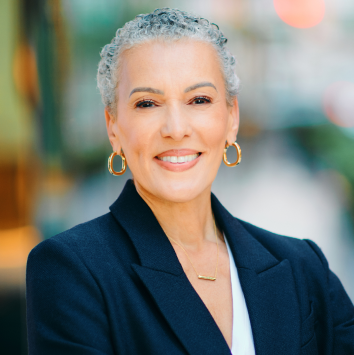
Sharon Malone
Obstetrician
20
APPEARANCES
15
PODCASTS
Oct 15, 2026


Sharon MaloneGUEST
You, you're at a steady state, but you're at a steady low state, and that steady low c- low state has long-term health implications for your heart, for your bones, for your skin.
Sharon MaloneGUEST
But the reason why, you know, I want women to be aware of it is you don't have to feel that way, you know? And sometimes, um, the solutions that are given are, again, you're piecemealing the symptoms.
Sharon MaloneGUEST
"Oh, my hair is thinning." "Well, here, take this." "Oh, my, my skin is dry," and you go see a dermatologist.
Sharon MaloneGUEST
"Oh, I've got, you know, I've got itchy ears," you're at a ENT, and that's sort of how we've been sort of piecemealing, uh, perimenopause.
Sharon MaloneGUEST
And I think that also what is an- another problem, which we haven't even gotten to the outer rungs, 'cause you'd think most of the, the responsibility for having these conversations falls to OBGYNs, right? It would be the logical place to have that conversation.
5 MINS LATER


Sharon MaloneGUEST
I think perimenopause is the most confusing of these stages, because perimenopause just simply means around the menopause, and it is also called the menopausal transition, where you go from your peak fertility years to no fertility, and it's that gap in between.
Sharon MaloneGUEST
If you're African American woman, your symptoms and that period lasts more closer to 10 years than four.
Sharon MaloneGUEST
Um, it is characterized by a lot of things, but the one thing that it is not characterized by is a lack of periods.
Sharon MaloneGUEST
And we think of menopause as being, "Okay, that's when my period stops," right? Well, in perimenopause, you may be getting your period regularly.


Sharon MaloneGUEST
And to be stricken with things that you don't know, that are bothersome for you, and you know, you need to know what all the symptoms are.
Sharon MaloneGUEST
There is this time where you have the ability to focus on you, which is something that many of us don't have early in our careers or when we're building families or taking care of others.
Sharon MaloneGUEST
And leaned in and said, "Light me up." Put it in my mouth and said, "Light me up." Mm-hmm.
17 MINS LATER


Sharon MaloneGUEST
But Katie, you and I were both around when that study was released in 2002, and I can't think of another study before nor since that has required, you know, a press conference at the National Press Club to announce the findings of the study.
Sharon MaloneGUEST
And I think the good news, and I'll say the good news first, is that Dr. Bernadine Healy was the first female director of NIH, and had she not been there, I am convinced that the study never would have been done, because prior to her recruiting for that study in the early '90s, there had never been, and has still has not been, another large scale, randomized, placebo controlled study on the role of estrogen in post-menopausal women.
Sharon MaloneGUEST
And this is despite the fact that estrogen had been in common use for over 50 years.
Sharon MaloneGUEST
We, uh, estrogen w- the Premarin, which was what was used in the study, was approved in 1942.
Sharon MaloneGUEST
So we had 50 years of experience using estrogen with no real clear scientific data about what it does and does not do.
16 MINS LATER
speaker_4UNKNOWN
[laughs]

Sharon MaloneGUEST
Let's just say you start birth control pills when you're 20, and you take them until you're 35 because you're not ready to have a baby until you're 35.
Sharon MaloneGUEST
Well, your fertility at 35 when you stop taking the pills is not what it was at 20.
Sharon MaloneGUEST
So if you're having difficulty conceiving at 35, it's not the 15 years of birth control pills that did it to you.
Sharon MaloneGUEST
It is the fact that you are 35, and that is something that we have to take into account.
Sharon MaloneGUEST
Your fertility changes decade by decade, but it's not the pills, and sometimes we blame the pills for things that really we shouldn't.
Sharon MaloneGUEST
But let me say, I, I think this is an important point to make, is that some women do react negatively to birth control pills.
21 MINS LATER

Mel RobbinsHOST
What do you want women in their 20s and 30s to understand about how fertility changes as you age?


Sharon MaloneGUEST
So it wasn't new news, but no one had ever really studied it in a, in a systematic way.
Sharon MaloneGUEST
So, um, I don't think that it's an accident that- That w- happened then because we had the first female director of NIH, and we should say her name, Dr. Bernadine Healy.
Sharon MaloneGUEST
She conceived of this study, and it was all to sort of codify the things that we kinda knew but no one had ever really rigorously studied.
Sharon MaloneGUEST
And it, and it was a great idea, just implemented not quite the way we wanted, which it should have been, but hindsight is always 20/20.
18 MINS LATER


Alan MorrisseyHOST
where people should be visiting, I guess the likes of Loophead Lighthouse, come into the picture as well and you know, we'll get to some of the other things that are happening elsewhere that people should be aware of, but maybe we'll start with Loophead Lighthouse.
Sharon MaloneGUEST
Okay, yeah I know it's so beautiful around the county this week in particular and Kilrush really is the gateway town to the west of the county, particularly from a tourism point of view, there's so much to do here.
Sharon MaloneGUEST
And then, yeah, moving west of here into Kilkee and then further on to the Loophead Peninsula, which is really stunning.
Sharon MaloneGUEST
You're getting away from it all and you're driving until you cannot drive anymore and you just come to the lighthouse.
Sharon MaloneGUEST
and it's this just gorgeous beacon there, perched out on the Shannon Estuary.
Alan MorrisseyHOST
Can you briefly just tell us what's happening at Kilrush and Kilkee libraries for the rest of the summer?
Alan MorrisseyHOST
Can you remind people and maybe enlighten some people who mightn't be aware of what the service is, what it offers visitors and how important it is for tourism in the north and west of the county?
Sharon MaloneGUEST
The general idea of it was, as we know, a lot of visitors coming up to the Cliffs of Moher, which during the summer months can lead to a lot of traffic on the road and a bit of congestion around the area.
Sharon MaloneGUEST
And with that, we looked at ways maybe we can reduce that without affecting the visitors' experience to the area and then also spread it out amongst the lovely towns and villages that are around the area.
5 MINS LATER
Alan MorrisseyHOST
And I suppose that's good that there is that flexibility to react to big events and provide a more frequent service, that it isn't just a set in stone thing that never changes, no matter what is or isn't happening.
Sharon MaloneGUEST
Morning Alan, how are you? It's a wonderful weekend for Kilrush and each year it's grown and grown and there's great excitement this year for it with three very full days planned targeting lots of different interests, music, dance.
Sharon MaloneGUEST
Our younger visitors are in for a treat as well with a lovely biology show on Saturday morning.
Sharon MaloneGUEST
And this year, too, Kilrush Shamrocks are launching their new publication, The Lord and Master's Book, celebrating the Kilrush Shamrocks' historic five in a row.
6 MINS LATER


Sharon MaloneGUEST
There's actually a newly named syndrome called the musculoskeletal syndrome of menopause.
Sharon MaloneGUEST
And that is not only joint pain, muscle pain, bone loss, all of this starts really in the perimenopausal phase.
Sharon MaloneGUEST
Estrogen, we know we have receptors everywhere from your brain all the way down to your skin and everything in between and the joint space in between.


Sharon MaloneGUEST
HYMANBut what did that mean in real terms? That means for women who did not take estrogen and progestin, 30- the natural incidence is about 30 per 10,000 women per year will be diagnosed with breast cancer, living long enough to get it.
Sharon MaloneGUEST
In the estrogen and progestin user group, it went from 30 per 10,000 women per year to 38 per 10,000 per year with no increase in the risk of dying from your breast cancer, even if you were diagnosed on hormone therapy.
6 MINS LATER
Sharon MaloneGUEST
If she, if you're having any combination of those symptoms and they are bothersome to you, then that is the time you start treatment.


William BranghamHOST
Uh, um, Sharon, what would, what, what would you add to their experience so that people understand a little bit about what women are going through?
Sharon MaloneGUEST
You know, I wish that all women knew that this is a phase of life that will take years long to transition into when you get to menopause, and I think that w- I want them to know that it's normal.
Sharon MaloneGUEST
You know, this is where I think that we sometimes in the medical community have not, have sort of failed our patients in not preparing them for this because the time to talk about menopause and perimenopause is not when you're in the middle of it.
Sharon MaloneGUEST
It's when you're 30, when you're 35, so you're prepared so you don't think that there's something horribly wrong when you start to experience these symptoms.
William BranghamHOST
Menopause and perimenopause, walk us through just some definitional understanding of what those two stages are.
Sharon MaloneGUEST
Well, menopause is, is a little bit easier to divine, define because it does have a bright line, and that is the time at which either your ovaries stop functioning naturally as a result of age, or you may have had surgery.

William BranghamHOST
Uh, um, Sharon, what would, what, what would you add to their experience so that people understand a little bit about what women are going through?
Sharon MaloneGUEST
You know, I wish that all women knew that this is a phase of life that will take years long to transition into when you get to menopause, and I think that w- I want them to know that it's normal, every woman will go through this, but suffering is not your only option.
Sharon MaloneGUEST
You know, this is where I think that we sometimes in the medical community have not, have sort of failed our patients in not preparing them for this because the time to talk about menopause and perimenopause is not when you're in the middle of it.
Sharon MaloneGUEST
It's when you're 30, when you're 35, so you're prepared so you don't think that there's something horribly wrong when you start to experience these symptoms.
William BranghamHOST
Walk us through just some definitional understanding of what those two stages are.
Sharon MaloneGUEST
Well, menopause is, is a little bit easier to divine, define because it does have a bright line, and that is the time at which either your ovaries stop functioning naturally as a result of age, or you may have had surgery, you may have had chemotherapy, things that prematurely c- plunge you into menopause.


Sharon MaloneGUEST
And again, I was born at home by choice, not because it was just baby number eight and she couldn't get to the hospital.
Sharon MaloneGUEST
And I don't have my mother here to ask her, but you know how sometimes you put together, you're like, "Well, what could she have been thinking?" 'Cause my sister who's seven years older than me, my mother had that baby at the hospital.
Sharon MaloneGUEST
It was the Mobile General Hospital, the City Hospital, and it was segregated.
18 MINS LATER
54:16
What would you say to someone who does have that disconnect about how to rebuild trust with their own bodies?

Sharon MaloneGUEST
Because it's helpful in a lot of things as far as disease prevention and longevity.
Sharon MaloneGUEST
When they stop working and your estrogen levels plummet, about 80% of people will be symptomatic during the menopausal transition and beyond.


Sharon MaloneGUEST
And that's the message that I think should be very hopeful, and I think that we should always give women the, the same basic lifestyle advice that we give all the time.
Sharon MaloneGUEST
It's exercise and eat right and get a good night's sleep, and all the things that you need to do.
Sharon MaloneGUEST
But there's so many things that we just accept as normal, and they shouldn't be.


Sharon MaloneGUEST
Head to myalloy.com and tell them all about your symptoms, and you'll get a fully customized treatment plan, and you'll get $25 off your first order today when you use code IMO25.
Sharon MaloneGUEST
Head to myalloy.com and enter the code IMO25 to get $25 off your first order.
12 MINS LATER

Craig RobinsonHOST
So can you talk, Dr. Sharon, about an essential thing that we can do for our health as we get older? Why is screening for colon cancer so important?
Sharon MaloneGUEST
In my clinical practice, I have seen patients getting diagnosed with stage three or stage four colon cancer because they waited too long to get screened.
Sharon MaloneGUEST
There are even patients in their early to mid-40s with no family history of colon cancer.
Craig RobinsonHOST
Can you talk a little bit about colon cancer screening and options people have?

OprahHOST
Yes.
Sharon MaloneGUEST
One of the things that I always tell, uh, young women, particularly when they're concerned about what does this mean in terms of childbearing and will I be able to have a baby or not...... first thing is know your family history, because I think you should talk to your mother.
Sharon MaloneGUEST
Because at 35, if you talk to your m- you say, "Mom, when did you go through menopause?" If she remembers and she shares that information, if she tells you, you were menopausal s- she was menopausal at 42, well then that has some bearing for you.
Sharon MaloneGUEST
Because at 35, you are more likely to be perimenopausal and to maybe have some fertility cha- challenges more than someone whose mother had menopause at 55.
Sharon MaloneGUEST
Do you see what I mean? So yes, it has a direct, uh, implication on when your symptoms start, um, but what to do about it...
Sharon MaloneGUEST
And let me say, e- e- we have more options now than we have ever had, because this is a situation if you say, "I'm not really, I'm not ready to have a baby right now at 35.
Sharon MaloneGUEST
I may not have even identified a partner at 35." Then this is where we can use-
25 MINS LATER
speaker_13UNKNOWN
(laughs)