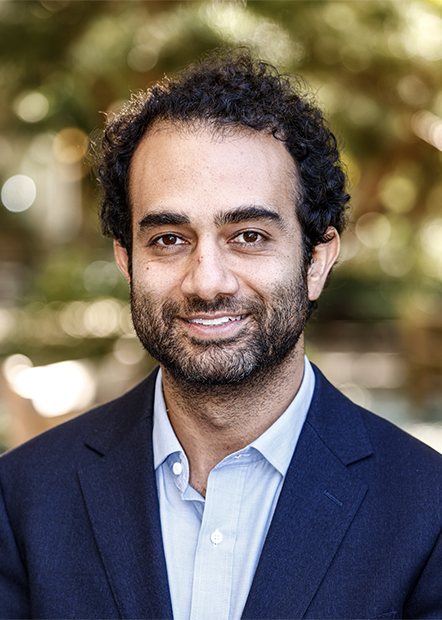
Shadi Hamid
American author and political scientist
9
APPEARANCES
9
PODCASTS
Oct 13, 2026


Shadi HamidGUEST
But they would, they would have a strong opinion that they would offer to their readers, but they would end with, uh, the Arabic words allahu alam, which means, "And God only knows." So that's really interesting because they, they were reminding themselves and their readers that God alone is the only one who knows for certain, that we as mere humans, as mere mortals, we can only go so far in our attainment of knowledge, and that's the key distinction that we outline in the book between the creator and us as creatures, that we can never put ourselves in the place of God and claim absolute certainty.
Shadi HamidGUEST
And you can think of this in terms of final judgment, too, that final judgment doesn't belong to human beings.
Shadi HamidGUEST
It belongs to God in the next life, where he will reward or punish, and we even have a chapter called "The Case for Hell," so we take that pretty seriously.
Shadi HamidGUEST
And we think that the idea of hell can relieve some pressure on our conflicts here in America because if you know that God is gonna hold the people you disagree with to account, let's say you really think that Donald Trump is awful and a terrible person, then he'll face God in the end and face some tough questions it'll have- he'll have to answer for.
Shadi HamidGUEST
That doesn't mean that we don't seek justice now, but it means that we acknowledge that final, the, the kind of final, definitive, um, judgment is not gonna come now.
11 MINS LATER


Faisal Al YafaiHOST
I want us to delve into some of the arguments around it, but I guess I should start with what made you want to write it in particular, because I think it's a very interesting intervention into a larger conversation that is happening, not about American power, but about what's happening within American borders and about how the society looks and feels today.
Shadi HamidGUEST
I mean, I used to be very focused on the Middle East and I lived in the Middle East during the Arab Spring.
Shadi HamidGUEST
I mean, I thought the US was a stable, predictable democracy, but then we see the rise of Donald Trump and we see American politics going in this very polarized direction.
Shadi HamidGUEST
So I was trying to understand, wait, why is this happening to America? And I think that the Middle East, in an interesting way, offered a preview of what was to come in America.
7 MINS LATER
Faisal Al YafaiHOST
They experienced the sharp end of being on the other side of that faith group.

Shadi HamidGUEST
It's sort of- know emp empires or neo-imperial um ventures like america's are naturally going to do bad things we're not a human rights organization we're not an ngo so this idea that we can act like an ngo abroad and just always be lovey-dovey and and living up to these human rights standards That's just never the way any large power, any superpower has acted.
Shadi HamidGUEST
And I think in that sense, we're not just comparing America to the current alternatives like China and Russia.
13 MINS LATER


10 MINS LATER


Freddy GrayHOST
So I suppose the argument against your book would be American power doesn't succeed in doing what it wants to do, so therefore it is better not being applied in regions which it cannot change.
Shadi HamidGUEST
So I agree with that to some degree, that we shouldn't go around invading countries and toppling their regimes without a clear plan for the day after.
Shadi HamidGUEST
That's why I was opposed to the Iran-- to this Iran intervention from the start, because I didn't see a realistic plan for getting rid of the regime.
Shadi HamidGUEST
Regime change seemed like a pipe dream that was based on unrealistic assessments on the ground.
Shadi HamidGUEST
I mean, I, I talk in the book about how I, I came, I came of age politically as an anti-war activist.
Shadi HamidGUEST
That was a very important time in my life, and so many of us I th- I think saw instinctively that this was a stupid, preposterous war, and we were right, even [chuckles] though we were college students.


Yehuda KurtzerHOST
And in what ways are those memories helpful to us? And in what ways did they actually obscure our ability to analyze what's taking place now that might be meaningfully different than something that formed our viewpoints beforehand?
Yehuda KurtzerHOST
summarize or characterize what you understand that American vision or American project to be about? What is the summary version of what that idealistic, optimistic project of America is that you say you believe


Mike PescaHOST
Or was it more the case that as you gained expertise you didn't find that, you just kinda oriented yourself about theories of power a little differently?
Shadi HamidGUEST
Well, I did find that there were occasionally things that America did well and that were net positives, and some of them had to do with, you know, saving Muslim populations in Kosovo and Bosnia in the 1990s during the Bosnian genocide.
Shadi HamidGUEST
So there are some examples we can point to and say that America actually did the right thing.
Shadi HamidGUEST
But also I think towards the end of the Cold War we started facilitating democratic transitions in Latin America, Africa, Asia.
15 MINS LATER


Shadi HamidGUEST
And- and I think that at- at some point, you know, in- in my life, at that- at that point actually, I didn't- I didn't wanna be on the outside looking in.
Shadi HamidGUEST
I wanted to actually be in the system, and I think that's what I've tried to do for the rest of my career is be in mainstream institutions, because at the end of the day, I want my country to change, and I think that American power can be used for good.
Shadi HamidGUEST
And this is sort of my roadmap for how it can be used to create a more moral and just world.


Yascha MounkHOST
I mean, Blinken and Sullivan are both pretty moderate Democrats, but this kind of left of center squeamishness about- It has
Shadi HamidGUEST
polluted, I think, a lot of the Democratic Party And there's a term that I use in the book that is actually coined by a British philosopher, Roger Scruton, oikophobia, which is the reverse of xenophobia.
Shadi HamidGUEST
Xenophobia is the fear of what is strange or unfamiliar, the fear of what is foreign.
Shadi HamidGUEST
And I think that that fear of home or that fear of what is familiar is actually something that is dangerous.
Shadi HamidGUEST
Again, it goes to this point that you can be self-critical without being self-loathing.
Shadi HamidGUEST
To get to the other part of your question on coming to terms with power, I think for me, okay, I'll go in maybe some controversial territory here.
6 MINS LATER
Yascha MounkHOST
But that, I guess, is the next question here, which is, why do you think that American power would actually end up or does fill that potential vacuum better than the countries that would rush in to fill the vacuum if America really did vacate it.