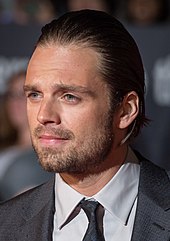
Sebastian Stan
Romanian-American actor
14
APPEARANCES
10
PODCASTS
Oct 12, 2026


Megan BraunHOST
Did Christian give you any insight into the character Mihai that was, like, beyond what's in the script? 'Cause it, like you're saying, it seems like he wants you to come to those conclusions.

Sebastian StanGUEST
The movie was inspired by various different cases that he had researched in Norway, which was of this similar kind of, um, families coming from different places, immigrating there, and then suddenly kinda clashing with the, the sort of, uh, system over there, or the, the, of beliefs or sort of the way of life and, and, and ending up as a minority and how that was affecting them.
Sebastian StanGUEST
There is a family that went very closely to, to what this family goes through in the movie, so I did research that, and I did watch everything I could on that.
Sebastian StanGUEST
Um, you know, I went to Romania with Renate, and we extensively sat with Christian and went through the background of both of these characters and how they met and why she was in Romania when they met and what their, you know, why they got together and why they had five kids and not three kids, and when they moved, why.
6 MINS LATER


Daniel BaptistaHOST
So for you, like, how did that kind of help you find who this character was in Fjord?
Sebastian StanGUEST
I, again, this was not something I always set out sort of when I was thinking of finding roles and acting and so on.
Daniel BaptistaHOST
So for you, when you were working on this film, as you were kind of pushed and pulled in different directions, you know, how did your feelings about the events of the story change from when you were filming to when you actually saw the final product?


Sebastian StanGUEST
If, if you look at this family and you go, "Did they do it? Did they not do it?" And, and what is the right way to raise kids, you know? Um, I mean, for me, of course you would think right on a primal, uh, feeling you, you can't separate a family, but at the same time, a kid doesn't always choose the environment that they're born in.
Sebastian StanGUEST
... or that the feelings that they have and the desire that they have to, y- you know, raise the kids in the best way they can.
Sebastian StanGUEST
I think there's probably always, right, on either side, that there needs to be a opening of a door, y- you know, for, for, for sort of more of a back and forth to happen.

Sebastian StanGUEST
If- if you look at this family and you go, "Did they do it? Did they not do it?" And- and what is the right way to raise kids, you know? Um, I mean, for me, of course you would think right on a primal- ...
Sebastian StanGUEST
But at the same time, a kid doesn't always choose the environment that they're born in, they don't choose the belief systems that we hand to them.
Sebastian StanGUEST
... or that the feelings that they have and the desire that they have to, y- you know, raise the kids in the best way they can.
Sebastian StanGUEST
I think there's probably always, right, on either side, that there needs to be a opening of a door, y- you know, for, for, for sort of more of a back and forth to happen.
Sebastian StanGUEST
If, if you look at this family and you go, "Did they do it? Did they not do it?" And, and what is the right way to raise kids, you know? Um, I mean, for me, of course you would think right on a primal, uh, feeling, you, you can't separate a family.
Sebastian StanGUEST
But at the same time, a kid doesn't always choose the environment that they're born in.
Sebastian StanGUEST
Or that the feelings that they have and the desire that they have to, you know, raise the kids in the best way they can.
Sebastian StanGUEST
I think there's probably always, right, on either side that there needs to be a opening of a door, y- you know, for, for, for sort of more of a back and forth to happen.
Sebastian StanGUEST
And, and, but I, but I also had a, a, a sense of shame- For being different and for, for coming from, uh, the country that I came.
Sebastian StanGUEST
I mean, Romania has a communist history and, and that also influenced a lot of, you know, as you see it with this family, but also how I grew up in the sense that I was very fearful to talk about where I was from- Mm-hmm ... and to own it, and, um...
Sebastian StanGUEST
But I, I think what gets lost is, well, what we used to celebrate in New York City- [laughs] ... which was, which was just everyone, everyone's differences.
speaker_19UNKNOWN
[laughs]


Joe ScarboroughHOST
And talk to us about why this film, this role, this part resonated with you.
Sebastian StanGUEST
I came to this country when I was 12, the, very much the age of the kids in the movie.
Sebastian StanGUEST
Um, and so I felt, um, not only did I wanna reconnect with this country that I'm from initially, you know, Romania, but I also felt like thinking about fatherhood, wanting kids and, and asking myself, how can I be the best parent I can be now? How do we raise kids today? I felt that the themes of the movie were really, um, very aligned to what I was asking myself personally, but also to a lot of what we're all asking ourselves kind of today, I think.

Molly Jong-FastGUEST
I'm curious, you know, you did that right before the mo- you, you had a baby right after the-
Sebastian StanGUEST
I, I didn't have a kid yet when I was doing the movie, but I was thinking about it, and it was a plan already in motion.


Sebastian StanGUEST
And, um, you know, it's the type of filmmaking where any time you press pause at whatever point in the movie, it will look like a painting, right? It will look like a tableau.
Sebastian StanGUEST
It doesn't s- feel, it's not, it looks very natural, but it's not accidental, you know? There's a real thought to who's in the foreground and in the background and the people and how you see everyth- everything is just...
Sebastian StanGUEST
And, and, and so there's a, there's a real care and a specificity there that for me, I, you know, uh, it was very interesting, and I, and I, and I was excited about wanting to fit in that.
Sebastian StanGUEST
I think that also ends up, you know, uh, affecting how you act in, in his movies, you know? There, there's-
Sebastian StanGUEST
I mean, I, you know, we had a very calm, intimate, uh, group of people that worked on this, and, um, it, I think it, it, especially when you have these long one-shots, it really requires everybody, everybody, from, from the actors to the sound men to the camera to everyone has to be on their A game so it works, you know? And, and at the end of the day, you feel like you've earned the day.

Justin ChangMODERATOR
got in early um sebastian um as someone who was born and raised in romania what was it like to finally play um a romanian character on screen
Sebastian StanGUEST
i'm just thinking about my mom out there going you finally played your grandfather um Listen, you know, it was an unbelievable dream come true, honestly.
Sebastian StanGUEST
I was talking earlier about this sort of, you know, how lucky we are through the arts and the creative sometimes to make these relationships to things that are difficult that we can't in life sometimes, you know.
Sebastian StanGUEST
And I left really early and, you know, I felt quite awkward coming into this because, you I didn't grow up there.
Sebastian StanGUEST
And although I had aspects of, you know, a traditional, I guess, Romanian upbringing, if you will, whatever that means.
Justin ChangMODERATOR
What was it like working with her under these very different characters and under very different conditions?


Josh HorowitzHOST
I mean, was this born off of the experience on The Apprentice, or had this been brewing for a while? Give me a sense of the origin story for this one.
Sebastian StanGUEST
Well, it's a little bit of both, because I, obviously, I, I'd been looking for years to kind of come back home with, with Romania in a way and, and, and find the perfect sort of project.
Sebastian StanGUEST
Um, and I was obsessed watching a lot of filmmakers like Mungiu, um, out of Romania for years and approaching different ones.
Sebastian StanGUEST
And he and I had had conversations, um, for several years about finding the right thing.
Sebastian StanGUEST
And then finally, this was it, because he said, um, "I think I'm gonna do my first English language movie, and it will be your first Romanian movie." And, and so the, the fit and the timing was right.
Sebastian StanGUEST
And, a- a- apropos to Apprentice and a different man and sort of these characters I had played, I, I, I, I felt coming off of these bigger, bigger-than-life characters, I wanted to do something much more subtle and nuanced and restrained.
20 MINS LATER


Nicole SorokaHOST
I'd love to just hear your perspective on how he carries himself, impacts his fatherhood and his relationship with his children.
Sebastian StanGUEST
Well, listen, I think so much about the beauty of this movie is that it's going to be very interpretive for each person that watches it.
Sebastian StanGUEST
So I'm hesitant to sit here and kind of give a whole... spiel on what is his character and why does he do what he does.
Sebastian StanGUEST
It's just going to be way, way richer and way better than me trying to explain anything.


David BianculliCORRESPONDENT
So, um, after choosing that clip, first of all, I should say some listeners were probably thinking, "He doesn't sound like Trump." What would you say to that?
Sebastian StanGUEST
Well, um, I mean, I would say that Trump did, did not sound like Trump when he was in his mid to late 30s, uh, which is when that was sort of happening.
Sebastian StanGUEST
And I think that I did make some conscious choices very carefully with the voice, not only just to honor the age and what he sounded like at the time, which to me sounded very different than today, but also to not lean into it as much as it's become popular to do.
Sebastian StanGUEST
Um, because a, a big challenge with this role, um, was obviously to avoid falling into caricature and into sort of the version, um, of a cartoon that he's somewhat become, um, one would argue even willingly on his own part [laughs] whether he's aware of that or not.
Sebastian StanGUEST
Um, because the voice along with mannerisms and other physical characteristics that he has that we've become so accustomed to and we've been so oversaturated with, um, really had to be kind of very...
Sebastian StanGUEST
I had to very carefully select and maneuver them and kind of earn them over the period of, of time with the movie, very much like he did as he grew into what we see today.
Sebastian StanGUEST
Uh, but in part because I needed to bring audience in on this journey as opposed to alienating them from the beginning with what they've already sort of know and expect.
Sebastian StanGUEST
Well, [sighs] it-- that's a really great question, and it's a, it's, it's one where there's no real clear answer that I can give you.
Sebastian StanGUEST
I mean, in a lot of ways, a lot of things look very predictable to me, especially having studied him for this film.
Sebastian StanGUEST
Um, the victimhood, uh, blaming, the revenge tactics, all that we go in depth, uh, in the film that he had absorbed from Roy Cohn.
Sebastian StanGUEST
Um, you really do see, I think even if you look at the inauguration, I mean, and even at the debate, right, with Kamala Harris, I mean, you really see what we talk about in the movie of these sort of ways he's learned to flip it around on the other person and, um, kind of just always just be denying reality and reshaping the truth as long as it fits his narrative and the complete...Utter lack of lack of acceptance for any criticism or any wrongdoing or, or, or anything whatsoever.

Terry GrossHOST
I'm wondering how much this film made you think about looks and how looks determine how people are treated in this world, which is something a lot of us think about all the time.
Sebastian StanGUEST
Well, [sighs] it- that's a really great question, and it's a, it's, it's one where there's no real, uh, clear answer that I can give you.
Sebastian StanGUEST
I mean, in a lot of ways, a lot of things look very predictable to me, especially having studied him for this film.
Sebastian StanGUEST
Um, the victimhood, uh, blaming, the revenge tactics, all that we go in depth, uh, in the film that he had absorbed from Roy Cohn.
Sebastian StanGUEST
Um, you really do see, I think even if you look at the inauguration, I mean, and even at the debate, right, with Kamala Harris, I mean, you really see what we talk about in the movie of these sort of ways he's learned to flip it around on the other person and, um, kind of just always just be denying reality and reshaping the truth as long as it fits his narrative, and the complete utter lack of, lack of acceptance for any criticism or any wrongdoing or, or, or anything whatsoever.
8 MINS LATER
Terry GrossHOST
I'm wondering how much this film made you think about looks and how looks determine how people are treated in this world, which is something a lot of us think about all the time.