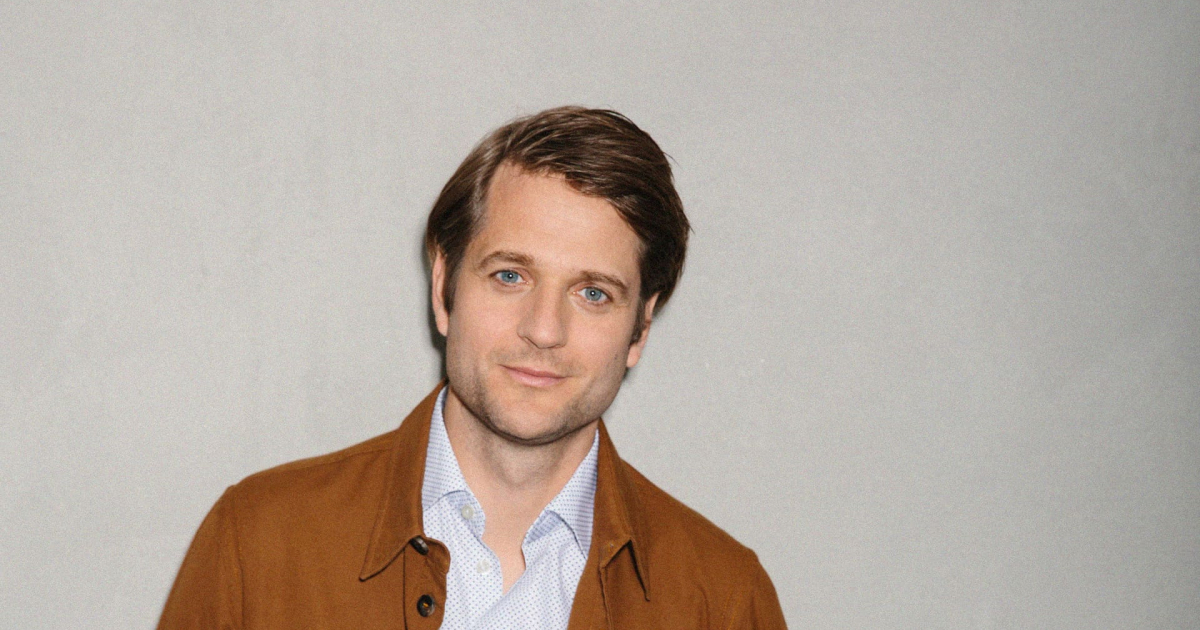
Sebastian Siemiatkowski
CEO of Klarna
22
APPEARANCES
17
PODCASTS
Jun 9, 2026


Liz HoffmanHOST
Is the goal to be a better PayPal or are you really trying to take on JP Morgan Chase?

9:21
And I think there's something unique about Amex, and we are very deeply inspired by what they're doing.
9:27
We call it spend-centric rather than lend-centric, which is the similar terminology that Amex uses.
9:32
Because different than your kind of lending, there are a couple of players in lending.
9:38
There's Affirm, there's Synchrony, etc., They turn around their books maybe two times a year, so they are predominantly a balance sheet lender.
9:47
While Klana is predominantly spend-centric, we turn around our balance sheet more than 10 times a year.
16 MINS LATER


Steven BartlettHOST
... an update on Klarna's business, AI agents, and all of that, if possible.
96:34
First and foremost, we were early on, uh, released, um, AI, uh, to support our customer service, which had that, uh, initial, uh, benefit of, uh, more calls being dealt with by AI, which customers liked because those calls or chat messages were much, much faster and more qualitative.
96:55
Um, what we did, however, try to communicate as well is that we believed in a world of where AI is cheap and available, the value of human interaction will be regarded as higher.
97:14
But at the same point of time, the efficiency gains within the company has continued.


46:59
So we were just like: Okay, we're gonna take some of the stuff that the banks do, and we're just gonna do it better online.
47:06
I mean, people don't know this, but we were-- We raised sixty thousand dollars in our first angel investment, thirty thousand dollars of that was spent, and then we became profitable.
10 MINS LATER

17:23

Well, first, it's very important to know that the most money you can make in the world from marketing is to sell credit card ads and financial services ads because these guys are willing to pay a lot.
17:36
And so we have a very strange society where a lot of people are making a lot of money from promoting cards.
17:42
And that in itself then may lead them to write more positively about credit cards as a product.
17:47
There's also a lot of lobbying going on because there are tremendous profits at risk here.
17:52
But the truth is that, and as I always say, look, I'm still offering people a form of credit.

Julie HymanHOST
Fast forward five, ten years from now, what do you think the financial landscape looks like? How do most people bank? How do most people pay, do you think?

Ed LudlowHOST
So you do have a credit card that is at the levels the president's talking about, right? Are you going to reduce the APR, therefore, based on what the president has directed or proposed?
43:47
And the thing is, obviously, we need to follow regulation as everyone else.
43:51
But the truth is, if you look at Klana's business model, those rates are very uncommon.
43:56
And the majority of our business is built around the buy now, pay later model, which actually charges only merchant fees and offers interest free credit for consumers.

Caroline HydeHOST
Sebastian, how much do you think people would turn instead to buy now, pay later if they can't have that sort of credit card availability if it was shut down because they didn't have 30% levels anymore?

17:26
Like, credit cards basically work like this, right? You are incentivized to put all of your spending on a credit card, your full monthly spending.
17:32
You then are incentivized to revolve, which is a confusing concept, and then hopefully build up a balance of, you know, $4,000, $5,000 charging 30% interest rate.
17:40
So you're really trying to people to borrow as much as possible at as high cost as possible.
17:44
And then you're surprised that you have high losses, specifically with people who have lower income or... lower FICO scores.

Frank HollandHOST
But then when it comes time to pay the bill, they end up paying that interest.


Liz ClamanHOST
What do you say to people who say you're creating an entire generation of people who are just pressing by and thinking about how they will pay for it later?
35:35
I think that the way I think about it, and I've thought a lot about this over my 20 years, and that is that I actually overheard a conversation like when we were talking in our customer, we do a lot of like customer interviews and we talk to customers.
35:49
And there was a, I think she was in her early 30s, a customer of ours who said, look, my mom called me and said, are you using this horrible thing called Binopulator? And she said, yes, it's great.
36:06
And then she asked her mom, do you have a credit card? And her mom says, yes.
7 MINS LATER

19:37
The point is that in the US, there is this group called self-aware avoiders, people who've tried credit cards, didn't like them, found that they are the product of the devil, they're pushing you into revolving, could be a store credit card, could be a traditional credit card from the bank.
19:53
And our product brings back what used to be how cards work, right? You swipe and you press one for debit or two for credit.

Brian SullivanHOST
So what are Americans then, and maybe Europeans too, but what are mostly Americans getting wrong about buy now, pay later? Are they, to your point, calling companies be in buy now, pay later that aren't their sort of credit cards in disguise or what?

151:15
But- but- but what's interesting, I think here is that like, even though that's the natural next step of, you know, offering, uh, using stablecoin for that, because it's a very efficient way to send money fast and, uh, at- at low cost.
151:28
Um, we also, uh, actually realize that, look, I mean, we're processing over $100 billion worth of volume every year, and we move ourselves quite large money between the US and Europe and so forth.
151:40
And this may actually be very efficient even for our treasury department to use as a way to- to move money, right? So, we've seen that there's a tremendous number of use cases, maybe more than we realized when we started looking into it.


Hallie JacksonHOST
What do you say to people who are looking at your partnership with DoorDash, for example, and going, "That seems ridiculous to use a buy now, pay later for that"?
18:55
Well, first and foremost, I mean, I think all of them are using their credit card when they buy online with DoorDash so they're already borrowing.
19:03
20% of our transactions are debit where people pay the full amount, so we're much more like a PayPal wallet.
20:15
We borrow for such short period of time, so people pay us back in 50, 60 days on average.
20:20
What I've seen with Klarna is our ability to adopt to new economical recession or, you know, or if it's more positive, we can adapt very, very quickly.

47:06
Well, I think that it actually came back to that idea 10 years ago when we said, okay, fine.
47:11
The future of financial services is going to be this digital financial system wakes you up in the morning, tells you, I've analyzed your mortgage.
47:23
And the only thing you need to do is say yes, and I'll switch and do all the paperwork for it.

Molly O’SheaHOST
How does that feel to you? And what do you think about the broader macro trends and where you're seeing consumer spend, delinquencies, defaults, et cetera, versus also the backdrop of national debt?
speaker_4HOST
Yeah, the future's here.
24:14
When ChatGPT came along, we were like, "Okay, it's gonna happen faster than we thought." Um, but still directionally, that's it.
24:20
So you wanna be a digital financial assistant, save people time, save people money, make sure that they are in control of their finances.
24:27
And then the next question was, okay, if that seems likely, not unlikely, it seems very likely, that's going to be a very valuable position to be in, and it's going to be a big global company.
15 MINS LATER
speaker_0UNKNOWN
(laughs)
39:12
Like, "Get me rid of this." Like, and they pay down the debt and they're like, "I don't wanna use that." And that group, they don't want the AirPart launches.
Caroline HydeHOST
Will you go for a banking license? Talk us through where the growth story is going forward.
16:25
No, look, we have a bank license in Europe, as you're well aware of.
Ed LudlowHOST
Sebastian, would you kind of illustrate, outline what the competitive landscape looks like to you, who your competitors are, and also the regulatory headwinds that you're bracing for?


Carl QuintanillaHOST
We were talking during the break about cost discipline and headcount, which has been maybe different for you than a lot of large employers, yes?
29:10
I mean, first I was celebrating that when Spotify listed, it cost them $35 million, and we did it for $25 million.
29:18
I'm not sure all the advisors around here are as happy, but $10 million is more for our customers, lower interest.
29:24
And I think that's the key, right? I think that To me, what's been so exciting about Walmart working with them and the inspiration from them is that's a company when they grew and became more efficient, they gave it back in higher quality and lower prices.
29:36
Have you ever seen a bank do that? Have you seen the banks reporting here like, oh, we made all this profit.

Sara EisenHOST
What have you learned along this journey that has prepared you for today and how different of a company is it now than it


14:19
That's actually very interesting because when we launched this company, it was all like buy now, pay later, buy this.
14:30
If I buy this online, which I didn't because I went all the way to Bend, Oregon to buy it.
14:35
But if I would have bought it online, then I don't like the concept if I'm on debit to send money and then maybe it will show up, right? So the benefit of credit is I pay it once I've received it and I see it's exactly the cap that I wanted, right? So that was the original idea.
7 MINS LATER
speaker_0HOST
(laughs)
80:04
... of Klarna, right? So, so the first thing that we realized is we can't silo the data anymore.
80:12
And that meant that we started removing the software as a service, uh, providers.
80:21
Uh, I think the next big one that would go is Atlassian, Jira, and, and, and so forth.
80:26
Uh, but then there's also, like, a long amount of smaller software as a service vendors that we have utilized.
speaker_0HOST
Mm-hmm.
15:19
I think also one of my beliefs is that if we're going to have truly digital financial systems that can recognize, can come to you and wake you up in the morning and say, I can save you on the carrier bill, I can save you on the electricity bill, the only thing you need to do is say yes.
15:42
The point is, what that means is the excess profits that has existed in utilities, in banking, in all these things will have to come down because we are predominantly stuck with our existing providers, not because we love them, not because they're awesome, but because we hate switching and we hate reading boring legal terms to realize, is this offer really better or not? Right.


Katie PrescottHOST
But on the point of being 20 years old, do you feel now that everyone has adjusted to the buy now, pay later model? Or are people, you know, regulators are still clamping down on it, still feels like there's a way to go in terms of, you know, integrating it into the traditional, in inverted commas, financial system?
7:26
I still think there's a huge amount of misunderstanding, and especially in the older generation, that they think about this as like, oh my God, why would anyone take a pizza on installment, right? And that's kind of the mindset that's in.
7:39
While they don't reflect on the fact that people go to grocery stores and put everything on the credit card, which is totally natural.
7:45
You just swipe your credit card and you get the bill at the end of the month.
7:48
And what we've been banging our head against and trying to get the message out there is that like when I was a kid and I worked at Burger King and you swipe your card, they used to be press one for debit, press two for credit.
8:02
And so you would per purchase you made, you would take a decision whether you put it on credit or not.
20 MINS LATER


Audie CornishHOST
So that's why I actually got to talk with Klarna CEO, Sebastian Semyakovsky, to get his take on whether the demand for services like this is actually saying something about the state of this economy.
15:12
Because in the end, it's the jobs that impact whether you can pay off or not, right? And if you look at the jobs, I'm concerned that AI may start having an impact on the employment rates in the US.
Audie CornishHOST
And we should say, you say this as a person who actually tried to do some restructuring where you used more AI rather than workers.
15:34
We have also like, despite like, you know, mixed writings about it, but the truth is, we were 5500 people about two years ago, and we're 3000 now.
15:45
So we have been able to utilize AI to become fewer to do the same amount of or even more work, right.

Audie CornishHOST
It was a way of sort of that report card, which we all deal with, is a way of keeping us in line.
13:41
And today, for example, Klana applies some newer, more modern technologies than credit bureaus to make that decision of whether we can extend credit to you or not.
13:50
So one example of that is today people connect their bank accounts, allowing us to get access to their real-time financial data, like what you're actually spending today.
13:59
and how much you're spending and what your income is rather than relying on a year old information.
14:04
And this is where the innovation is happening, that we're trying to be even smarter on how you take those decisions to prevent people from getting into those situations.
14:13
But generally speaking as well, I would say that like because we don't charge interest, the interest here is paid by the merchant, right? They pay for the fee of these loans.
15 MINS LATER


Kelly EvansHOST
Is there a real need for Buy Now, Pay Later loans on DoorDash? And where's that need coming from?
25:46
I mean, Klana, if you look at Klana in Europe, we are basically a PayPal equivalent.
25:50
We process all types of purchases and we do both debits where you pay in full and so forth.
25:54
In the US, it is a very strange market because you have a tremendously high fee of debit payments.
26:00
And with vendors like Uber, DoorDash that we work with, They have strong incentives of looking for better, more affordable payment solutions, and we can build them for them.
26:10
We have this ability to, for example, aggregate transactions from a whole month and put them at a bill at the end of the month, which allows us to process payments very, very attractively for those merchants.
Kelly EvansHOST
Just talk to us a little bit about what your strategy has been there and what you're experiencing.
43:43
I mean, Klona have historically signed up merchants directly and that's brought us to about 600,000 merchants.
43:49
But then we took a closer look at like, I mean, maybe the most successful expansion of a third party network was Amex in the last two, three decades, which went from, you know, being something you only use at restaurants and hotels to being, you know, something you can use everywhere.
44:05
That can only happen through these amazing partnerships with Stripe and the Addins of the world and the WorldPace and the JP Morgans of the world and so forth.
