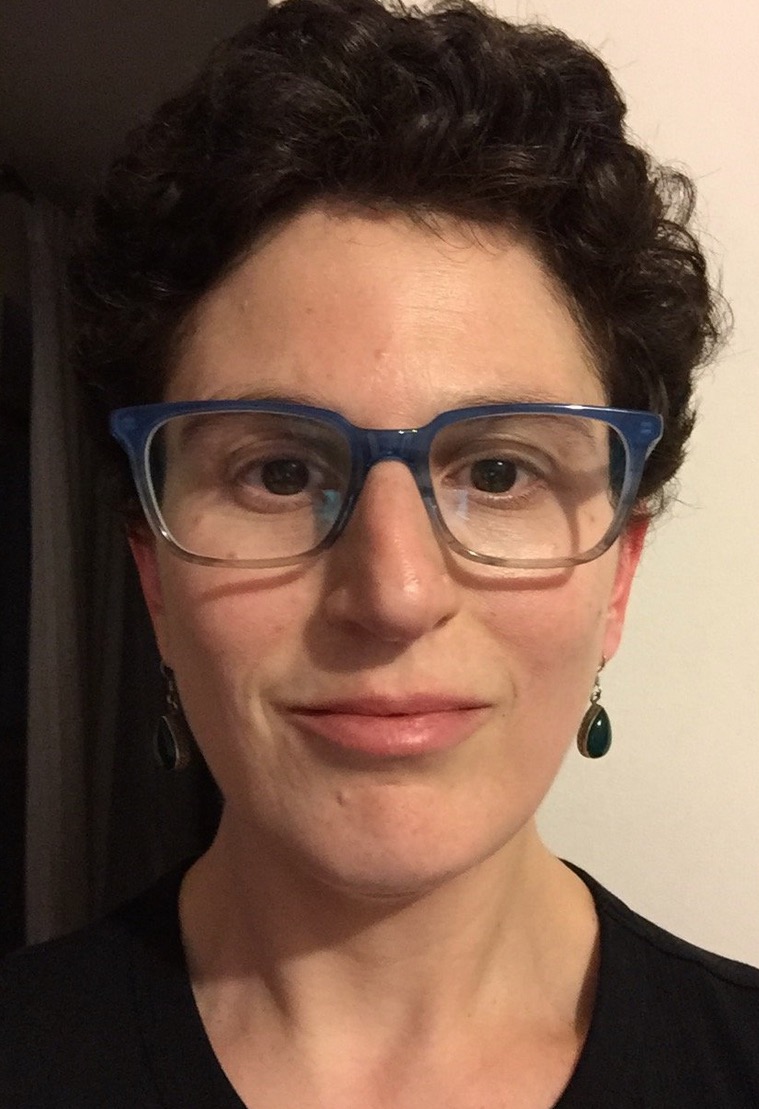
Sarah Weinman
Journalist
3
APPEARANCES
3
PODCASTS
Oct 2, 2026


Nora MosbyHOST
As we're getting started, I love an origin story, and I would love to hear a little bit about your background and how you arrived at writing about crime.

Sarah WeinmanGUEST
I feel like it's a multivariate response because I was a child who was always fascinated by crime in some capacity.
Sarah WeinmanGUEST
I would look at old newspapers and get curious whenever there were reports of, say, missing children or unsolved murders.
Sarah WeinmanGUEST
And I was growing up in eastern Ontario in Canada in the 1980s and early 1990s.
Sarah WeinmanGUEST
And it kind of dovetailed with when particularly there were these young teenage girls going missing and eventually found murdered.
Sarah WeinmanGUEST
And it turned out that they had been killed by this couple, Paul Bernardo, who was later found out to be a serial rapist, and his wife, Carla Homolka.
Sarah WeinmanGUEST
And that became a very notorious case in Canada and trying to figure out why they would do something like this.
21 MINS LATER


Alison StewartHOST
How did Greta's case move along the spousal rape laws? How did it he- how did it help it evolve to the point of the Laberta case in Buffalo? We'll talk about it in a minute.
Sarah WeinmanGUEST
So it's interesting to think that an acquittal might have spurred this more quickly than a conviction, and I think just because the outrage about the acquittal and then there was a brief moment afterwards where John and Greta reunited mostly because there was a custody issue, and in figuring out what to do with their daughter, it was the path of least resistance to try to get back together and make a go of it even if the media and the town of Salem itself felt that this was kind of a betrayal of everything that the trial had stood for.
Sarah WeinmanGUEST
But because of activists like a woman named Laura X, who had already been around feminist circles in Berkeley, she was part of the Free Speech Movement, she founded the Center for Women's History, and learning about this case galvanized her to found the National Clearinghouse for Marital and Date Rape.
Sarah WeinmanGUEST
And because she was an archivist who was documenting every known instance of spousal rape that went to trial or where there was an arrest and a conviction, she had the data and she also had the wherewithal to...... essentially mount a PR campaign that helped other activists galvanize legislatures in every state.
Sarah WeinmanGUEST
So it took about 15 years, but it went from just four states making spousal rape a crime to all 50 by 1993.


Allison GillHOST
And, and all of these sort of, these underpinnings of gender and power and sexuality and autonomy that I was referencing are still very relevant today even though we are seeing it in a different light.
Sarah WeinmanGUEST
I mean, all you have to look at is what happened with Dobbs, which hap- which was in, just in 2022.
Sarah WeinmanGUEST
Here was a constitutional right to abortion, which we had for almost 50 years that was taken away, and now you have the right wing really agitating to roll back even more, I mean, talking about repealing the 19th Amendment, getting rid of no-fault divorce, which by the way had only become a thing starting in California in 1969, and that eventually became a nationwide state-by-state campaign of its own.
Sarah WeinmanGUEST
And so when I started working on this book, I mean, I had been thinking about it since I first read about the case in 2017, but I really started working on it in 2022.
Sarah WeinmanGUEST
And Dobbs really kind of made this all coalesce for me that if such a important constitutional right could just be rolled back, what else could be under threat? And it seemed like the idea of spousal rape, th- that had become a crime in every state finally by 1993, albeit with a lot of exceptions and loopholes unfortunately, but at least in every state there is some statute that says that, yes, you cannot rape your spouse.