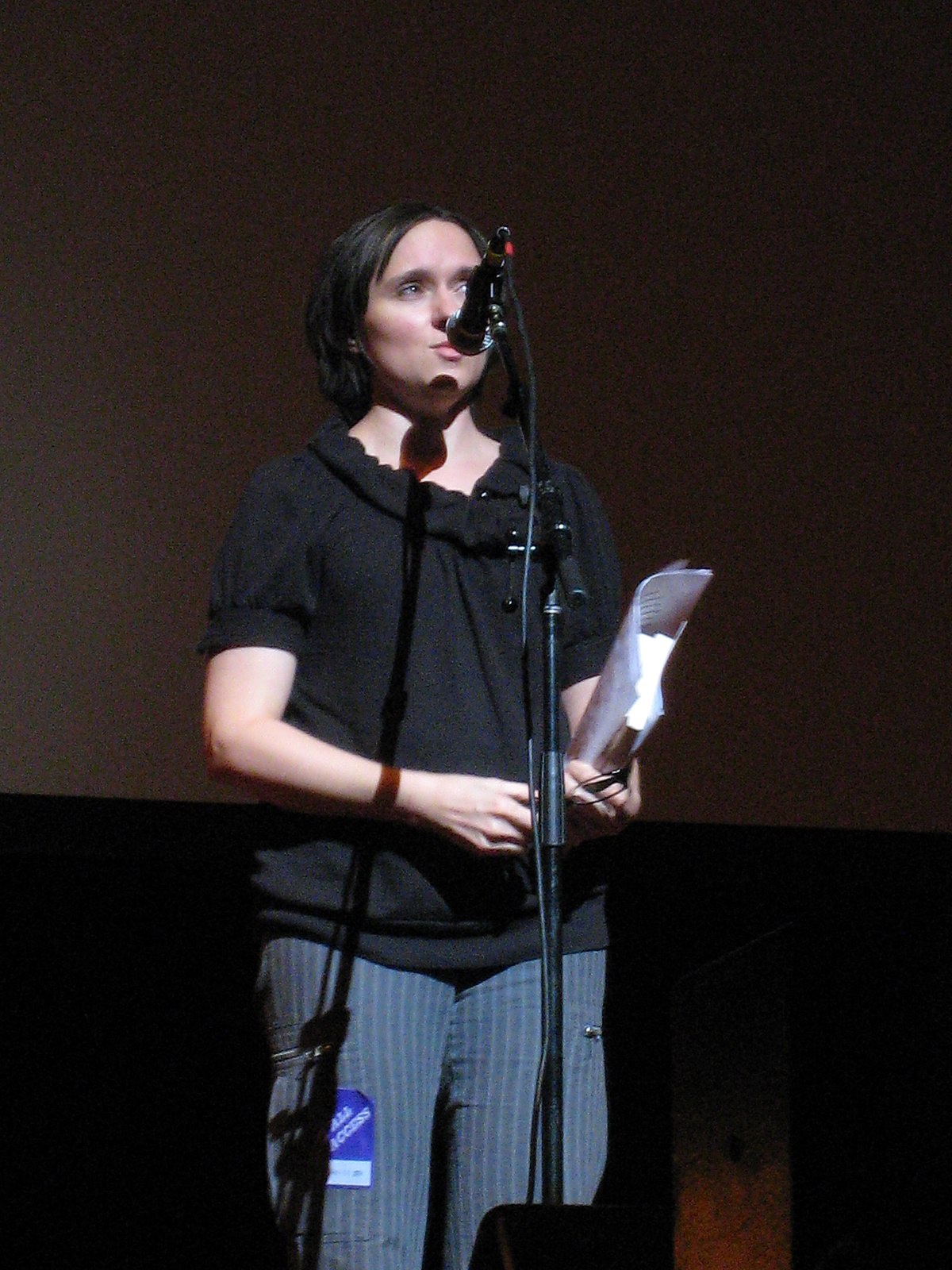
Sarah Vowell
American historian and writer
5
APPEARANCES
5
PODCASTS
Jul 21, 2026


Sarah VowellGUEST
I mean, you have to basically take this— online course and pass this test to get credentialed.
Sarah VowellGUEST
It's not hard or anything, but imagine you're, you know, an elderly person who is not, you know, so good with computers, figuring all that stuff out.
36 MINS LATER


Sarah VowellGUEST
A couple of French explorers, a plaque on the bridge said, "Passed by in 1673," an Indian massacre in 1812 right there in front of the Burger King, vague notions of Abe Lincoln's debt to the Chicago Tribune, whose quaint Gothic tower looms over the bridge's north side.
Sarah VowellGUEST
I thought, "That's enough American history, and I just make up the rest." [upbeat music] Turns out my theory was only too right.
Sarah VowellGUEST
The intersection of Michigan and Wacker, I found out, isn't just a corner, it's a vortex.
Sarah VowellGUEST
The deeper I dug into the history of Chicago and its relationship to the history of the country, the more crowded the ghost traffic jam clogging up the Michigan Avenue Bridge got.
Sarah VowellGUEST
[traffic rumbling] Hey, I'm standing here right now on the Michigan Avenue Bridge, and the Chicago River is right underneath me.

speaker_13UNKNOWN
[laughing]
Sarah VowellGUEST
Um, and he decided, "Hey, we..." Um, it was, you know, um, eight- in the 1890s.
Sarah VowellGUEST
N- uh, and, um, he decided, "There are all these white guys down South who can vote."...
Sarah VowellGUEST
And so he sent McKinley down to the South, and, um, McKinley gave some speeches about how, McKinley, a Civil War veteran, gave some speeches about how the Civil War was about American valor.

Sarah VowellGUEST
Maybe I offended him." At that moment, Jefferson, he got up out of his chair, and he went over, and he just sat next to his friend, John Adams.


Sarah VowellGUEST
Well, when I was given this assignment a million years ago, I wanted to pick someone who was from west of the Mississippi.
Sarah VowellGUEST
Partly because I was a Smithsonian intern and, you know, I'm from Montana, I'm in Montana right now.
Sarah VowellGUEST
People from out here, when you say Washington, it's almost like a different species of human.
Sarah VowellGUEST
And when I was a, you know, left Montana State University to become a Smithsonian intern, no one was from Washington.

Sarah VowellGUEST
Yeah. So, um, I, m- my main, uh, criterion was I wanted... I- I'm from Montana, I live in Montana, I wanted to write about someone in the government from west of the Mississippi, just because, you know, we have to tell our own stories. I found this woman from Conrad, Montana, graduate of University of Montana, I'm a Montanan, and, um, she works at the National Archives and it's her job, it was her job, she just retired, uh, to digitize the National Archives, which has 13 billion records, and she, um, and her core of volunteers, I mean, it's interesting in the context now because we got this job 18 months ago. Um, a lot of what she was doing, and I think what Casey's guy is doing, is they were trying to get the taxpayer the most bang for the buck. And one of the ways she was doing that is she recruited an army of volunteers to help digitize those records. And, um, part of that just comes from, I mean, she said being a ranch kid from Montana where she grew up hauling water, canning vegetables, knitting her own hats, you know, like, like monty ranch people do.
14 MINS LATER

Rick WilsonHOST
Uh, I don't recall the details but they- these were just enlisted, the remains of some enlisted men that had been found.
Sarah VowellGUEST
The document that, that made me burst into tears and I didn't ask to see this, I was just handed this. I wasn't handed, I was shown it. Um, it was the Treaty of New Echota and my family is Cherokee and I was shown the treaty that basically gave the government the legal, uh, you know, discretion to march my ancestors at gunpoint across the country. And looking at this piece of paper, I mean, I had read the treaty before, but looking at the paper and seeing the names signed, um, like it was, it was a death warrant, you know? And some of the members of the United States Army who accompanied them to what's now Oklahoma might be in some of those cemeteries I'm guessing. But just the gravity of the... I mean, we both, Casey, our pieces kind of deal with death and, like, the, the amount of pain and suffering that went into building this country and keeping it going. And the, um, just the solemnity of how, you know, in the archives case, the way they take care of these records, like, I was shown this wall of glass cases of, of all of, um, Mathew Brady's studio's glass plate negatives from his photos and I was like, "Is there any reason to ever open these again?" And they said no because, you know, they printed out all the photos and it was just, just knowing, uh, in those cases were just all of these, you know, pictures of, of these fallen men and, and what they gave their lives for. And then, you know, another thing the National Archives does is they administer the census records and, like, putting everything together, like, um, I mean, the census right after the Civil War, that was the first time that, um, African Americans were all listed by name and those two things are related, you know? And just the care and just sacred quality of the whole thing and they take it so seriously, I mean, my, my, um, subject Pam Wright, we talked about... We, we looked at the first law which, uh, the Congress passed which is to take an oath to defend The Constitution and she talked about, you know, how seriously she took that.