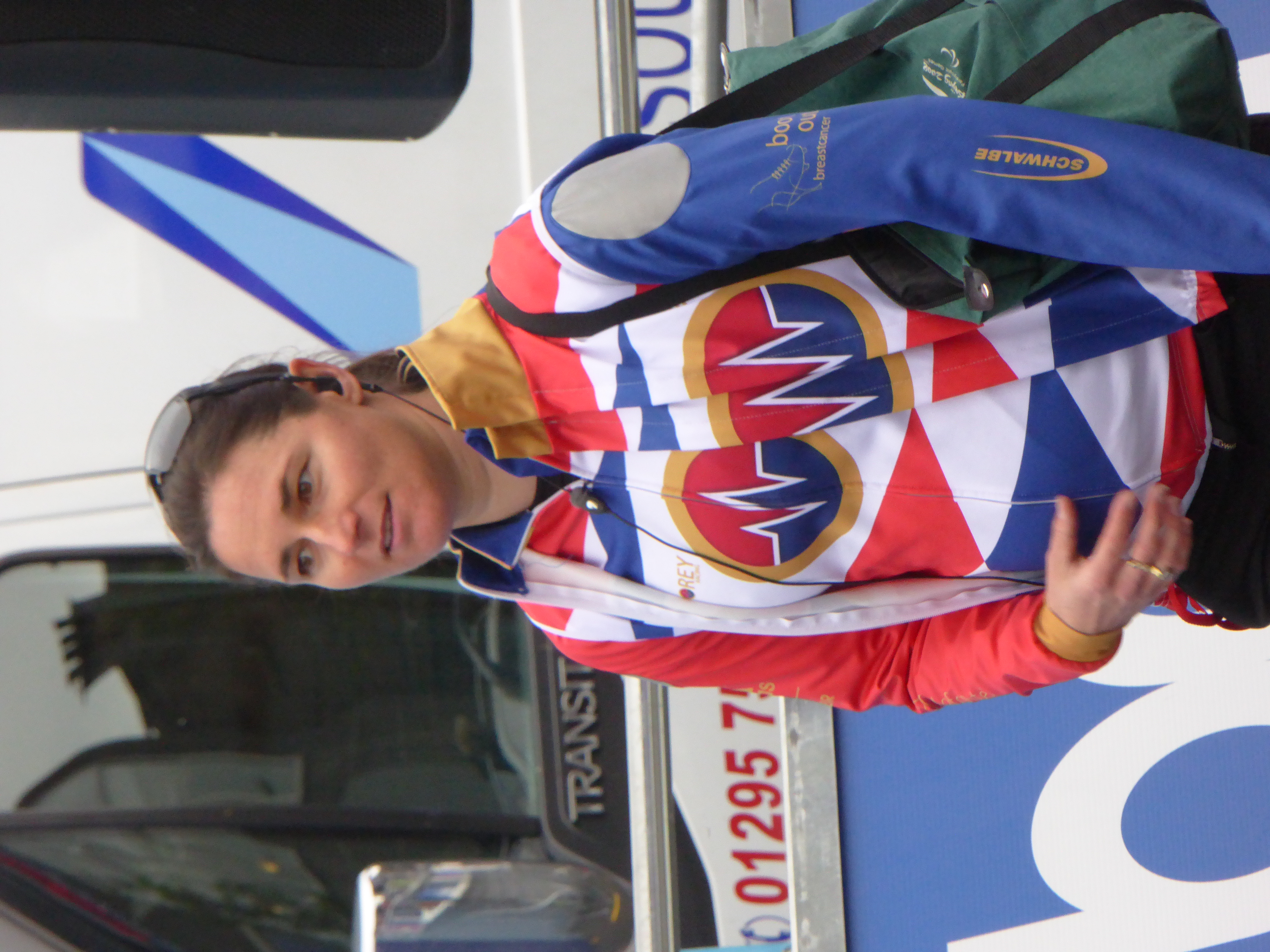
Sarah Storey
British cyclist and swimmer
4
APPEARANCES
4
PODCASTS
Jul 9, 2026

JohnHOST
Dame Sarah, how much has the Paralympics changed since you first, uh, as you say, appeared as a 14-year-old?

Sarah StoreyGUEST
The coverage that we had in, uh, Barcelona in 1992 was around an hour of TV highlights once every three days, so there really wasn't enough time to go across all the sports and all of the different performances.
JohnHOST
Are you confident that America can stage the Paralympics better than the Parisians?


Lauren LaverneHOST
I spoke to her last year before she went to the Paris Games, her ninth Paralympics.
Sarah StoreyGUEST
The first games I remember watching is 1984, but what I didn't realize was the Paralympics was a thing because I had never really been given any inkling that, you know, any sport was possible for people who weren't, you know, two arms, two legs, full able-bodied people.
Sarah StoreyGUEST
So I looked at the, the Olympic Games and thought, "I wonder if I could go to the Olympics." And it wasn't until around 1990 that I watched, uh, a TV program about a young lady who was hoping to qualify for the Paralympic team in '92, and she was missing part of her arm, and I was born with my left arm shorter than my right, no left hand, not fully formed.
Sarah StoreyGUEST
And so I was like, "I wonder whether it counts for people like me." I'd never seen myself as any different to anyone else.
Sarah StoreyGUEST
But because I was swimming just as quickly if not faster than everybody that I knew, it hadn't really crossed my mind.
Lauren LaverneHOST
Like, when did you notice? How did your parents explain that to you, and how did you feel about it?

Sarah StoreyGUEST
And I think, you know, we're talking about all sorts of the pressures and challenges on 15 year olds.
Sarah StoreyGUEST
And maybe because I'd been at those games for three weeks and I'd looked after myself.
16 MINS LATER

Georgie AinslieHOST
Do you think if you hadn't have had those sort of early experiences at 14 and everything that happened after that, you would have had the, I don't know, the sort of wherewithal to go, actually, well, we can park this and we can take this on?


Mark ChapmanHOST
And they were talking about their pioneering research into helping female athletes with the menopause.
Sarah StoreyGUEST
But then also your- your- your menstrual cycle, I think it starts to lengthen and then it shortens, and then it lengthens again, and you're not really sure where you are.
Sarah StoreyGUEST
So, I've never been an athlete that's struggled when I was, uh, younger with my menstrual cycle.
Sarah StoreyGUEST
But as soon as I noticed some changes, I asked Kirsty, I said, "Why is this happening? Why have I got a headache?" And there'll be a one- one particular day where I thought I'd come down with some kind of horrendous illness.
Sarah StoreyGUEST
I- my head was pounding, and I thought, "Well, I- there's no way I'm gonna be able to race tomorrow." Uh, I went out for an easy ride.
