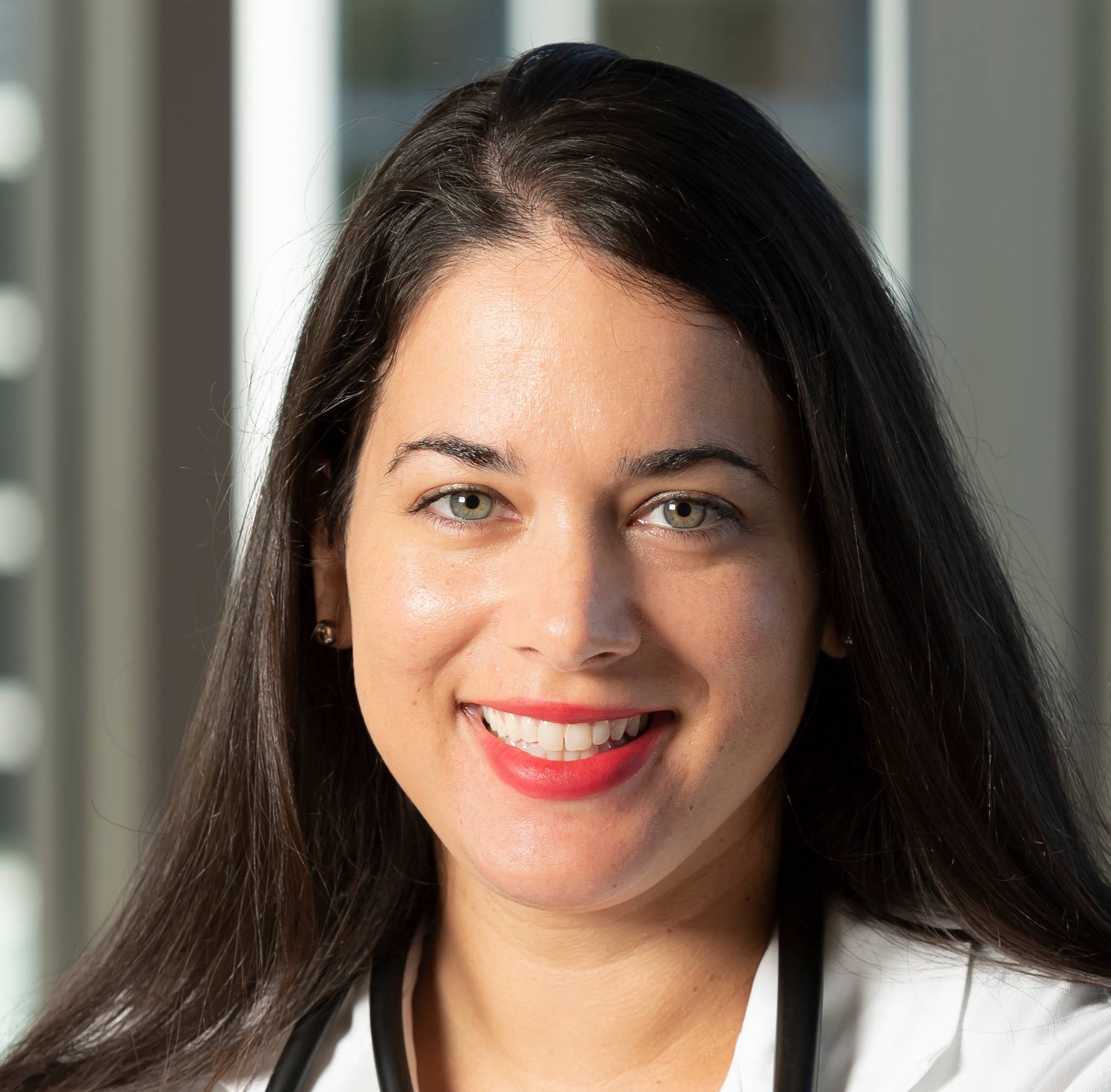
Sarah Sammons
Breast medical oncologist, Co-Leader of Breast Oncology at University of Maryland Greenebaum Comprehensive Cancer Center, formerly of Dana-Farber Cancer Institute and Harvard Medical School.
2
APPEARANCES
2
PODCASTS
Jun 23, 2026


Ada WaxGUEST
So how do you interpret these long-term data, and what do they tell us about the role of pertuzumab added to trastuzumab-based chemotherapy for patients with HER2-positive early breast cancer?

Sarah SammonsGUEST
So I think what the Affinity 11-year data showed us, and for anyone who's not familiar with Affinity, Affinity was the landmark phase three trial that looked at the addition of pertuzumab to chemotherapy and trastuzumab in the adjuvant setting for stage two and three HER2-positive breast cancer.
Sarah SammonsGUEST
And we've known for a very long time that the addition of pertuzumab to chemo and trastuzumab, followed by pertuzumab, trastuzumab, leads to an improvement in invasive disease-free survival.
Sarah SammonsGUEST
But now what we see in 11 years for the first time is that there is an improvement in overall survival.
Sarah SammonsGUEST
There is not much of a difference in the node-negative population for either invasive disease-free survival or overall survival, but we're really seeing a benefit both in the intention-to-treat population and driven by mostly the node-positive population.
Sarah SammonsGUEST
Staying in the early stage setting, the 2026 NCCN updates also highlight an important change for patients with residual disease after neoadjuvant therapy.


Sarah SammonsGUEST
Sammons, why don't you start us off? Just to bring everybody up to speed really on what we're talking about.
Sarah SammonsGUEST
We're talking about the Serena 6 clinical trial, which essentially was taking patients with metastatic estrogen receptor positive HER2 negative breast cancer who are on their first line aromatase inhibitor and CDK4-6 inhibitor.
Sarah SammonsGUEST
If they were on therapy with stable or responding disease for at least six months without progression, they could start getting blood tests to detect a mutation in the estrogen gene called an ESR1 mutation.
Sarah SammonsGUEST
And if the patients developed an ESR1 mutation and their scans showed that they did not have progressive disease on scans, then they could be randomized to either continue their current therapy, which is what we would do in clinical practice until they progressed on scans, or they could switch to camisestrant, which is an oral selective estrogen degrader, so an oral SIRD.
Sarah SammonsGUEST
And the rationale behind this is that we know that ESR1 mutations are really the major resistance mechanism in terms of why disease becomes resistant or progresses on scans to aromatase inhibitors.
Sarah SammonsGUEST
So we know that patients that have an ESR1 mutation don't respond as long to aromatase inhibitors, and they do better with these oral SIRDs.
27 MINS LATER
